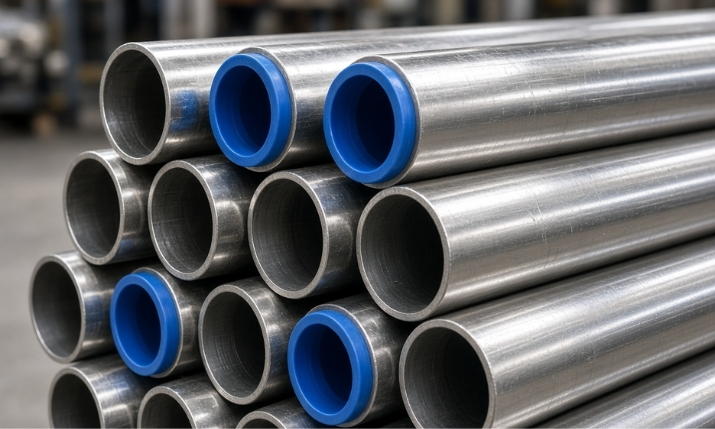
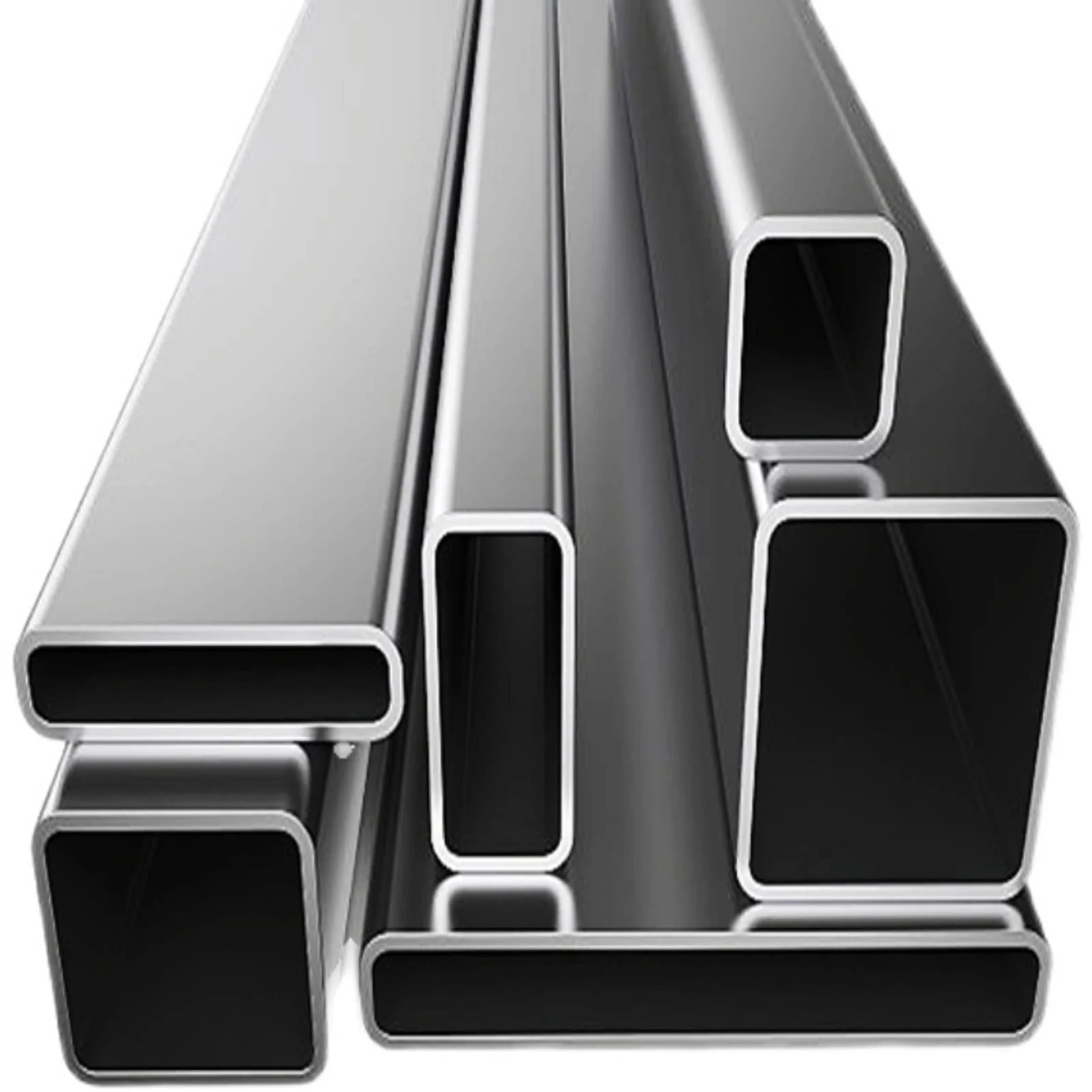
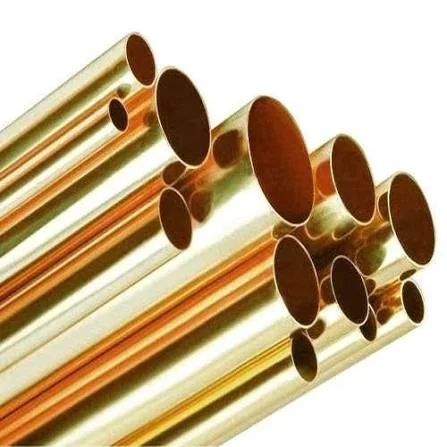
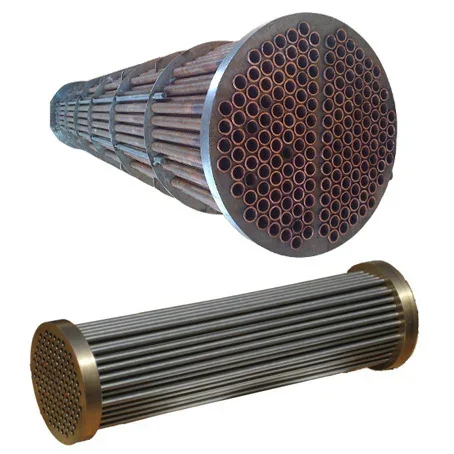
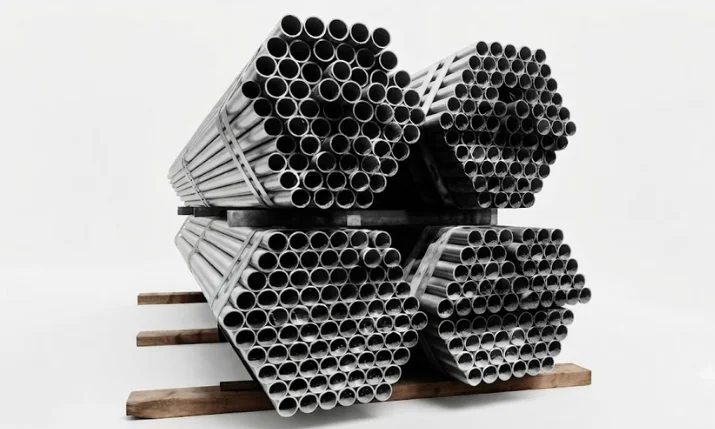
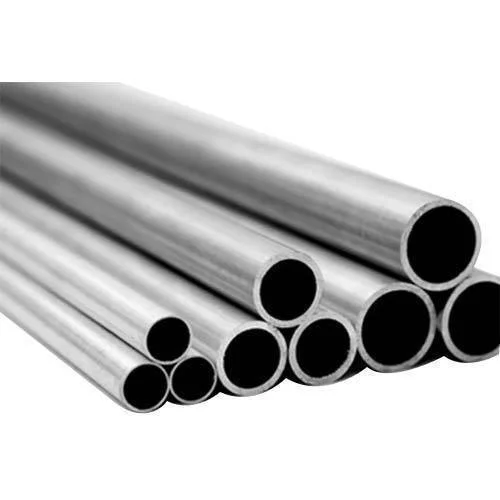
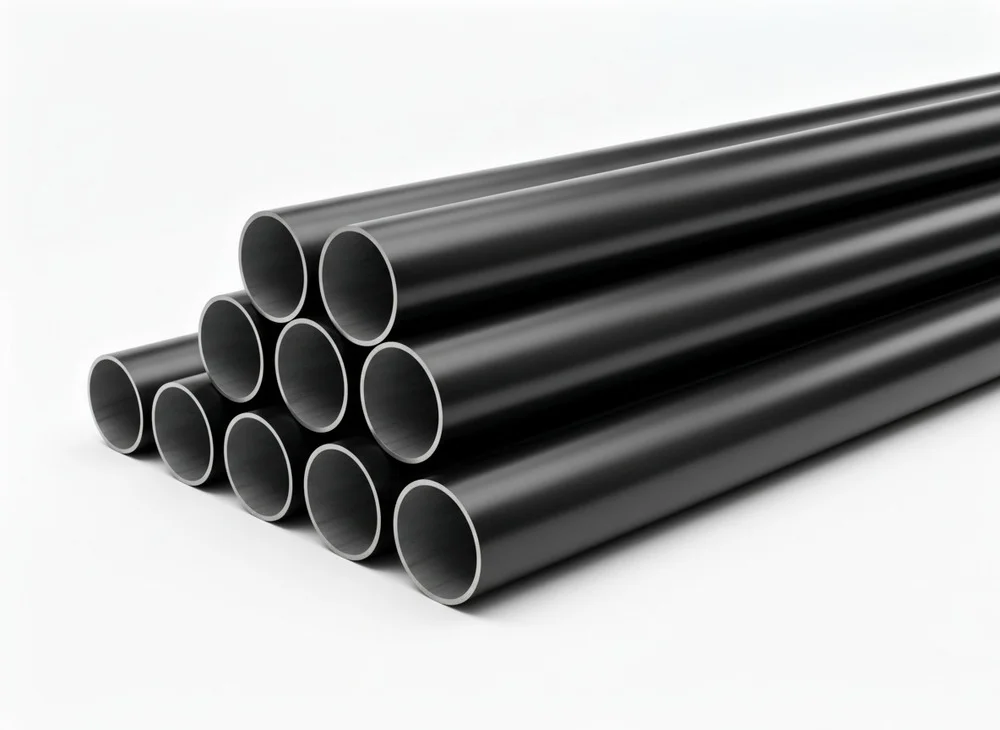
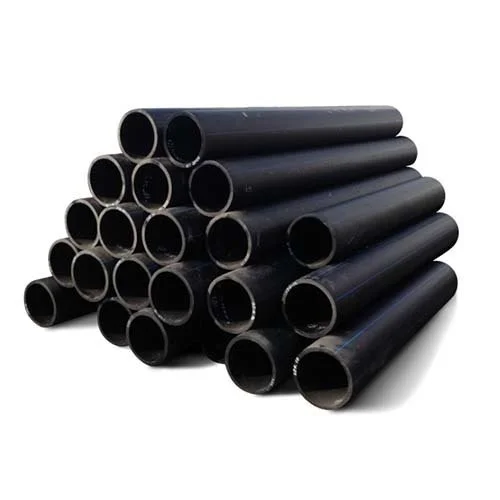
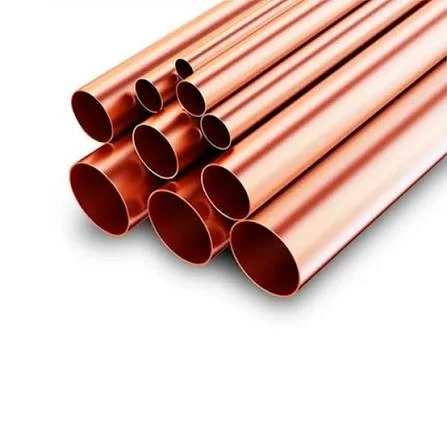
Stainless Steel 316Ti Pipes and Tubes Specifications
| Parameter |
Details |
| Grade | 316Ti / S31635 / 1.4571 |
| Titanium limit | 5 × (C + N) minimum, 0.70% maximum |
| Manufacturing route | Seamless, ERW, EFW, TIG welded |
| Pipe size | ⅛" NPS to 24" NPS |
| Tube OD | 6.35 mm to 168.3 mm |
| Wall thickness | 0.5 mm to 20 mm |
| Delivery condition | Solution annealed, pickled or bright annealed |
| Length | Single random, double random, fixed cut up to 12 m |
| End finish | Plain, beveled, threaded |
| Surface | Pickled, 2B, bright annealed, polished |
| Testing | Chemical, tensile, flattening, hydrotest or eddy current, PMI |
| Optional tests | IGC to ASTM A262, ferrite check, ultrasonic |
| Paperwork | EN 10204 3.1 mill certificate |
Stainless Steel 316Ti Pipes and Tubes Standards
| Category |
Standard |
What it covers |
| Pipe | ASTM A312 / ASME SA312 | Seamless and welded austenitic pipe |
| Pipe | ASTM A358 / ASME SA358 | EFW pipe for high-temperature use |
| Tube | ASTM A213 / ASME SA213 | Seamless tubes for boilers and exchangers |
| Tube | ASTM A249 / ASME SA249 | Welded tubes for boilers and exchangers |
| Tube | ASTM A269 | General service tubing |
| Dimensions | ASME B36.19M | Stainless pipe sizes and schedules |
| European | EN 10216-5 / EN 10217-7 | Seamless and welded stainless tubes |
| Japanese | JIS G3459 | Stainless steel pipes |
Stainless Steel 316Ti vs 316L Pipes and Tubes: Which Should You Pick?
| Your situation |
Better choice |
| Operating above 450°C for long stretches | 316Ti |
| Welded joints that cannot be heat treated afterwards | 316L or 316Ti |
| Mirror polish or sanitary finish | 316L |
| Hot, chloride-bearing process fluid | 316Ti |
| European standard calling for 1.4571 | 316Ti |
| Lowest material cost | 316L |
| Exhaust, flue and furnace-side piping | 316Ti |
Stainless Steel 316Ti Pipes and Tubes Chemical Composition
| Element |
Content (%) |
| Carbon (C) | 0.08 max |
| Manganese (Mn) | 2.00 max |
| Silicon (Si) | 1.00 max |
| Phosphorus (P) | 0.045 max |
| Sulphur (S) | 0.030 max |
| Chromium (Cr) | 16.0 – 18.0 |
| Nickel (Ni) | 10.0 – 14.0 |
| Molybdenum (Mo) | 2.00 – 3.00 |
| Titanium (Ti) | 5×(C+N) min – 0.70 max |
| Nitrogen (N) | 0.10 max |
| Iron (Fe) | Balance |
Stainless Steel 316Ti Pipes and Tubes Mechanical Properties
| Property |
Value |
| Tensile strength | 515 MPa min |
| Yield strength (0.2%) | 205 MPa min |
| Elongation | 35% min |
| Hardness | 90 HRB max |
| Density | 7.98 g/cm³ |
| Melting range | About 1375 – 1400°C |
| Elastic modulus | About 193 GPa |
| Thermal expansion (0–100°C) | About 16 µm/m·°C |
Stainless Steel 316Ti Pipes and Tubes Size and Weight Chart
Theoretical weights below use (OD − Wall) × Wall × 0.02507, which gives kg per metre with both values in mm. The factor reflects a density of 7.98 g/cm³.
Pipes (ASME B36.19M)
| NPS |
OD (mm) |
Sch 10S wall (mm) |
Sch 10S kg/m |
Sch 80S wall (mm) |
Sch 80S kg/m |
| ½" | 21.3 | 2.11 | 1.02 | 3.73 | 1.64 |
| 1" | 33.4 | 2.77 | 2.13 | 4.55 | 3.29 |
| 1¼" | 42.2 | 2.77 | 2.74 | 4.85 | 4.54 |
| 2" | 60.3 | 2.77 | 4.00 | 5.54 | 7.61 |
| 2½" | 73.0 | 3.05 | 5.35 | 7.01 | 11.60 |
| 3" | 88.9 | 3.05 | 6.56 | 7.62 | 15.53 |
| 4" | 114.3 | 3.05 | 8.51 | 8.56 | 22.69 |
| 6" | 168.3 | 3.40 | 14.06 | 10.97 | 43.27 |
| 8" | 219.1 | 3.76 | 20.30 | 12.70 | 65.72 |
| 10" | 273.1 | 4.19 | 28.25 | 12.70 | 82.91 |
Tubes (OD basis)
| OD (mm) |
Wall (mm) |
Weight (kg/m) |
| 6.35 | 0.89 | 0.12 |
| 9.53 | 1.24 | 0.26 |
| 15.88 | 1.65 | 0.59 |
| 22.23 | 2.11 | 1.06 |
| 25.40 | 2.11 | 1.23 |
| 38.10 | 2.77 | 2.45 |
| 44.45 | 2.77 | 2.89 |
| 57.15 | 3.05 | 4.14 |
| 76.20 | 3.05 | 5.59 |
Stainless Steel 316Ti Pipes and Tubes Sizes, Dimensions and Schedules
Two pipes with the same nominal size can have very different walls. Light schedules like 5S suit low-pressure, weight-sensitive lines. Schedule 40S and above are chosen for pressure, threading and rough handling. DN is the metric size that matches each NPS.
| NPS |
DN |
OD (mm) |
Sch 5S (mm) |
Sch 40S (mm) |
| ¾" | 20 | 26.7 | 1.65 | 2.87 |
| 1½" | 40 | 48.3 | 1.65 | 3.68 |
| 2½" | 65 | 73.0 | 2.11 | 5.16 |
| 3" | 80 | 88.9 | 2.11 | 5.49 |
| 5" | 125 | 141.3 | 2.77 | 6.55 |
For tubes, specify OD and wall directly in mm or inches, or by BWG gauge. Non-standard combinations, odd lengths and special end preparation can be made to your drawing.
Common Materials Supplied with Stainless Steel 316Ti Pipes and Tubes
Industrial piping projects often require multiple stainless steel grades to handle different temperatures, pressure conditions and corrosive environments. As Stainless Steel 316Ti Pipes and Tubes suppliers, we also offer other grades to meet specific project requirements and help buyers source multiple materials from one place.
316 and 316L: Molybdenum-bearing grades that provide good resistance to corrosion in chloride-containing environments.
316H: A higher-carbon grade used in applications requiring improved strength at elevated temperatures.
321 and 321H: Titanium-stabilised grades suitable for applications involving elevated temperatures and welding.
347 and 347H: Niobium-stabilised grades commonly used in refinery equipment and power generation systems.
317L: Offers higher molybdenum content than 316L for improved resistance to certain corrosive chemicals.
904L and Duplex 2205: Used in demanding chemical processing and marine applications where enhanced corrosion resistance is required.
These material options help engineers and procurement teams select suitable grades based on operating conditions, fabrication requirements and project specifications.
Stainless Steel 316Ti Pipes and Tubes We Manufacture and Supply
| Product |
Standard |
Common finish |
| Seamless pipe | ASTM A312 | Annealed and pickled |
| Welded pipe | ASTM A312 / A358 | Annealed and pickled |
| Seamless tube | ASTM A213 / A269 | Bright annealed |
| Welded tube | ASTM A249 / A269 | Bright annealed or 2B |
| U-bend exchanger tube | ASTM A213 | Stress relieved |
| Instrumentation tube | ASTM A269 | Bright annealed |
| Coil tube | ASTM A269 | Bright annealed |
Applications of Stainless Steel 316Ti Pipes and Tubes
- Petrochemical and Refining: Hot hydrocarbon lines and exchanger bundles that see heat and sulphur compounds.
- Chemical Processing: Reactor feed lines and transfer piping carrying acids and chloride-bearing media.
- Power Generation: Superheater sections, flue gas ducts and condenser tubing.
- Marine and Offshore: Exhaust lines, scrubber piping and onboard process systems.
- Pharmaceutical: Process utilities where welded joints must stay corrosion resistant.
- Oil and Gas: Instrumentation tubing and heated utility lines on platforms and terminals.
- Pulp and Paper: Bleach plant and digester-side piping.
- Automotive and Furnace: Exhaust manifolds, thermowells and heat-treatment equipment.
Why Choose Us as Your Stainless Steel 316Ti Pipes and Tubes Manufacturer in India?
Since 2005, we have built experience in manufacturing and exporting stainless steel pipes and tubes for industrial applications worldwide. Our monthly supply capacity exceeds 100 tons, and we serve customers in 85+ countries. This experience helps us understand the requirements of industrial buyers, EPC contractors, distributors and procurement teams.
We manufacture and supply Stainless Steel 316Ti Pipes and Tubes in seamless and welded forms, including ERW, TIG and EFW pipes, cold drawn tubes, U-bend tubes and bright annealed tubes. We offer different diameters, wall thicknesses, lengths and customised specifications to suit project requirements. Along with SS 316Ti, we supply grades such as 316, 316L, 316H, 321, 321H, 347, 347H, 317L, 904L and Duplex 2205.
Our ISO 9001:2015 and TÜV certifications reflect our commitment to quality standards. We also provide EN 10204 3.1 mill test certificates with applicable orders for material verification and traceability. From standard sizes to customised requirements, we work to deliver consistent quality, reliable supply and products suited to demanding industrial environments.
Countries We Export To
Our Stainless Steel 316Ti Pipes and Tubes reach industrial customers across 85+ countries, supporting projects that require titanium-stabilised stainless steel for elevated-temperature and corrosive service.
Europe: Germany, Italy, France, Netherlands, United Kingdom, Spain, Belgium, Poland.
Middle East: UAE, Saudi Arabia, Qatar, Oman, Kuwait, Bahrain.
North America: USA, Canada, Mexico.
Asia-Pacific: Singapore, Malaysia, Indonesia, Thailand, Vietnam, Australia, South Korea.
Africa: South Africa, Nigeria, Egypt, Kenya, Ghana, Angola.
South America: Brazil, Chile, Argentina, Peru.
South Asia: Nepal, Bangladesh, Sri Lanka.
We support international orders with export paperwork tailored to shipment requirements, including commercial invoices, packing lists, shipping documents and certificates of origin where applicable. Material orders can include EN 10204 3.1 mill test certificates for grade verification and traceability. This helps overseas buyers coordinate material inspection, customs clearance and project documentation.