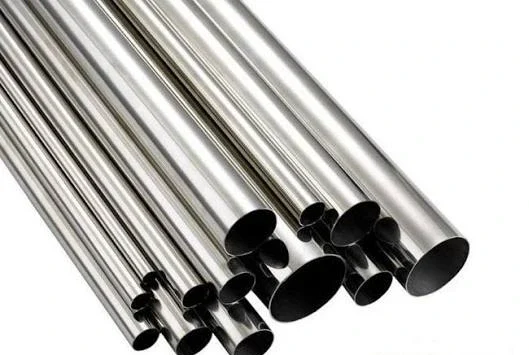
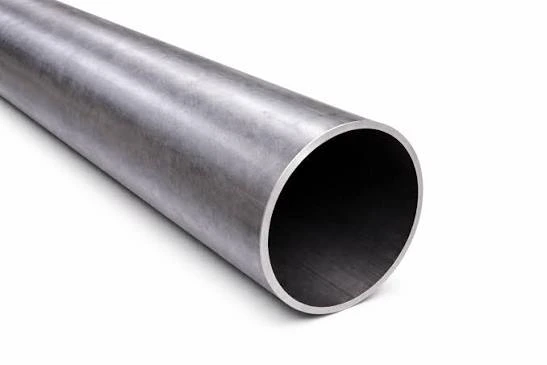
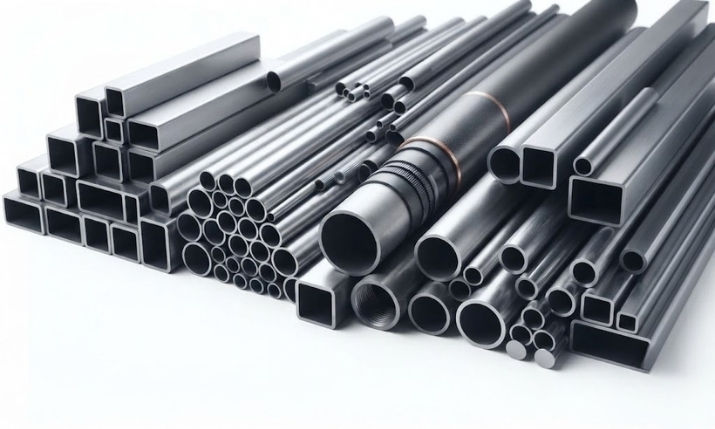
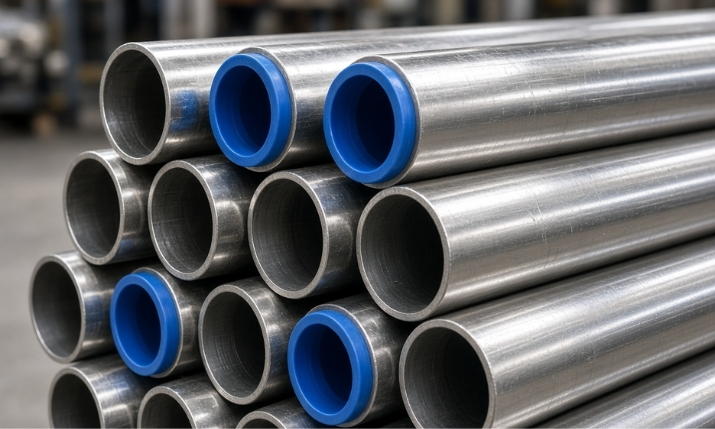
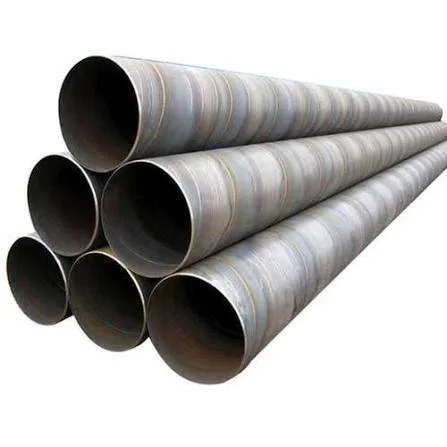
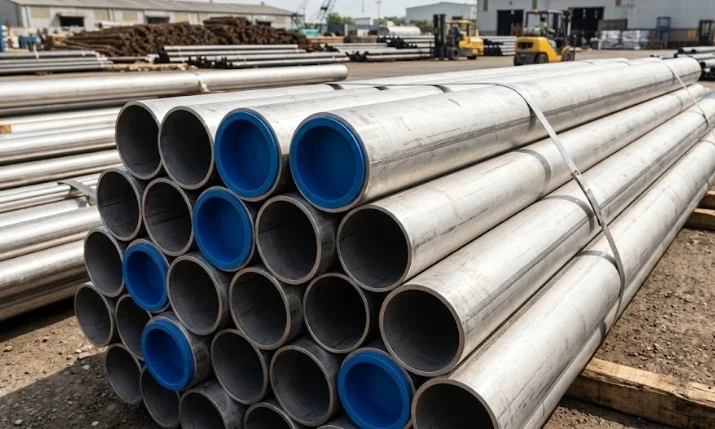
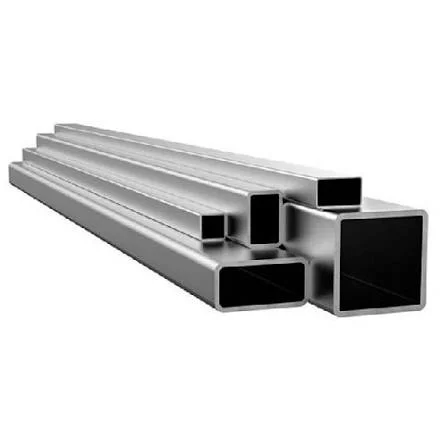
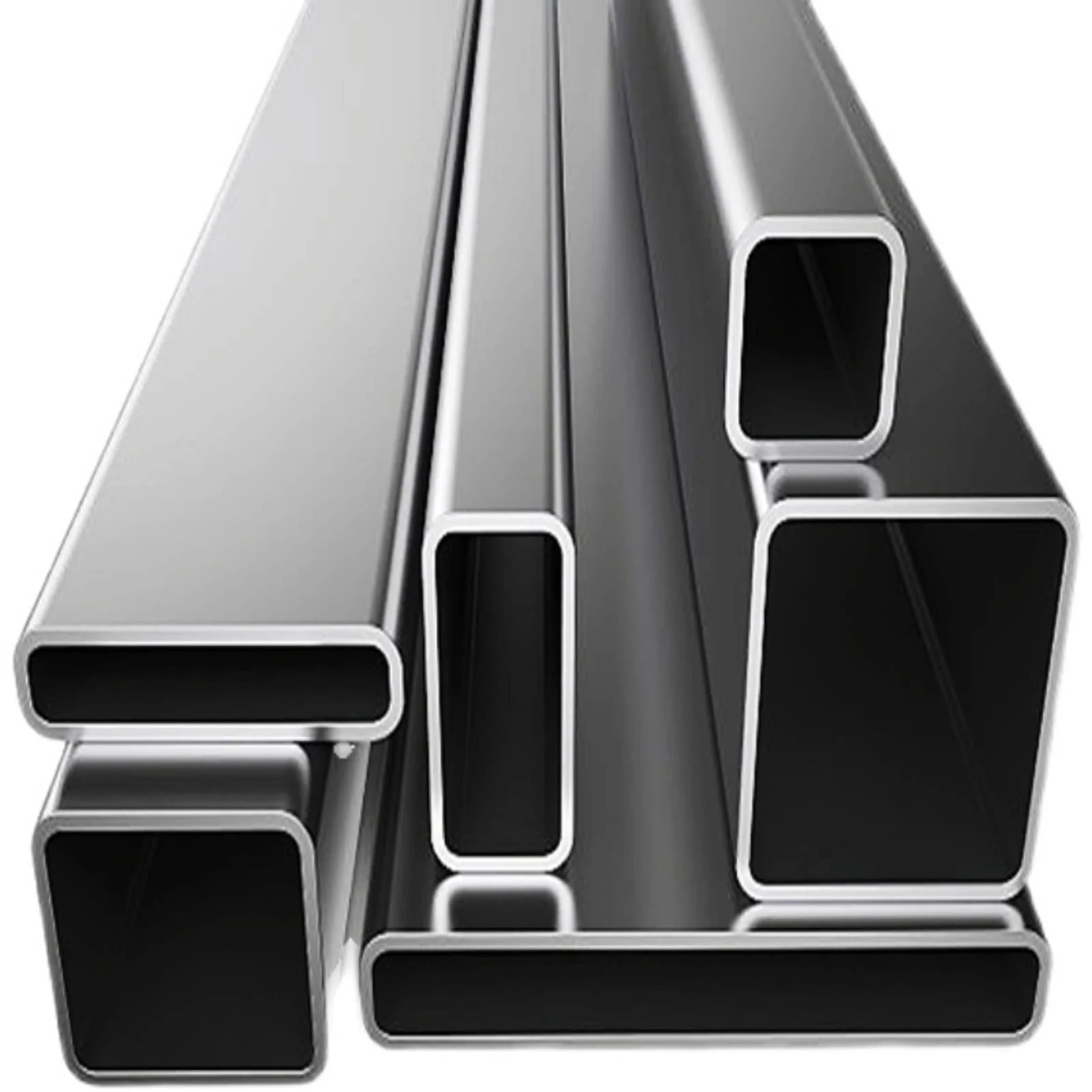
Stainless Steel 316L Pipes and Tubes Specifications
| Parameter |
Details |
| Material | Stainless Steel 316L / UNS S31603 / 1.4404 |
| Product forms | Seamless, ERW, EFW, TIG welded |
| Pipe size | ⅛" NPS to 24" NPS |
| Tube OD | 6 mm to 203.2 mm |
| Wall thickness | 0.5 mm to 25 mm |
| Delivery condition | Solution annealed, pickled or bright annealed |
| Length | Single random, double random, cut length up to 12 m |
| Ends | Plain, beveled, threaded, tri-clamp prepared on request |
| Surface | Pickled, 2B, bright annealed, mechanically polished, electropolished |
| Tests | Chemical analysis, tensile, flattening, hydrotest or eddy current, PMI |
| Extra tests on request | IGC, ultrasonic, radiography |
| Documents | EN 10204 3.1 mill certificate, inspection reports |
Stainless Steel 316L Pipes and Tubes Standards
| Standard |
What it covers |
| ASTM A312 / ASME SA312 | Seamless and welded austenitic pipe |
| ASTM A358 / ASME SA358 | EFW pipe for high-temperature service |
| ASTM A213 / ASME SA213 | Seamless boiler and heat exchanger tubes |
| ASTM A249 / ASME SA249 | Welded boiler and heat exchanger tubes |
| ASTM A269 | General service tubing |
| ASTM A270 | Sanitary tubing for dairy and pharma |
| ASTM A554 | Welded mechanical and ornamental tubing |
| ASME B36.19M | Stainless pipe dimensions and schedules |
| EN 10216-5 / EN 10217-7 | European seamless and welded stainless tubes |
| JIS G3459 | Japanese stainless steel pipes |
Material and Grades of Stainless Steel 316L Pipes and Tubes
316L (S31603): The standard low-carbon grade, with carbon up to 0.03%. It is the default for welded systems.
316/316L dual certified: One pipe that meets the chemistry of both grades and the higher strength of 316. Many buyers specify it so a single stock can serve both requirements.
1.4404: The European name for 316L, common on EN drawings and in German and Italian tenders.
1.4435: A 316L variant with more nickel (12.5–15%) and slightly more molybdenum. It has lower ferrite and is often the pharma and biotech specification.
316LN: Adds nitrogen for extra strength while keeping carbon low.
All grades are supplied solution annealed, with the carbon level confirmed on the heat certificate.
Stainless Steel 316L vs 316 vs 304L Pipes and Tubes: Which One Do You Need?
| Point |
316L |
316 |
304L |
| Carbon | 0.03% max | 0.08% max | 0.03% max |
| Molybdenum | 2.0–3.0% | 2.0–3.0% | None |
| Pitting resistance (PREN) | About 24 | About 24 | About 19 |
| Yield strength (min) | 170 MPa | 205 MPa | 170 MPa |
| Weld decay risk | Very low | Moderate in thick welds | Very low |
| Chloride resistance | Good | Good | Moderate |
| Cost | Higher than 304L | Similar to 316L | Lowest |
If the pipe will be welded and exposed to chlorides, acids or washdown chemicals, 316L is the right pick. If strength matters more than weld performance, 316 gives you a little more. If the line carries clean water, air or food products with no chlorides, 304L does the job for less money.
Stainless Steel 316L Pipes and Tubes Chemical Composition
| Element |
TP316L (S31603) % |
1.4404 % |
1.4435 % |
| Carbon (C) | 0.03 max | 0.030 max | 0.030 max |
| Manganese (Mn) | 2.00 max | 2.00 max | 2.00 max |
| Silicon (Si) | 1.00 max | 1.00 max | 1.00 max |
| Phosphorus (P) | 0.045 max | 0.045 max | 0.045 max |
| Sulphur (S) | 0.030 max | 0.015 max | 0.015 max |
| Chromium (Cr) | 16.0 – 18.0 | 16.5 – 18.5 | 17.0 – 19.0 |
| Nickel (Ni) | 10.0 – 14.0 | 10.0 – 13.0 | 12.5 – 15.0 |
| Molybdenum (Mo) | 2.00 – 3.00 | 2.00 – 2.50 | 2.50 – 3.00 |
| Nitrogen (N) | — | 0.11 max | 0.11 max |
| Iron (Fe) | Balance | Balance | Balance |
Stainless Steel 316L Pipes and Tubes Mechanical Properties
| Property |
Value |
| Tensile strength | 485 MPa min |
| Yield strength (0.2%) | 170 MPa min |
| Elongation | 35% min |
| Hardness | 90 HRB max (192 HBW) |
| Density | 7.98 g/cm³ |
| Melting range | About 1375 – 1400°C |
| Elastic modulus | About 193 GPa |
| Thermal expansion (0–100°C) | About 16 µm/m·°C |
| Magnetic response | Non-magnetic when annealed |
Corrosion Resistance of Stainless Steel 316L Pipes and Tubes
This table is a general guide. Exact limits depend on concentration, temperature and oxygen level, so send us your operating conditions if you are unsure.
| Environment |
How 316L performs |
| Drinking and process water | Excellent |
| Marine air and splash zone | Very good |
| Continuous seawater immersion | Limited; pitting is possible in warm, still water |
| Warm chloride solutions | Pitting risk rises above about 50°C; stress corrosion cracking possible above about 60°C |
| Nitric acid | Good |
| Phosphoric acid | Good in many concentrations |
| Organic acids (acetic, citric) | Very good |
| Caustic soda | Good at moderate strength and temperature |
| Sulphuric acid | Fair when cold and dilute; poor when hot or at medium strength |
| Hydrochloric acid | Not recommended |
Stainless Steel 316L Pipes and Tubes Size and Weight Chart
Theoretical weight is (OD − Wall) × Wall × 0.02507, giving kg per metre with dimensions in mm. Real weight varies slightly within mill tolerance.
Pipes (ASME B36.19M)
| NPS |
OD (mm) |
10S wall |
10S kg/m |
40S wall |
40S kg/m |
80S wall |
80S kg/m |
| ½" | 21.3 | 2.11 | 1.02 | 2.77 | 1.29 | 3.73 | 1.64 |
| ¾" | 26.7 | 2.11 | 1.30 | 2.87 | 1.71 | 3.91 | 2.23 |
| 1" | 33.4 | 2.77 | 2.13 | 3.38 | 2.54 | 4.55 | 3.29 |
| 1½" | 48.3 | 2.77 | 3.16 | 3.68 | 4.12 | 5.08 | 5.50 |
| 2" | 60.3 | 2.77 | 4.00 | 3.91 | 5.53 | 5.54 | 7.61 |
| 3" | 88.9 | 3.05 | 6.56 | 5.49 | 11.48 | 7.62 | 15.53 |
| 4" | 114.3 | 3.05 | 8.51 | 6.02 | 16.34 | 8.56 | 22.69 |
| 6" | 168.3 | 3.40 | 14.06 | 7.11 | 28.73 | 10.97 | 43.27 |
| 8" | 219.1 | 3.76 | 20.30 | 8.18 | 43.25 | 12.70 | 65.72 |
Sanitary and general tubes (OD basis)
| OD (mm) |
Wall (mm) |
Weight (kg/m) |
| 12.70 | 1.65 | 0.46 |
| 19.05 | 1.65 | 0.72 |
| 25.40 | 1.65 | 0.98 |
| 38.10 | 1.65 | 1.51 |
| 50.80 | 1.65 | 2.03 |
| 63.50 | 1.65 | 2.56 |
| 76.20 | 1.65 | 3.08 |
| 101.60 | 2.11 | 5.26 |
Stainless Steel 316L Pipes and Tubes Sizes, Dimensions and Schedules
Two pipes of the same nominal size can have very different walls. Light schedules like 5S and 10S save weight and cost on low-pressure lines. Heavier schedules like 40S and 80S carry more pressure and take more mechanical abuse. DN is the metric size for each NPS.
| NPS |
DN |
OD (mm) |
Sch 5S (mm) |
Sch 160 (mm) |
| ½" | 15 | 21.3 | 1.65 | 4.78 |
| 1" | 25 | 33.4 | 1.65 | 6.35 |
| 2" | 50 | 60.3 | 1.65 | 8.74 |
| 4" | 100 | 114.3 | 2.11 | 13.49 |
| 6" | 150 | 168.3 | 2.77 | 18.26 |
| 8" | 200 | 219.1 | 2.77 | 23.01 |
Typical outside diameter tolerance for ASTM A312 pipe is below.
| Pipe size (NPS) |
OD tolerance (mm) |
| ⅛" to 1½" | +0.4 / −0.8 |
| Over 1½" to 4" | +0.8 / −0.8 |
| Over 4" to 8" | +1.6 / −0.8 |
| Over 8" to 18" | +2.4 / −0.8 |
Wall thickness tolerance is −12.5% on A312 pipe. Tubes made to A269 and A270 follow tighter tolerances on both OD and wall. We also cut to length, bend and prepare ends to drawing.
Finishes of Stainless Steel 316L Pipes and Tubes
| Finish |
What it is |
Where it is used |
| Annealed and pickled | Acid-cleaned after annealing to remove heat scale | Industrial process pipe |
| Bright annealed (BA) | Annealed in a controlled atmosphere for a clean, shiny surface | Instrumentation and hydraulic tubing |
| Mechanically polished | Ground and buffed in grit stages, Ra 0.8 µm or better | Food, dairy and beverage lines |
| Electropolished (EP) | Electrochemically smoothed, Ra 0.5 µm or better on request | Pharma, biotech and semiconductor lines |
| Passivated | Citric or nitric acid treatment that restores the protective film | All hygienic and chemical service |
Testing and Inspection of Stainless Steel 316L Pipes and Tubes
| Test |
Purpose |
| Chemical analysis | Confirms carbon, chromium, nickel and molybdenum against the standard |
| Tensile and hardness | Checks strength, elongation and hardness |
| Flattening and flaring (tubes) | Shows the tube can deform without cracking |
| Hydrostatic or eddy current | Finds leaks and hidden defects |
| PMI | Verifies the alloy before dispatch |
| IGC to ASTM A262 | Confirms resistance to intergranular attack, on request |
| Dimensional and visual | Checks OD, wall, length, straightness and surface |
| Ultrasonic or radiography | Extra checks for EFW and heavy-wall pipe, on request |
Common Materials Supplied with Stainless Steel 316L Pipes and Tubes
Different piping systems face different challenges, from chemical exposure to high temperatures and seawater contact. Along with SS 316L, we supply other stainless steel grades and duplex alloys to help customers choose materials that suit their operating conditions and project specifications.
SS 304 and 304L: Suitable for general-purpose piping where corrosion conditions are moderate and chloride exposure is limited.
SS 316 and 316Ti: SS 316 offers good corrosion resistance, while titanium-stabilised 316Ti is useful for certain elevated-temperature applications.
SS 317L: Contains more molybdenum than SS 316L, improving resistance to specific corrosive chemicals.
SS 321 and 347: Stabilised grades used in equipment exposed to sustained elevated temperatures.
SS 904L: A high-alloy grade selected for demanding environments involving certain acids, including sulphuric acid.
Duplex 2205 and Super Duplex 2507: Offer higher strength and improved resistance to chloride-related corrosion, making them suitable for demanding marine and offshore applications.
As stainless steel pipes and tubes suppliers, we help buyers identify suitable grades according to corrosion exposure, temperature, fabrication needs and project specifications.
Applications of Stainless Steel 316L Pipes and Tubes
- Pharmaceutical and Biotech: Purified water, WFI, clean steam and process lines that must stay sterile.
- Food, Dairy and Beverage: Milk, juice, beer and CIP lines with smooth, easy-to-clean walls.
- Chemical Processing: Acid, solvent and reagent transfer where welds must stay corrosion free.
- Oil and Gas: Offshore topside piping, instrumentation tubing and umbilical lines.
- Marine and Shipbuilding: Seawater cooling, ballast, scrubber and deck piping.
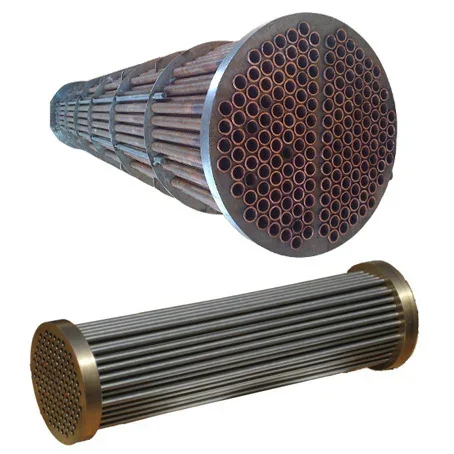
- Power Generation: Heat exchangers, condensers and cooling water systems.
- Water Treatment: Desalination, reverse osmosis and chlorinated water distribution.
- Semiconductor and Electronics: Ultra-pure water and gas lines using electropolished tubing.
- Construction: Coastal handrails, cladding and architectural structures.
Why Choose Us as Your Stainless Steel 316L Pipes and Tubes Manufacturer in India?
Since 2005, we have built our expertise in manufacturing stainless steel pipes and tubes for industrial applications. We manufacture and export over 100 tons of stainless steel products monthly to customers in 85+ countries. Our experience helps us handle bulk orders, customised dimensions and different project specifications without losing sight of material quality and consistency.
We manufacture Stainless Steel 316L Pipes and Tubes in seamless and welded forms, along with sanitary tubes and heat exchanger tubes. We offer different outside diameters, wall thicknesses, schedules, lengths and surface finishes to match specific requirements. Our team understands the importance of low-carbon chemistry in SS 316L, particularly for welded applications where resistance to intergranular corrosion matters.
Our ISO 9001:2015 and TÜV certifications support our quality processes. We provide EN 10204 3.1 mill test certificates with applicable orders, with additional PMI testing, intergranular corrosion testing and third-party inspection available when specified. Pickling and passivation can also be arranged according to project requirements. With established manufacturing and export experience, we coordinate material documentation, export packing and shipping requirements for supplies to international destinations.
Countries We Export Stainless Steel 316L Pipes and Tubes To
As a Stainless Steel 316L Pipes and Tubes Manufacturer and Supplier in India, we export to 85+ countries, serving pharmaceutical, chemical, oil and gas, marine, food processing and power generation industries.
Middle East: UAE, Saudi Arabia, Qatar, Oman, Kuwait and Bahrain.
Europe: Germany, Italy, United Kingdom, Netherlands, France, Spain, Belgium and Poland.
Asia-Pacific: Singapore, Malaysia, Indonesia, Thailand, Vietnam, South Korea, Japan and Australia.
Americas: USA, Canada, Mexico, Brazil and Chile.
Africa: South Africa, Nigeria, Egypt and Kenya.
South Asia: Nepal, Bangladesh and Sri Lanka.
EN 10204 3.1 mill test certificates come with every order. EN 10204 3.2 certification and third-party inspection can be arranged on request. We pack each shipment to suit its route and destination, and we prepare the shipping and export documents your project needs, so international orders move smoothly from our plant to your site.