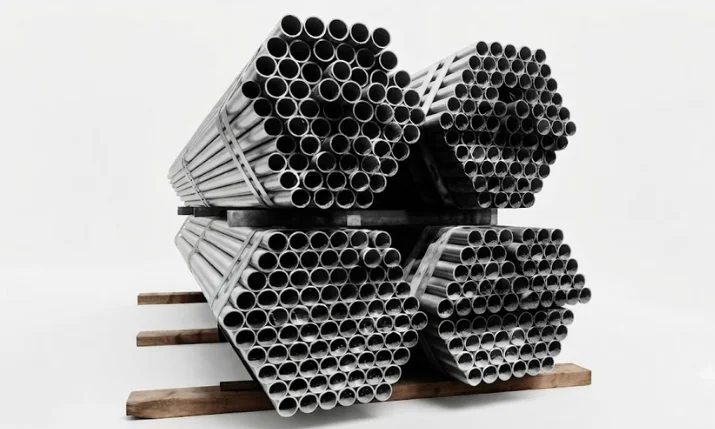
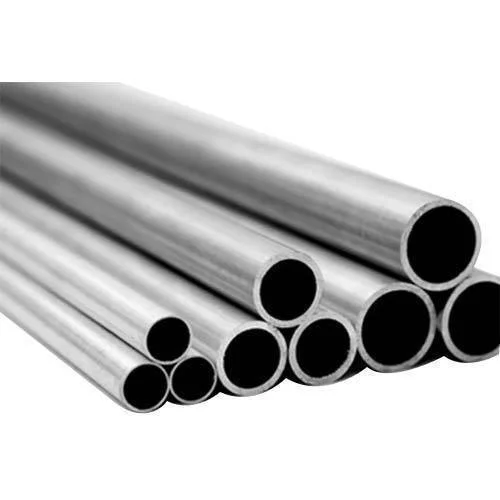
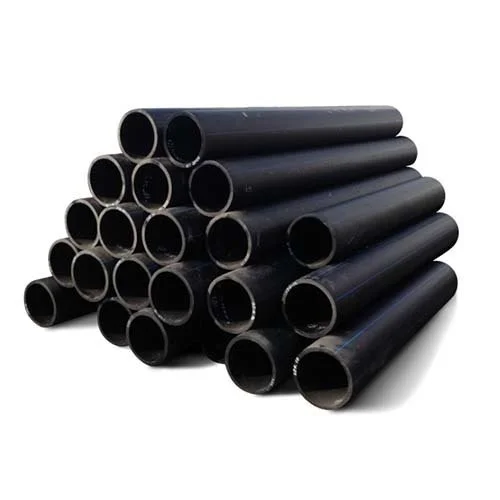
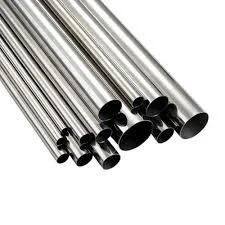
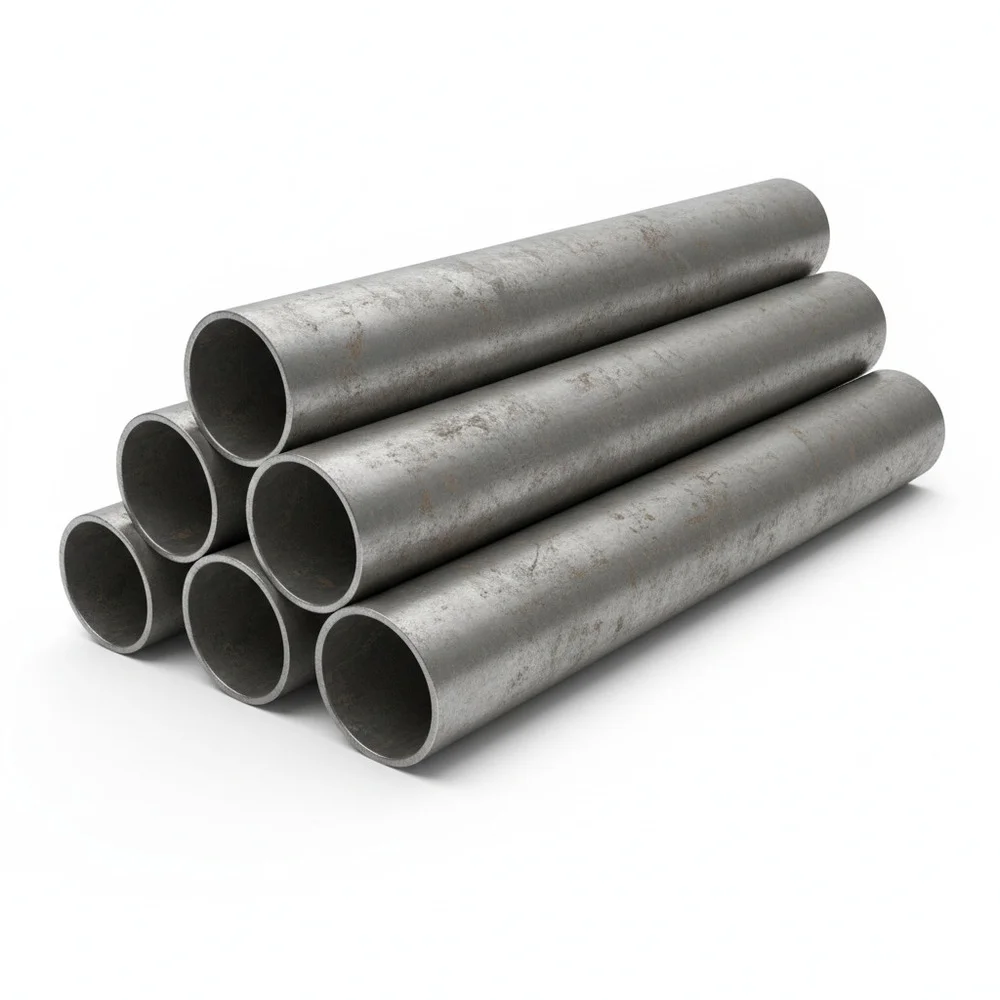
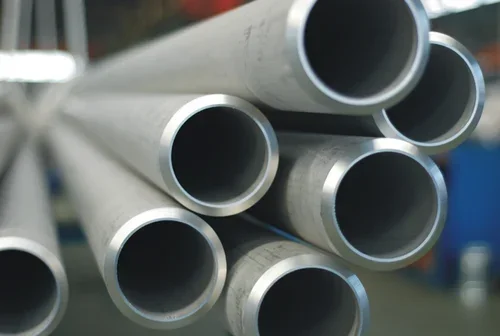
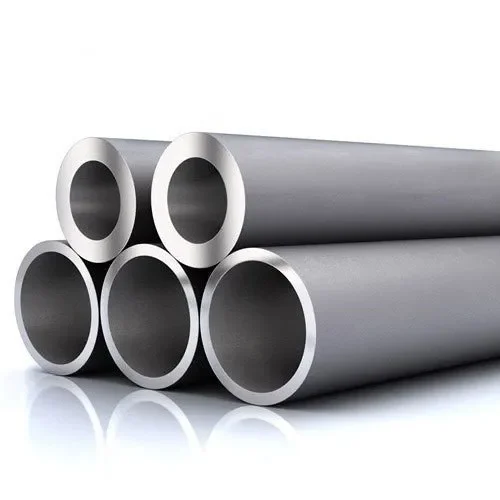
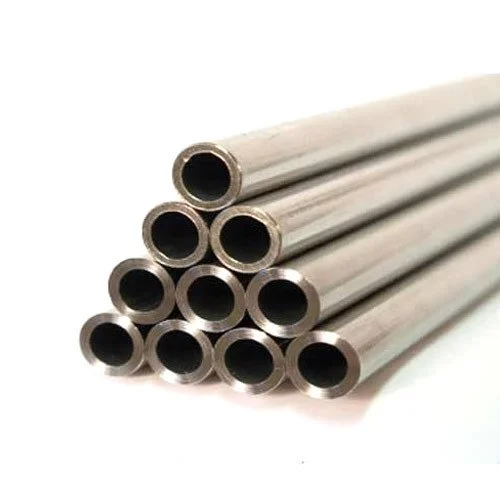
Alloy Steel Heat Exchanger Tubes Specification
The table below sets out the working specification.
| Item |
Detail |
| Product | Alloy Steel Heat Exchanger Tubes |
| Type | Seamless |
| Main grades | A213 T5, T9, T11, T12, T22, T91; A209 T1; A334 Gr 3, 7, 9; EN 10216-2 16Mo3, 13CrMo4-5, 10CrMo9-10 |
| Product standards | ASTM A213 / ASME SA213, ASTM A209, ASTM A334, EN 10216-2 |
| General requirements | ASTM A1016 (for A213), ASTM A450 (for A209) |
| Size basis | OD and wall thickness, wall ordered by minimum or average |
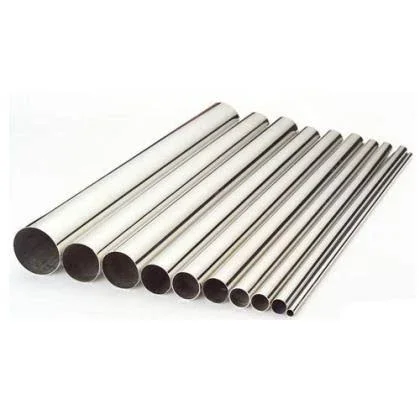
| Size reference | OD 15.88 to 50.8 mm in the weight chart, other sizes on request |
| Wall reference | BWG 16, 14, 12 and 10 in the chart, other walls on request |
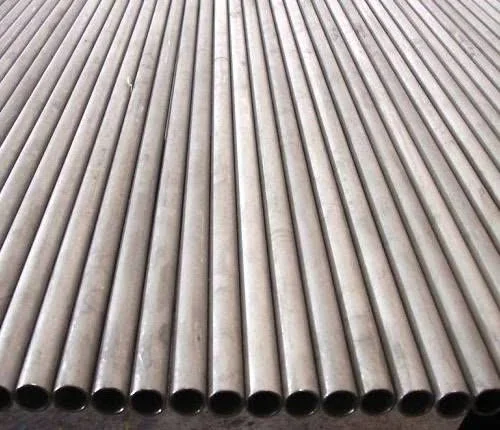
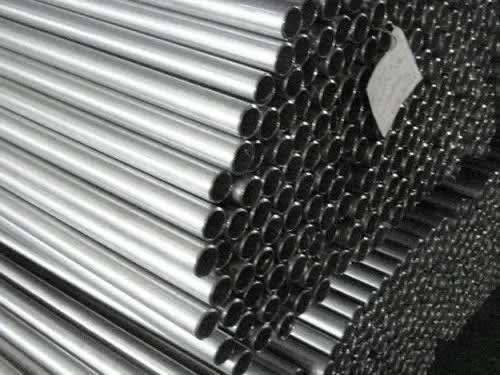
| Length | Fixed, random or cut length |
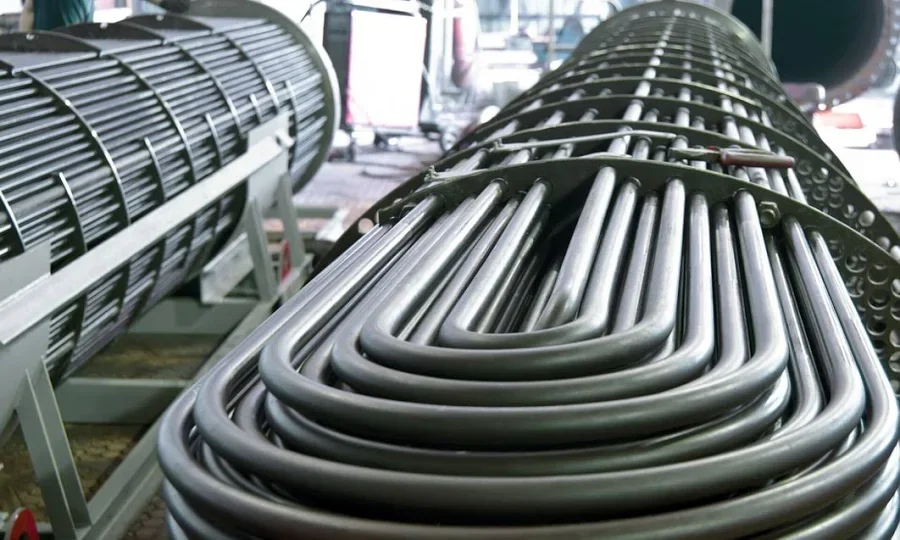
| Shapes | Straight tubes, or U-bend against a drawing |
| Finish | Cold drawn or hot finished, pickled, oiled or varnished |
| Heat treatment | Annealed, normalised or tempered, as the grade requires |
| Tests | Chemical analysis, tensile, hardness, flattening, flaring, hydrostatic or eddy current test |
| Certificate | EN 10204 3.1 with every order, 3.2 on request |
| Inspection | Third-party inspection on request |
Alloy Steel Heat Exchanger Tubes Standards and Specifications
Heat exchanger tubes are bought to a material standard, with a design code and a general standard running alongside. The table shows how they link.
| Standard |
Role |
Applies to |
| ASTM A213 / ASME SA213 | Seamless ferritic and austenitic alloy tubes for boilers, superheaters and heat exchangers | T5, T9, T11, T12, T22, T91 |
| ASTM A209 | Seamless carbon-molybdenum boiler and superheater tubes | T1 |
| ASTM A334 | Seamless and welded tubes for low-temperature service | Gr 3, 7, 9 |
| ASTM A1016 | General requirements for ferritic alloy, austenitic and duplex tubes | Tolerances, tests, marking for A213 |
| ASTM A450 | General requirements for carbon and low-alloy tubes | Tolerances, tests for A209 |
| EN 10216-2 | Seamless tubes for pressure use with elevated-temperature properties | 16Mo3 and EN chrome-moly tubes |
| TEMA | Standards for shell and tube heat exchangers | Tube sizes and fits in the bundle |
| ASME Section VIII, Div. 1 | Pressure vessel design rules | Wall and allowable stress by your designer |
| EN 10204 | Types of inspection documents | 3.1 and 3.2 certificates |
Alloy Steel Heat Exchanger Tubes Material and Grades
Pick the grade by the hottest metal temperature and the fluid. The table lists common choices.
| Grade |
UNS |
EN number (closest) |
Best for |
| A213 T5 | K41545 | 1.7362 (X12CrMo5) | Sulphur-bearing refinery streams |
| A213 T9 | K81590 | 1.7386 (X11CrMo9-1) | Oxidising hot gas and flue duty |
| A213 T11 | K11597 | 1.7335 (13CrMo4-5) | Hot hydrocarbon and steam service |
| A213 T12 | K11562 | 1.7335 (13CrMo4-5) | Moderate-temperature steam |
| A213 T22 | K21590 | 1.7380 (10CrMo9-10) | Hydrogen service and power plant heaters |
| A213 T91 | K90901 | 1.4903 (X10CrMoVNb9-1) | Very high-temperature, high-pressure duty |
| A209 T1 | K11522 | 1.5415 (16Mo3) | Moderate heat at lower cost |
| A334 Gr 3 | K31918 | 1.5637 (12Ni14) | Chillers and cold-service coolers |
What Is the Difference Between Alloy Steel Heat Exchanger Tubes and Carbon Steel Heat Exchanger Tubes?
The short answer: carbon steel tubes (such as ASTM A179) are cheaper and work well in mild, clean service, while alloy steel tubes resist heat, sulphur, hydrogen and oxidation, and last longer in harsh duty. Choose carbon when the fluid is gentle and the temperature is moderate. Choose alloy when the metal runs hot or the fluid is aggressive.
| Point |
Alloy steel tubes |
Carbon steel tubes (A179) |
| Alloy content | Chromium, molybdenum, nickel | Little or none |
| Heat resistance | Strong at high temperature | Drops off as heat rises |
| Resistance to oxidation and sulphur | Good | Poor |
| Hydrogen service | Suitable in grades like T22 | Prone to attack |
| Cost | Higher | Lower |
| Service life in harsh duty | Longer | Shorter |
| Typical use | Refinery, power, petrochemical exchangers | Water, steam and clean process cooling |
Alloy Steel Heat Exchanger Tubes Chemical Composition
Chemistry sets heat resistance, creep strength and weldability. The first table shows the chrome-moly grades under ASTM A213, one element per row. Values are percentage by weight, maximum unless shown as a range.
| Element |
T5 |
T9 |
T11 |
T22 |
T91 |
| Carbon (C) | 0.15 | 0.15 | 0.05–0.15 | 0.05–0.15 | 0.07–0.14 |
| Manganese (Mn) | 0.30–0.60 | 0.30–0.60 | 0.30–0.60 | 0.30–0.60 | 0.30–0.60 |
| Silicon (Si) | 0.50 | 0.25–1.00 | 0.50–1.00 | 0.50 | 0.20–0.50 |
| Chromium (Cr) | 4.00–6.00 | 8.00–10.00 | 1.00–1.50 | 1.90–2.60 | 8.00–9.50 |
| Molybdenum (Mo) | 0.45–0.65 | 0.90–1.10 | 0.44–0.65 | 0.87–1.13 | 0.85–1.05 |
| Vanadium (V) | — | — | — | — | 0.18–0.25 |
| Niobium (Nb) | — | — | — | — | 0.06–0.10 |
| Phosphorus (P) | 0.025 | 0.025 | 0.025 | 0.025 | 0.020 |
| Sulphur (S) | 0.025 | 0.025 | 0.025 | 0.025 | 0.010 |
Carbon-Moly and EN Grades
| Grade |
C |
Mn |
Si |
Cr |
Mo |
P max |
S max |
| A209 T1 | 0.10–0.20 | 0.30–0.80 | 0.10–0.50 | — | 0.44–0.65 | 0.025 | 0.025 |
| 16Mo3 | 0.12–0.20 | 0.40–0.90 | 0.35 max | 0.30 max | 0.25–0.35 | 0.025 | — |
Alloy Steel Heat Exchanger Tubes Mechanical Properties
Mechanical properties show how strong the tube is. They also guide how hard it can be before it is rolled into a tubesheet. The table gives minimum values.
| Grade |
Tensile min (MPa) |
Yield min (MPa) |
Elongation min (%) |
Hardness max |
Typical service |
| A213 T5, T9, T11, T12, T22 | 415 | 205 | 30 | 163 HBW / 85 HRB | Refinery and power exchangers |
| A213 T91 | 585 | 415 | 20 | 250 HBW | High-temperature, high-pressure duty |
| A209 T1 | 380 | 205 | 30 | 80 HRB | Moderate-heat boiler and exchanger tubes |
| 16Mo3 (EN 10216-2, wall up to 16 mm) | 450–600 | 280 | 22 | — | EN-code pressure tubes |
Alloy Steel Heat Exchanger Tubes Size and Weight Chart
Heat exchanger tubes are sized by OD and wall, and walls are often given as BWG gauge numbers. We calculate weight with the standard formula for carbon and low-alloy steel:
| OD (mm) |
OD (in) |
16 BWG, 1.65 mm (kg/m) |
14 BWG, 2.11 mm (kg/m) |
12 BWG, 2.77 mm (kg/m) |
10 BWG, 3.40 mm (kg/m) |
| 15.88 | 5/8" | 0.58 | 0.72 | 0.90 | 1.05 |
| 19.05 | 3/4" | 0.71 | 0.88 | 1.11 | 1.31 |
| 25.4 | 1" | 0.97 | 1.21 | 1.55 | 1.84 |
| 31.75 | 1-1/4" | 1.22 | 1.54 | 1.98 | 2.38 |
| 38.1 | 1-1/2" | 1.48 | 1.87 | 2.41 | 2.91 |
| 44.5 | 1-3/4" | 1.74 | 2.21 | 2.85 | 3.45 |
| 50.8 | 2" | 2.00 | 2.53 | 3.28 | 3.97 |
Available Sizes, Dimensions and Tolerances
Alloy Steel Heat Exchanger Tubes are commonly ordered in the OD sizes shown above, with the wall given in BWG or mm. Other sizes can be quoted on request. The BWG gauges map to these wall thicknesses:
| BWG |
Wall (mm) |
| 18 | 1.24 |
| 16 | 1.65 |
| 14 | 2.11 |
| 12 | 2.77 |
| 10 | 3.40 |
Tolerances follow ASTM A1016 or A450, depending on the grade. For cold-finished tubes, the OD varies by ±0.10 mm under 25.4 mm, ±0.15 mm from 25.4 to 38.1 mm, ±0.20 mm above 38.1 up to 50.8 mm, and ±0.25 mm from 50.8 to 63.5 mm. Wall may run up to 20% over nominal on tubes ordered by minimum wall, up to 38.1 mm OD, and up to 22% over above that. Tight OD matters here because the tube must expand evenly into the tubesheet hole.
Alloy Steel Heat Exchanger Tubes Common Materials
These are the materials most often asked for in Alloy Steel Heat Exchanger Tubes.
ASTM A213 T11: 1¼Cr-½Mo steel (UNS K11597) for hot hydrocarbon and steam service.
ASTM A213 T22: 2¼Cr-1Mo steel (UNS K21590) for hydrogen service and power plant heaters.
ASTM A213 T5 and T9: 5Cr and 9Cr steels for sulphur and oxidation resistance.
ASTM A213 T91: Modified 9Cr-1Mo steel (UNS K90901) for very high-temperature duty.
ASTM A209 T1: Carbon-molybdenum steel (UNS K11522) for moderate heat.
ASTM A334 Grade 3: 3.5% nickel steel (UNS K31918) for cold-service exchangers.
16Mo3, 13CrMo4-5 and 10CrMo9-10: EN pressure-tube grades.
Alloy Steel Heat Exchanger Tubes We Manufacture and Supply
We make Alloy Steel Heat Exchanger Tubes for the exchanger types below. The right grade depends on the fluid and the temperature.
| Exchanger type |
Common grades |
Tube form |
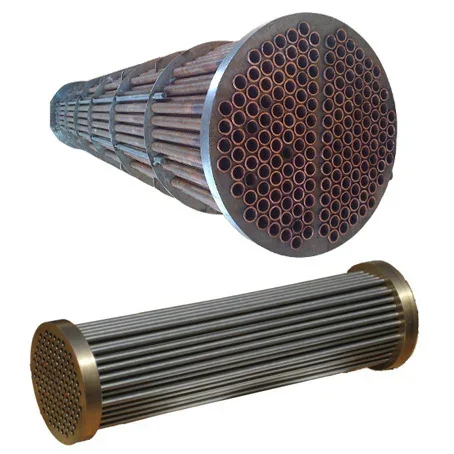
| Shell and tube, fixed head | T11, T22, T5 | Straight tubes |
| Shell and tube, U-tube | T11, T22, A209 T1 | U-bend, against your drawing |
| Fired heaters and furnaces | T5, T9, T22 | Straight tubes |
| High-temperature steam exchangers | T91 | Straight tubes |
| Chillers and cold-service coolers | A334 Gr 3, 7, 9 | Straight tubes |
Applications of Alloy Steel Heat Exchanger Tubes
- Oil refineries: Crude preheat trains, hydrotreater exchangers and fired heaters.
- Petrochemical plants: Reactor effluent coolers and process heaters.
- Power plants: Feedwater heaters, superheaters and condensers.
- Fertiliser plants: Ammonia and synthesis gas exchangers.
- Chemical plants: Reboilers and process coolers in hot, aggressive service.
- Oil and gas processing: Gas coolers and glycol exchangers.
- Marine and offshore: Oil coolers and engine heat recovery units.
- Pharmaceutical plants: Steam-heated utility exchangers outside the product-contact zone.
Why Choose Us as Your Alloy Steel Heat Exchanger Tubes Manufacturer in India?
With 20+ years of experience since 2005, We have the expertise to supply Alloy Steel Heat Exchanger Tubes in a wide range of grades, sizes, wall thicknesses, lengths, and finishes. We supply commonly required grades such as ASTM A213 T5, T9, T11, T22, T91, ASTM A209 T1, 16Mo3, and other grades as per applicable specifications and customer requirements. Our tubes are suitable for heat exchangers, boilers, condensers, pressure equipment, power plants, petrochemical plants, refineries, and other industrial applications.
Our production and supply capabilities support bulk requirements, replacement tubes, and project orders, with popular sizes available from ready stock, subject to availability. Tubes can be supplied with EN 10204 3.1 Material Test Certificates (MTC), inspection reports, chemical and mechanical test reports, dimensional inspection reports, hydrostatic test reports, and NDE documentation as required.
As an experienced Alloy Steel Heat Exchanger Tubes Supplier in India, we also provide appropriate packaging, export documentation, and shipment support for customers across international markets.
Countries We Export Alloy Steel Heat Exchanger Tubes To
We supply Alloy Steel Heat Exchanger Tubes to customers across major industrial markets worldwide. Our export network covers 100+ countries across the Middle East, Europe, North America, South America, Africa, and Asia-Pacific.
Middle East: Saudi Arabia, UAE, Qatar, Kuwait, Oman, Bahrain, and Iraq
Europe: Germany, United Kingdom, France, Italy, Netherlands, Spain, and Turkey
North America: USA and Canada
South America: Brazil and Mexico
Africa: South Africa, Nigeria, Egypt, Kenya, Ghana, and Tanzania
Asia-Pacific: Singapore, Malaysia, Indonesia, Thailand, South Korea, Japan, Australia, and Bangladesh
CIS & Central Asia: Kazakhstan and Uzbekistan
We support international orders with export documentation, material certificates, inspection reports, suitable packaging, and shipment coordination, helping ensure Alloy Steel Heat Exchanger Tubes reach customers safely and with the required documentation.