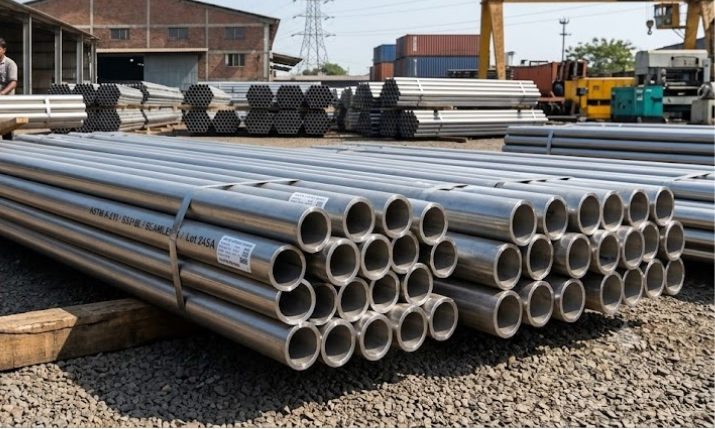
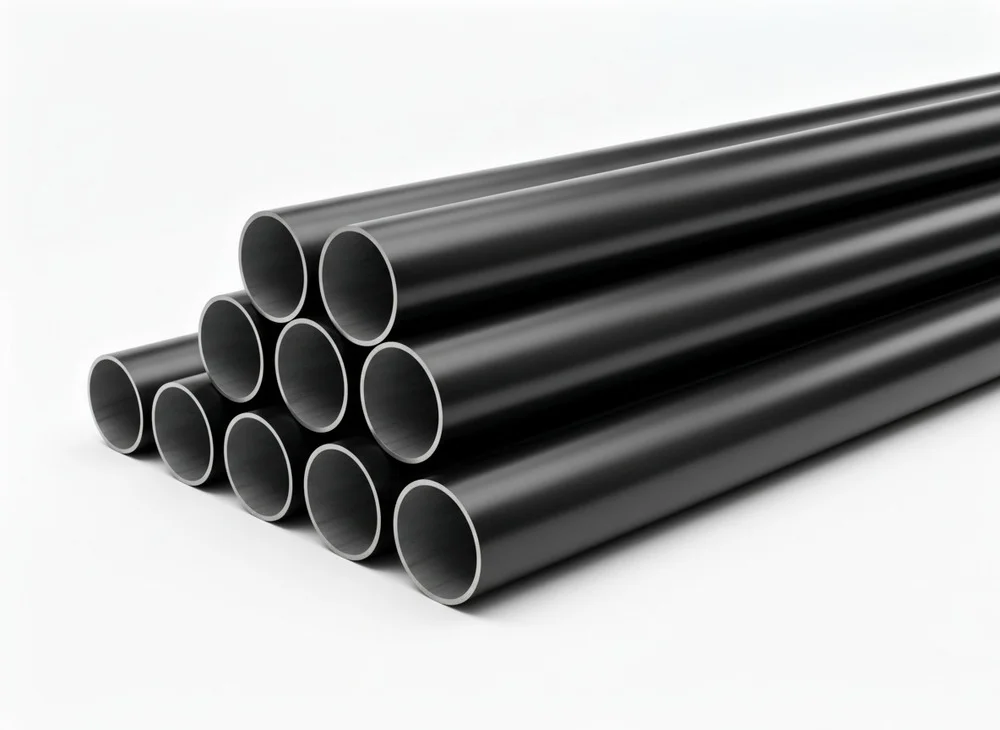
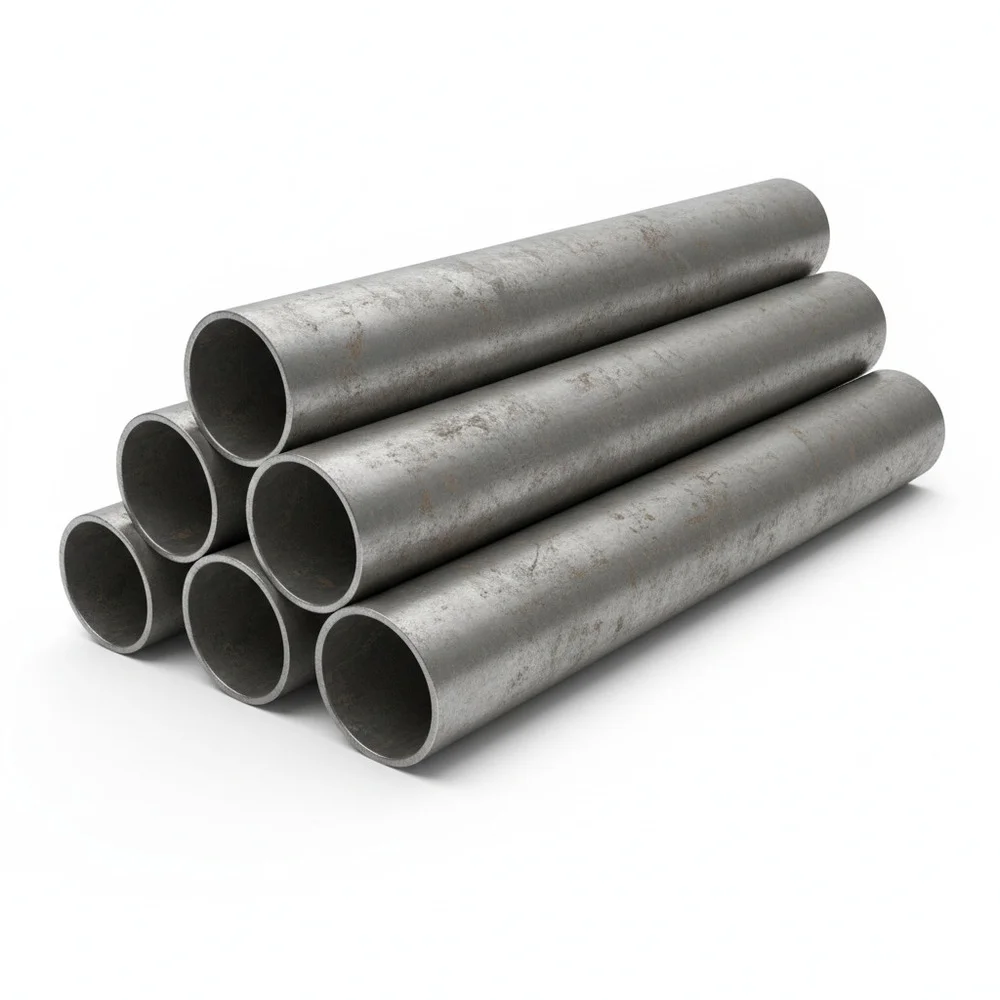
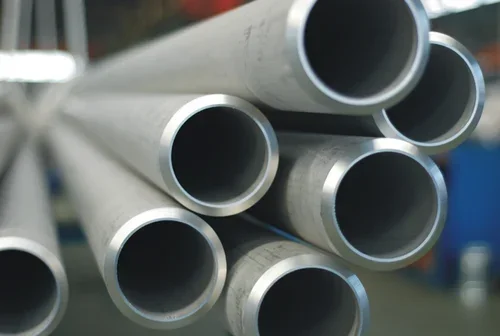
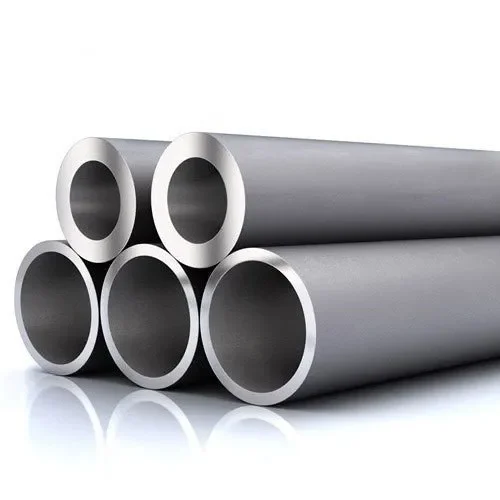
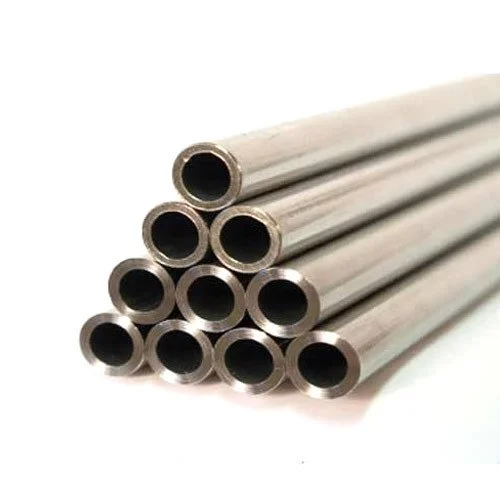
Stainless Steel 316 Electropolished Seamless Tubes Specification
The table sets out the working specification.
| Item |
Detail |
| Product | Stainless Steel 316 Electropolished Seamless Tubes |
| Grades | 316 (S31600), 316L (S31603), 316Ti (S31635) |
| Process | Seamless, cold drawn, solution annealed, then electropolished |
| Tube standards | ASTM A269 / ASME SA269, ASTM A213 / ASME SA213, ASTM A270, EN 10216-5 |
| General requirements | ASTM A1016 |
| Size reference | OD 6.35 to 76.2 mm in the tables, other sizes on request |
| Wall thickness | BWG gauge or mm, as per drawing |
| Length | Fixed or cut length |
| Ends | Plain, cut square, deburred and capped |
| Heat treatment | Solution annealed |
| Surface | Electropolished OD, ID or both, Ra to specification |
| Tests | Chemical analysis, tensile, hardness, flattening, flaring, hydrostatic or eddy current test; Ra measurement, bore inspection and ferroxyl test on request |
| Certificate | EN 10204 3.1 with every order, 3.2 on request |
| Inspection | Third-party inspection on request |
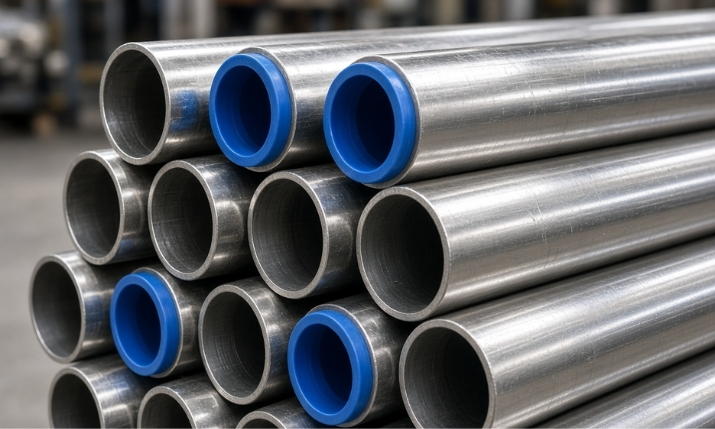
| Packing | End caps and protective sleeves |
Stainless Steel 316 Electropolished Seamless Tubes Standards and Specifications
Electropolished tube is bought to a tube standard for the steel and a finishing standard for the surface. The table links each one to its job.
| Standard |
Covers |
Applies to |
| ASTM A269 / ASME SA269 | Seamless and welded austenitic stainless steel tubing for general service | Process and instrumentation tube |
| ASTM A213 / ASME SA213 | Seamless austenitic stainless steel boiler, superheater and heat-exchanger tubes | Heat-exchange and pressure tube |
| ASTM A270 | Seamless and welded austenitic and ferritic/austenitic stainless steel sanitary tubing | Food and dairy sanitary tube |
| EN 10216-5 | Seamless stainless steel tubes for pressure purposes | European grades 1.4401, 1.4404, 1.4571 |
| ASTM A1016 | General requirements for stainless steel tubes | Tolerances and test rules |
| ASTM B912 | Passivation of stainless steels using electropolishing | Electropolished finish |
| ASTM A967 | Chemical passivation treatments for stainless steel parts | Passivation test methods |
| ASTM A380 | Cleaning, descaling and passivation of stainless steel parts | Cleanliness and ferroxyl test |
| ASME BPE | Bioprocessing equipment | Pharmaceutical and biotech surface finish |
| ISO 2037, DIN 11850 | Stainless steel tubes for the food industry | Food and beverage tube |
| ASME B46.1 | Surface texture, roughness, waviness and lay | Ra measurement |
| SEMI F19 | Surface condition of wetted stainless steel components | Semiconductor clean service |
| EN 10204 | Types of inspection documents | 3.1 and 3.2 certificates |
Stainless Steel 316 Electropolished Seamless Tubes Material and Grades
Pick the grade by the cleanliness level, welding method and temperature. The table lists the 316 grades with their UNS and EN numbers.
| Grade |
UNS |
EN number |
EN name |
Typical use |
| 316 | S31600 | 1.4401 | X5CrNiMo17-12-2 | Food, chemical, general clean service |
| 316L | S31603 | 1.4404 | X2CrNiMo17-12-2 | Pharmaceutical, biotech, welded lines |
| 316L (high Ni) | S31603 | 1.4435 | X2CrNiMo18-14-3 | Pharmaceutical and biotech systems |
| 316Ti | S31635 | 1.4571 | X6CrNiMoTi17-12-2 | Higher-temperature chemical service |
What Is the Difference Between Stainless Steel 316 Electropolished Seamless Tubes and Mechanically Polished Seamless Tubes?
The short answer: electropolishing removes metal and levels the surface, while mechanical polishing grinds and smears it. The electropolished tube is smoother at the microscopic level, cleaner and more corrosion resistant. Choose electropolished tube for pharmaceutical, biotech and sanitary lines, and mechanically polished tube where appearance matters but cleanliness does not.
| Point |
Electropolished 316 Tubes |
Mechanically Polished 316 Tubes |
| How the surface is made | Anodic dissolution in acid under current | Abrasive grinding and buffing |
| Surface at microscopic level | Smooth, with peaks removed | Scratched, with smeared metal and grit |
| Surface roughness (Ra) | Lowered further than the starting finish | Depends on grit used |
| Embedded iron and particles | Removed | Can remain |
| Chromium-rich oxide layer | Yes, improved | Not improved |
| Corrosion resistance | Higher | Lower |
| Cleanability (CIP / SIP) | Excellent | Fair |
| Bore (ID) finish | Possible on long, small-bore tubes | Hard to reach on small bores |
| Cost | Higher | Lower |
| Typical use | Pharmaceutical, biotech, sanitary lines | Decorative and general lines |
Stainless Steel 316 Electropolished Seamless Tubes Chemical Composition
Chemistry sets the corrosion resistance of the tube before electropolishing begins. The table shows the ASTM A269 and A213 limits, one element per row. Values are percentage by weight, maximum unless shown as a range or marked "min".
| Element |
316 (S31600) |
316L (S31603) |
316Ti (S31635) |
| Carbon (C) | 0.08 | 0.035 | 0.08 |
| Manganese (Mn) | 2.00 | 2.00 | 2.00 |
| Phosphorus (P) | 0.045 | 0.045 | 0.045 |
| Sulphur (S) | 0.030 | 0.030 | 0.030 |
| Silicon (Si) | 1.00 | 1.00 | 0.75 |
| Chromium (Cr) | 16.0–18.0 | 16.0–18.0 | 16.0–18.0 |
| Nickel (Ni) | 10.0–14.0 | 10.0–15.0 | 10.0–14.0 |
| Molybdenum (Mo) | 2.00–3.00 | 2.00–3.00 | 2.00–3.00 |
| Nitrogen (N) | — | — | 0.10 |
| Titanium (Ti) | — | — | 5×(C+N) min, 0.70 max |
Stainless Steel 316 Electropolished Seamless Tubes Mechanical Properties
Mechanical properties come from the base 316 tube, and electropolishing does not change them. The table gives minimum values and typical physical data, one property per row.
| Property |
316 |
316L |
316Ti |
| Tensile strength, MPa (ksi) | 515 (75) | 485 (70) | 515 (75) |
| Yield strength 0.2%, MPa (ksi) | 205 (30) | 170 (25) | 205 (30) |
| Elongation (%) | 35 | 35 | 35 |
| Hardness, max | 90 HRB (192 HBW) | 90 HRB (192 HBW) | 90 HRB (192 HBW) |
| Density (g/cm³) | 7.98 | 7.98 | 7.98 |
| Melting range (°C) | 1375–1400 | 1375–1400 | 1375–1400 |
| Thermal conductivity at 100 °C (W/m·K) | 16.3 | 16.3 | 16.3 |
| Modulus of elasticity (GPa) | 193 | 193 | 193 |
Stainless Steel 316 Electropolished Seamless Tubes Size and Weight Chart
Weight depends on OD and wall thickness. 316 stainless steel has a density of about 7.98 g/cm³, so we use this formula:
| OD (in) |
OD (mm) |
18 BWG, 1.24 mm (kg/m) |
16 BWG, 1.65 mm (kg/m) |
14 BWG, 2.11 mm (kg/m) |
12 BWG, 2.77 mm (kg/m) |
| 1/4" | 6.35 | 0.159 | 0.194 | — | — |
| 3/8" | 9.53 | 0.258 | 0.326 | 0.393 | — |
| 1/2" | 12.70 | 0.356 | 0.457 | 0.560 | 0.690 |
| 3/4" | 19.05 | 0.554 | 0.720 | 0.896 | 1.131 |
| 1" | 25.40 | 0.751 | 0.982 | 1.232 | 1.572 |
| 1-1/2" | 38.10 | 1.146 | 1.508 | 1.904 | 2.453 |
| 2" | 50.80 | 1.541 | 2.033 | 2.576 | 3.335 |
| 2-1/2" | 63.50 | 1.935 | 2.558 | 3.247 | 4.217 |
| 3" | 76.20 | 2.330 | 3.084 | 3.919 | 5.099 |
Available Sizes, Dimensions and Tolerances
Stainless Steel 316 Electropolished Seamless Tubes are ordered by OD and wall thickness, with the wall given in BWG gauge or in mm. Instrumentation tube starts at 6.35 mm OD, and process tube runs up to 76.2 mm OD in common walls. Other ODs, metric walls and lengths can be quoted on request. A higher BWG number means a thinner wall.
| BWG |
Wall (in) |
Wall (mm) |
| 12 | 0.109 | 2.77 |
| 14 | 0.083 | 2.11 |
| 16 | 0.065 | 1.65 |
| 18 | 0.049 | 1.24 |
| 20 | 0.035 | 0.89 |
Common OD and wall pairs for clean process tube are 1/2 in × 1.65 mm, 3/4 in × 1.65 mm, 1 in × 1.65 mm, 1-1/2 in × 1.65 mm, 2 in × 1.65 mm, 2-1/2 in × 1.65 mm and 3 in × 1.65 mm, with 2.11 mm on request for pressure or higher corrosion allowance. Tolerances on OD, wall and length follow ASTM A269 or A213 together with ASTM A1016, and electropolishing removes a thin surface layer, so quote the final dimensions you need.
Common Materials in Stainless Steel 316 Electropolished Seamless Tubes
Selecting the right stainless steel grade depends on the operating temperature, welding requirements, and cleanliness standards of the application. Different 316-series materials offer specific properties for pharmaceutical, chemical, and hygienic processing systems.
316 (S31600, 1.4401): Contains chromium, nickel, and molybdenum to provide corrosion resistance in chloride-containing environments.
316L (S31603, 1.4404): Its low carbon content makes it suitable for welded equipment and pharmaceutical processing lines.
316L (1.4435): Features higher nickel and molybdenum content, making it suitable for applications requiring controlled material composition.
316Ti (S31635, 1.4571): Titanium-stabilised stainless steel intended for chemical processing and elevated-temperature service.
Dual-Certified 316/316L: Meets the requirements of both grades, offering flexibility for clean-process piping systems.
Stainless Steel 316 Electropolished Seamless Tubes Suppliers offer these material options in different diameters, wall thicknesses, lengths, and electropolished finishes to meet specific project requirements.
Stainless Steel 316 Electropolished Seamless Tubes We Manufacture and Supply
We make Stainless Steel 316 Electropolished Seamless Tubes for the jobs below. The finish and wall follow the product, the cleaning method and the code.
| Line |
Typical grade |
Typical finish |
| Purified water and clean steam utilities | 316L | ID and OD electropolished |
| Bioreactor, buffer and media lines | 316L (1.4435) | ID and OD electropolished |
| Pharmaceutical process and CIP lines | 316L | ID electropolished |
| Food, dairy and beverage product lines | 316, 316L | ID electropolished |
| Semiconductor process gas and chemical lines | 316L | ID and OD electropolished |
| Instrumentation and sampling lines | 316L | ID electropolished, small bore |
| Heated chemical process lines | 316Ti | ID and OD electropolished |
Applications of Stainless Steel 316 Electropolished Seamless Tubes
- Pharmaceutical industry: Purified water, clean steam and process lines.
- Biotech plants: Buffer, media, bioreactor and clean-in-place lines.
- Food and dairy processing: Product and CIP lines that need a cleanable surface.
- Beverage and brewing: Wort, beer, juice and soft-drink lines.
- Semiconductor plants: Process gas and chemical delivery lines.
- Cosmetics and personal care: Product transfer and mixing lines.
- Chemical processing: Clean, chloride-bearing and mild-acid lines.
- Laboratory and analytical equipment: Sample lines and instrument tubing.
- Marine and coastal plants: Instrumentation lines exposed to salt air.
- Medical equipment manufacturing: Clean fluid and gas lines.
Why Choose Us as Your Stainless Steel 316 Electropolished Seamless Tubes Manufacturer in India?
With experience in the pipes and tubes industry since 2005, we understand the material quality, surface finish, and dimensional accuracy required for Stainless Steel 316 Electropolished Seamless Tubes. Our manufacturing and export capabilities support orders of up to 100 metric tons per month, with supplies reaching 85+ countries worldwide.
We offer Grades 316, 316L, 316L (1.4435), and 316Ti in different outside diameters, wall thicknesses, and lengths, with ID and OD electropolished finishes to meet project specifications.
Our quality credentials include ISO 9001:2015, ISO 14001:2015, ISO 45001:2018, PED 2014/68/EU, and TÜV approvals. Every order comes with an EN 10204 3.1 material test certificate, while 3.2 certification and third-party inspection can be arranged on request. We also support material traceability, dimensional checks, export documentation, and protective packaging to help maintain tube quality during international transportation.
Countries We Export Stainless Steel 316 Electropolished Seamless Tubes To
We supply Stainless Steel 316 Electropolished Seamless Tubes from India to 85+ countries worldwide, serving customers in pharmaceutical, chemical, food processing, marine, and other industrial sectors.
Middle East: UAE, Saudi Arabia, Qatar, Oman, Kuwait, and Bahrain.
Europe: Germany, Italy, United Kingdom, France, Netherlands, Spain, and Belgium.
Asia-Pacific: Singapore, Malaysia, Thailand, Indonesia, Vietnam, Japan, South Korea, and Australia.
North and South America: USA, Canada, Mexico, and Brazil.
Africa: South Africa, Egypt, Nigeria, and Kenya.
International orders are supported with EN 10204 3.1 material test certificates, while 3.2 certification and third-party inspection can be arranged on request. Export packaging and shipping documentation are coordinated according to destination and order requirements.