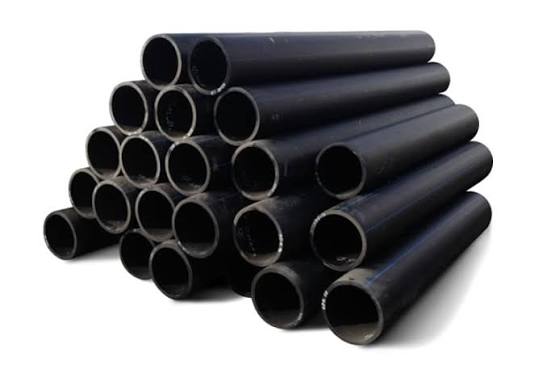
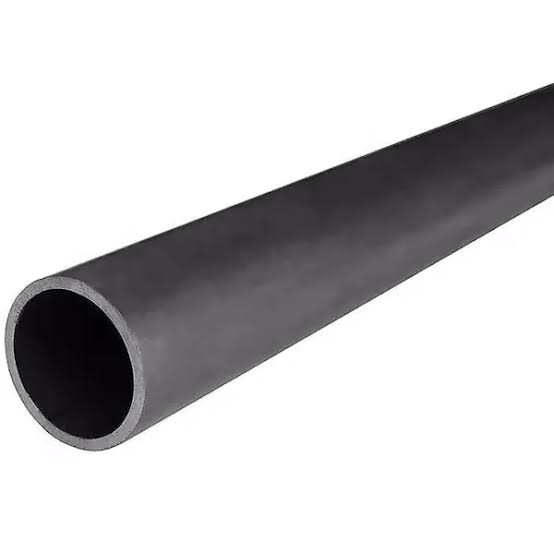
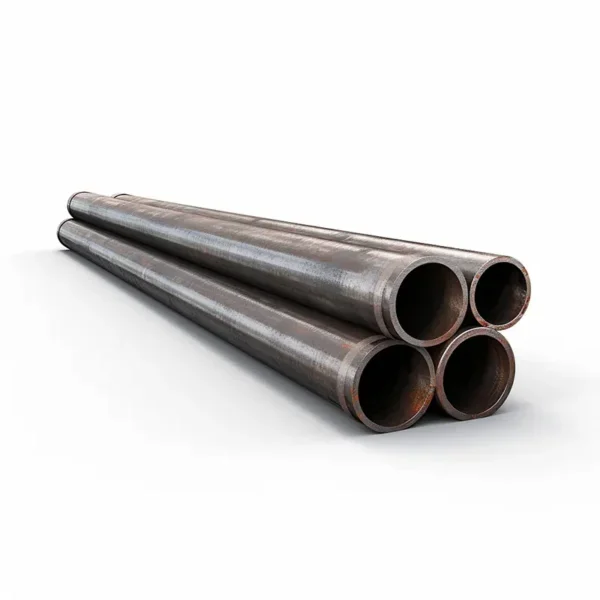
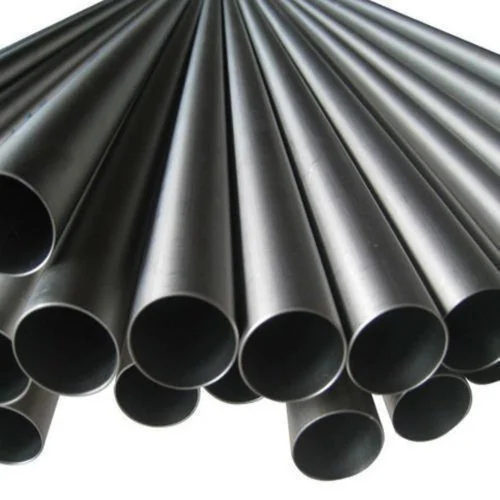
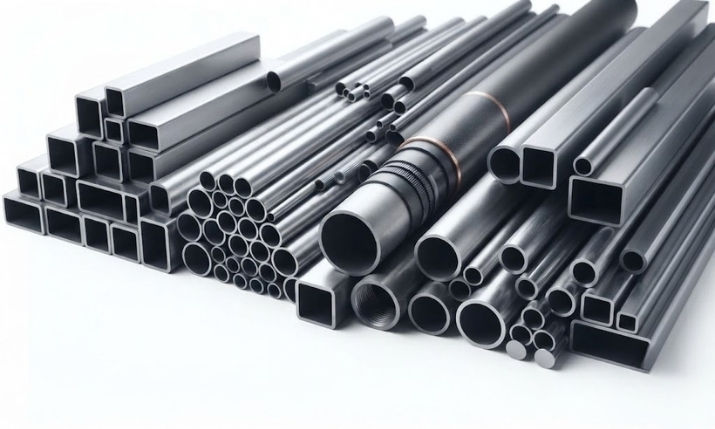
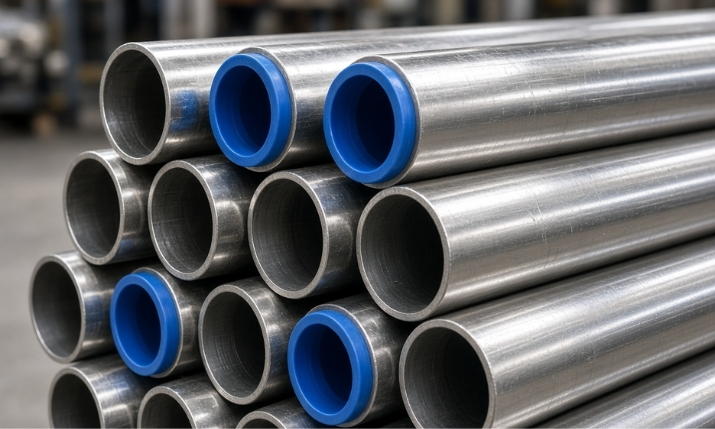
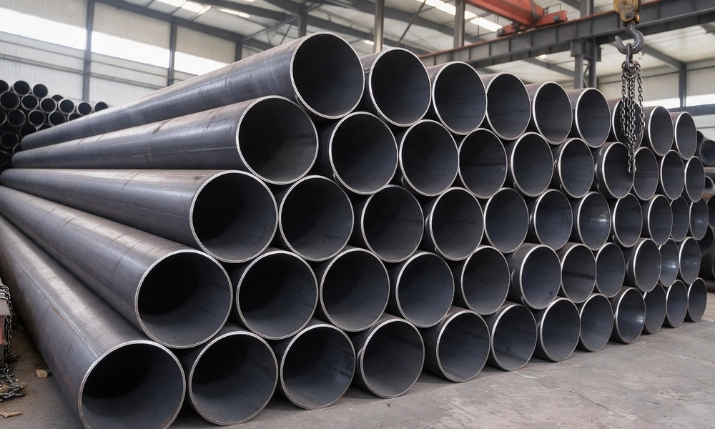
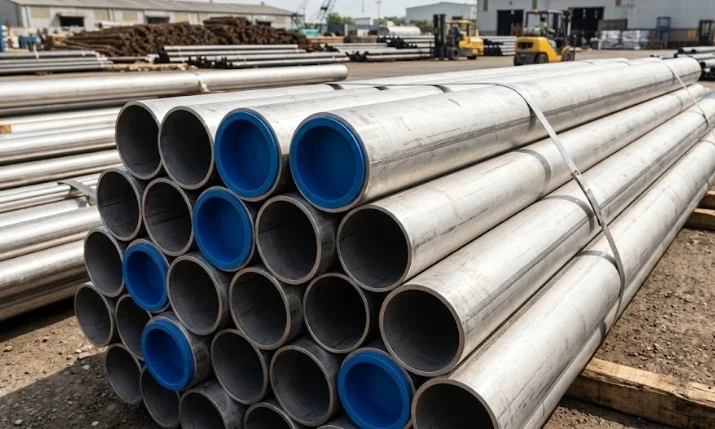
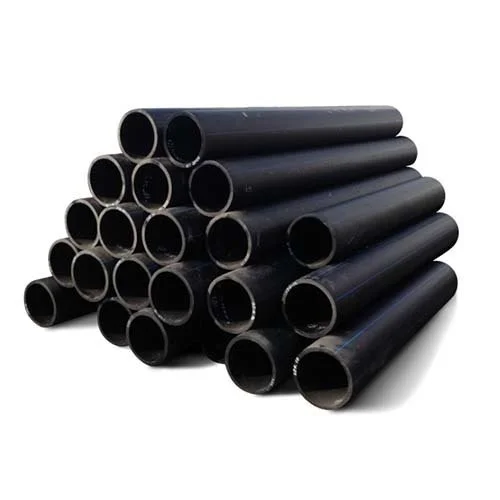
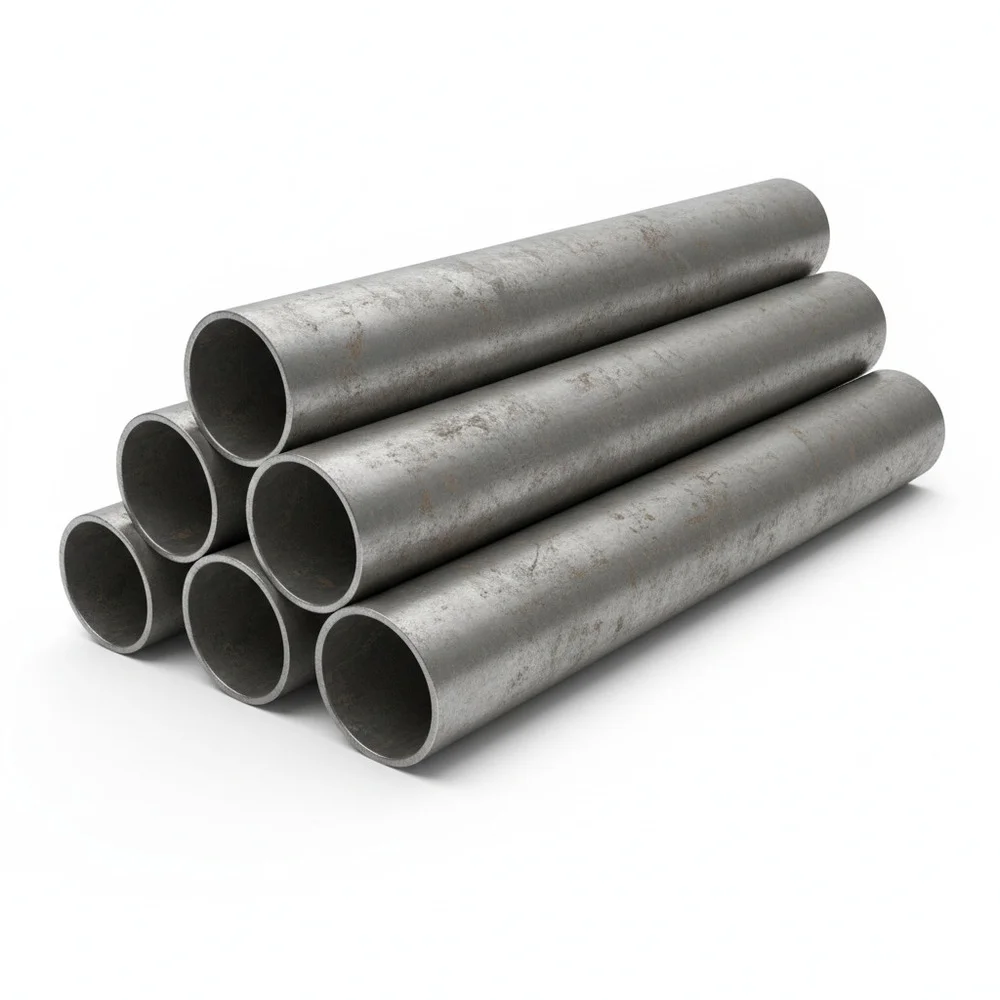
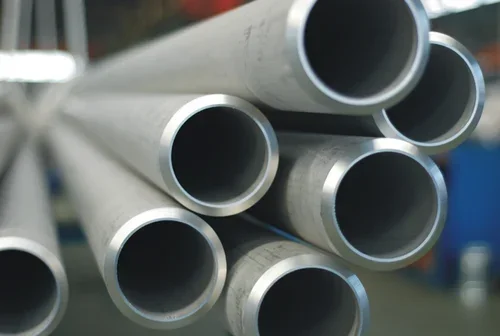
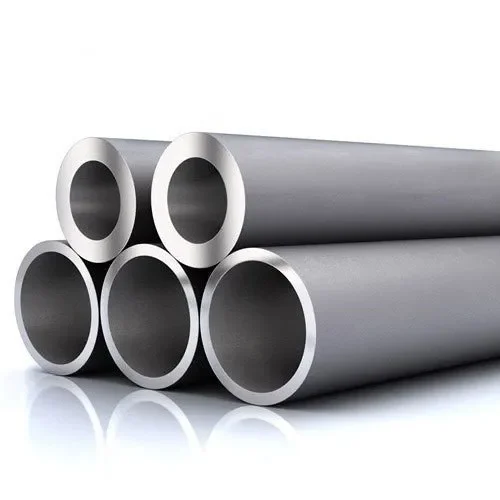
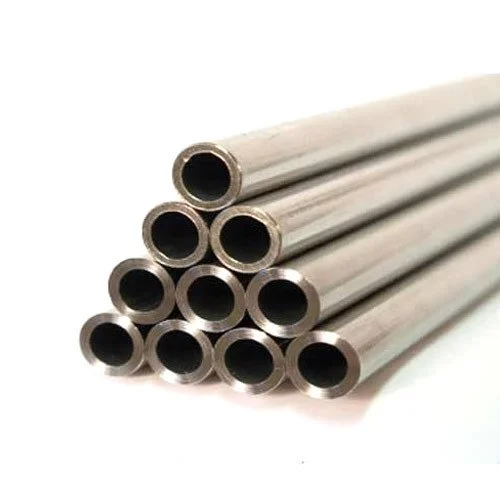
ASTM A106 Grade A Carbon Steel Pipes Specifications
| Parameter |
Details |
| Material | ASTM A106 Grade A / ASME SA106 Grade A / UNS K02501 |
| Product form | Seamless, hot finished or cold drawn |
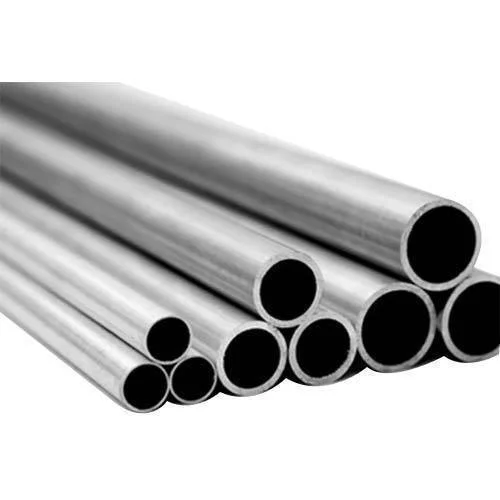
| Pipe size | ⅛" NPS to 24" NPS, larger on request |
| Schedules | Sch 40, 80, 160, STD, XS, XXS and others |
| Wall thickness | 2.77 mm to 50 mm |
| Length | Single random 4.8 to 6.7 m, double random from 10.7 m, cut length on request |
| Ends | Plain, beveled, threaded |
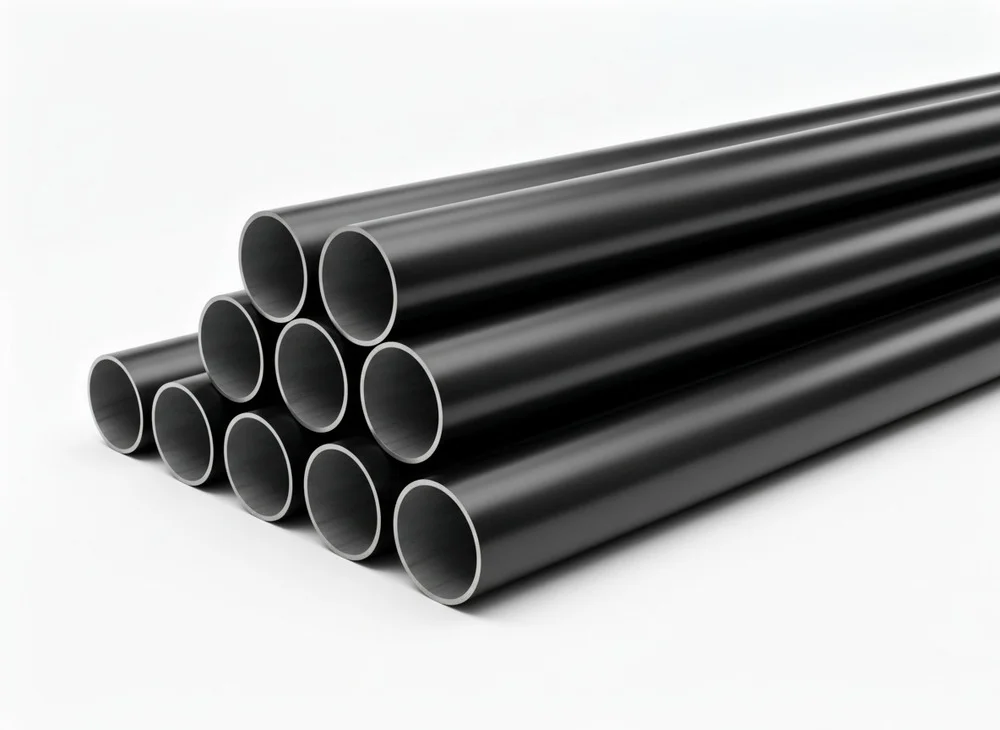
| Surface | Black oiled, varnished, primed, galvanised |
| Tests | Hydrostatic, tensile, flattening or bend, chemical analysis |
| Extra tests on request | Charpy impact, NDE, hardness |
| Documents | EN 10204 3.1 mill certificate, inspection reports |
ASTM A106 Grade A Carbon Steel Pipes Standards
| Standard |
What it covers |
| ASTM A106 / A106M | Seamless carbon steel pipe for high-temperature service |
| ASME SA106 | The ASME version of A106 for pressure piping |
| ASTM A530 / A530M | General requirements and tolerances for carbon and alloy steel pipe |
| ASME B36.10M | Dimensions of welded and seamless steel pipe |
| ASME B31.1 | Power piping |
| ASME B31.3 | Process piping |
| ASME B16.25 | Butt-welding end preparation |
| ASME B1.20.1 | Pipe threads |
| EN 10216-2 | European seamless pressure tubes, nearest equivalent |
Material and Grades of ASTM A106 Grade A Carbon Steel Pipes
ASTM A106 has three grades: A, B and C. They differ mainly in carbon and manganese, and that decides strength and workability.
Grade A: Carbon up to 0.25%. It is the softest and most ductile, with a minimum tensile strength of 330 MPa. It is chosen for bending, close coiling and general hot service.
Grade B: Carbon up to 0.30%. It is the most widely used grade, with a minimum tensile strength of 415 MPa. It suits most steam and process piping.
Grade C: Carbon up to 0.35%. It is the strongest, with a minimum tensile strength of 485 MPa, but the least ductile, and is used where strength is the priority.
Hot finished A106 pipe does not require a final heat treatment. Cold drawn pipe must be heat treated after cold drawing, at 650°C or higher, to restore ductility.
ASTM A106 Grade A vs Grade B vs Grade C: Which One Do You Need?
| Point |
Grade A |
Grade B |
Grade C |
| Carbon (max) | 0.25% | 0.30% | 0.35% |
| Tensile strength (min) | 330 MPa | 415 MPa | 485 MPa |
| Yield strength (min) | 205 MPa | 240 MPa | 275 MPa |
| Ductility | Highest | Moderate | Lowest |
| Bending and coiling | Best | Good | Limited |
| Weldability | Easiest | Good | Needs more care |
| Typical use | Bent, coiled and general hot lines | Standard steam and process piping | High-strength piping |
Choose Grade A for lines that will be bent or coiled, for lighter duty or when easy welding matters. Choose Grade B for standard process piping, since it is the usual specification on most projects. Choose Grade C only when the design needs its higher strength.
ASTM A106 Grade A Carbon Steel Pipes Chemical Composition
| Element |
Content (%) |
| Carbon (C) | 0.25 max |
| Manganese (Mn) | 0.27 – 0.93 |
| Phosphorus (P) | 0.035 max |
| Sulphur (S) | 0.035 max |
| Silicon (Si) | 0.10 min |
| Chromium (Cr) | 0.40 max |
| Copper (Cu) | 0.40 max |
| Molybdenum (Mo) | 0.15 max |
| Nickel (Ni) | 0.40 max |
| Vanadium (V) | 0.08 max |
| Iron (Fe) | Balance |
The total of copper, nickel, chromium, molybdenum and vanadium must not exceed 1.00%.
ASTM A106 Grade A Carbon Steel Pipes Mechanical Properties
| Property |
Value |
| Tensile strength | 330 MPa min (48 ksi) |
| Yield strength | 205 MPa min (30 ksi) |
| Elongation, longitudinal | 35% min (for walls 5/16" and above) |
| Elongation, transverse | 25% min (for walls 5/16" and above) |
| Density | About 7.85 g/cm³ |
| Elastic modulus | About 200 GPa |
| Melting range | About 1450 – 1510°C |
| Magnetic response | Magnetic |
ASTM A106 Grade A Carbon Steel Pipes Size and Weight Chart
Theoretical weight is (OD − Wall) × Wall × 0.02466, giving kg per metre with dimensions in mm. Real weight varies slightly within mill tolerance.
| NPS |
OD (mm) |
Sch 40 wall (mm) |
Sch 40 kg/m |
Sch 80 wall (mm) |
Sch 80 kg/m |
| ½" | 21.3 | 2.77 | 1.27 | 3.73 | 1.62 |
| ¾" | 26.7 | 2.87 | 1.69 | 3.91 | 2.20 |
| 1" | 33.4 | 3.38 | 2.50 | 4.55 | 3.24 |
| 1½" | 48.3 | 3.68 | 4.05 | 5.08 | 5.41 |
| 2" | 60.3 | 3.91 | 5.44 | 5.54 | 7.48 |
| 3" | 88.9 | 5.49 | 11.29 | 7.62 | 15.27 |
| 4" | 114.3 | 6.02 | 16.07 | 8.56 | 22.32 |
| 6" | 168.3 | 7.11 | 28.26 | 10.97 | 42.56 |
| 8" | 219.1 | 8.18 | 42.55 | 12.70 | 64.64 |
| 10" | 273.1 | 9.27 | 60.31 | 15.09 | 96.01 |
| 12" | 323.9 | 10.31 | 79.73 | 17.48 | 132.09 |
ASTM A106 Grade A Carbon Steel Pipes Sizes, Dimensions and Schedules
A pipe is named by its nominal size, but its wall depends on the schedule. Higher schedule numbers mean thicker walls, more pressure capacity and more weight. The table shows how wall thickness changes across schedules at two common sizes. DN is the metric size for each NPS.
| Schedule |
Wall at 2" / DN 50 (mm) |
Wall at 6" / DN 150 (mm) |
Typical use |
| Sch 40 / STD | 3.91 | 7.11 | Standard process and utility piping |
| Sch 80 / XS | 5.54 | 10.97 | Steam and higher-pressure lines |
| Sch 160 | 8.74 | 18.26 | High pressure |
| XXS | 11.07 | 21.95 | Very high pressure and temperature |
Typical outside diameter tolerance under ASTM A530 is below.
| Pipe size (NPS) |
OD tolerance (mm) |
| ⅛" to 1½" | +0.4 / −0.8 |
| Over 1½" to 4" | +0.8 / −0.8 |
| Over 4" to 8" | +1.6 / −0.8 |
| Over 8" to 18" | +2.4 / −0.8 |
| Over 18" to 24" | +3.2 / −0.8 |
Wall thickness is held to −12.5% under the standard. Pipe is supplied in single random or double random lengths, and we cut and bevel to your drawing.
Testing and Inspection of ASTM A106 Grade A Carbon Steel Pipes
| Test |
Purpose |
| Hydrostatic test | Each length is pressure tested to the A106 requirement to confirm it is leak tight |
| Tensile test | Checks tensile strength, yield strength and elongation |
| Flattening or bend test | Shows the pipe deforms without cracking, as the standard requires for the size |
| Chemical analysis | Confirms carbon, manganese, phosphorus, sulphur and residuals are within limits |
| Dimensional check | Measures OD, wall, length, straightness and ovality |
| Visual inspection | Checks surface for scale, laps, seams and dents |
| NDE | Ultrasonic or eddy current, on request |
| Charpy impact test | For low-temperature service, on request |
ASTM A106 Grade A Carbon Steel Pipes Manufacturers and Suppliers in India
A106 Grade A is often confused with similar grades, and a purchase order may use any of several names. Our team checks every enquiry against the table below before quoting. We supply direct, so as an ASTM A106 Grade A Carbon Steel Pipes Manufacturer and ASTM A106 Grade A Carbon Steel Pipes Supplier in India, you work with one team from grade selection to dispatch. Buyers comparing ASTM A106 Grade A Carbon Steel Pipes Suppliers will find the same clarity on grade, schedule and certificates in every quote.
| System |
Designation |
| ASTM | A106 Grade A |
| ASME | SA106 Grade A |
| UNS | K02501 |
| Similar ASTM grade | A53 Grade A (seamless) |
| Similar API grade | API 5L Grade A |
| DIN (approximate) | St 35.8 |
| EN (nearest) | P235GH |
The equivalents are close but not identical, and your design code and specification decide what is acceptable.
Coatings and Finishes of ASTM A106 Grade A Carbon Steel Pipes
| Finish |
What it is |
Where it is used |
| Black / mill finish | As-rolled surface with a light oil coat | Pipe that will be painted or coated on site |
| Varnish coating | Thin protective lacquer | Storage and shipping protection |
| Red oxide primer | Corrosion-protective primer coat | Pipe that will be painted later |
| Epoxy coating | Epoxy paint system for stronger protection | Buried or wet environments, on request |
| Hot-dip galvanised | Zinc coating applied to the pipe | Water, outdoor and fire services, on request |
Common Materials Supplied with ASTM A106 Grade A Carbon Steel Pipes
A complete piping system may need materials for standard operations, extreme temperatures, or long-distance transportation. Our product range covers several carbon steel and alloy steel options, along with the components needed to connect pipe sections and build industrial pipelines. This allows us to support different project requirements through one supply network.
ASTM A106 Grade B and C: Carbon steel pipe grades used when the design calls for higher tensile strength than Grade A.
ASTM A53 Grade A and B: Common choices for utility piping, general industrial use, and certain structural applications.
API 5L Grade B to X70: Pipeline grades used to transport oil, natural gas, and other fluids over long distances.
ASTM A333 Grade 6: Designed for low-temperature service where resistance to brittle fracture is important.
ASTM A335 P11, P22, and P91: Heat-resistant alloy steel pipes used in boilers, power stations, and high-temperature process lines.
Carbon Steel Fittings and Flanges: Help connect pipe sections, branch off pipelines, reduce pipe diameter, and join equipment.
As carbon steel pipe suppliers, we help customers source suitable materials for different operating conditions. The final selection depends on temperature, pressure, fluid type, and the technical specifications of the project.
Applications of ASTM A106 Grade A Carbon Steel Pipes
- Power Generation: Boiler feed water, steam and condensate lines.
- Oil and Gas Refining: Process piping, utility lines and refinery services below 425°C.
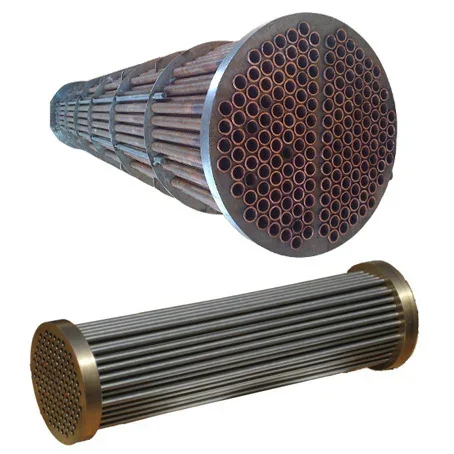
- Petrochemical: Plant piping and heat-exchanger connections.
- Chemical Processing: Process and utility lines that do not need stainless steel.
- Boilers and Heat Exchangers: Bent and coiled sections where ductility matters.
- Compressed Air and Hydraulics: Plant utility and high-pressure lines.
- Shipbuilding: Engine room and auxiliary piping.
- Industrial Plants: Steam tracing, cooling water and general high-temperature service.
Why Choose Us as Your ASTM A106 Grade A Carbon Steel Pipe Manufacturer in India?
With 20+ years of experience since 2005, we understand the material requirements of industrial piping systems. Our ISO 9001:2015 and TÜV certifications reflect our focus on quality, manufacturing standards, and dependable supply. We handle orders for refineries, power plants, boiler systems, and other industries that use seamless carbon steel pipes.
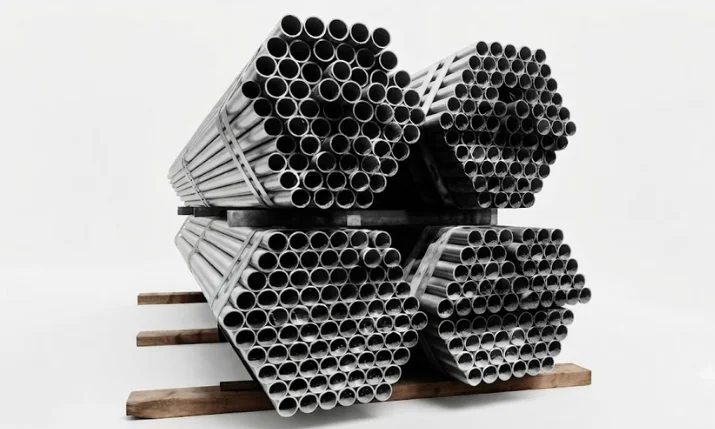
Our production and supply capacity of up to 100 tons per month allows us to manage bulk orders and regular project requirements. We supply ASTM A106 Grade A pipes in sizes from ⅛ inch to 24 inches, with different schedules and wall thicknesses to suit specific designs. Plain ends, bevelled ends, and protective coatings are available to meet installation and storage needs.
We pay attention to material composition, dimensions, and traceability throughout the supply process. Every order includes an EN 10204 3.1 material test certificate, while additional testing and third-party inspections can be arranged on request. As an ASTM A106 Grade A carbon steel pipe manufacturer and supplier in India, we also export to 85+ countries, supporting international orders with suitable packaging and export documentation.
Countries We Export ASTM A106 Grade A Carbon Steel Pipes To
As an ASTM A106 Grade A Carbon Steel Pipes Manufacturer and Supplier in India, we export to 85+ countries, serving oil and gas, refining, power generation, petrochemical and chemical industries.
Middle East: UAE, Saudi Arabia, Qatar, Oman, Kuwait and Bahrain.
Europe: Germany, Italy, United Kingdom, Netherlands, France, Spain, Belgium and Poland.
Asia-Pacific: Singapore, Malaysia, Indonesia, Thailand, Vietnam, South Korea, Japan and Australia.
Americas: USA, Canada, Mexico, Brazil and Chile.
Africa: South Africa, Nigeria, Egypt and Kenya.
South Asia: Nepal, Bangladesh and Sri Lanka.
EN 10204 3.1 mill test certificates come with every order. EN 10204 3.2 certification and third-party inspection can be arranged on request. We pack each shipment to suit its route and destination, and we prepare the shipping and export documents your project requires, so international orders move cleanly from our plant to your site.