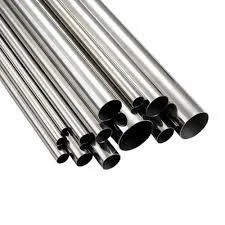
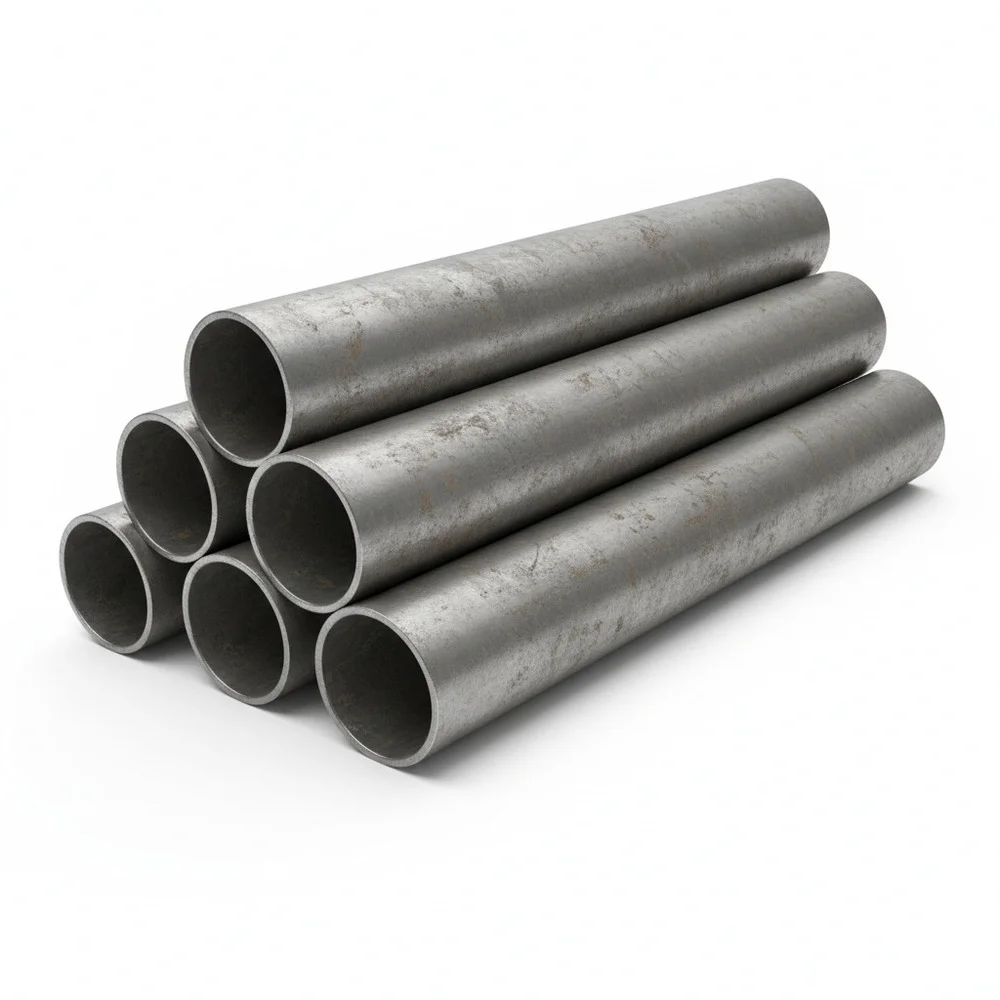
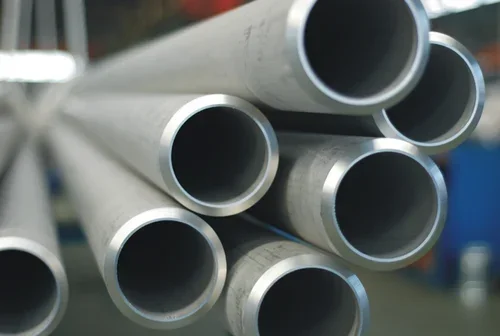
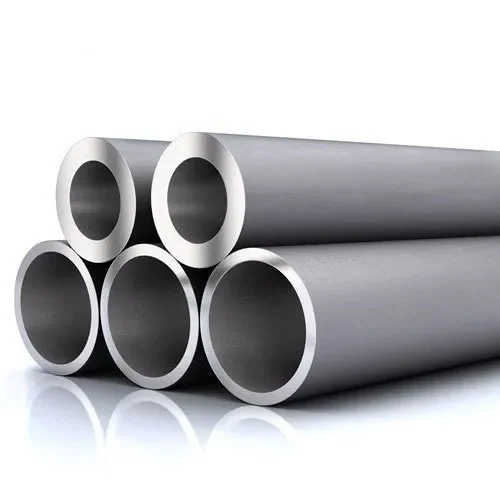
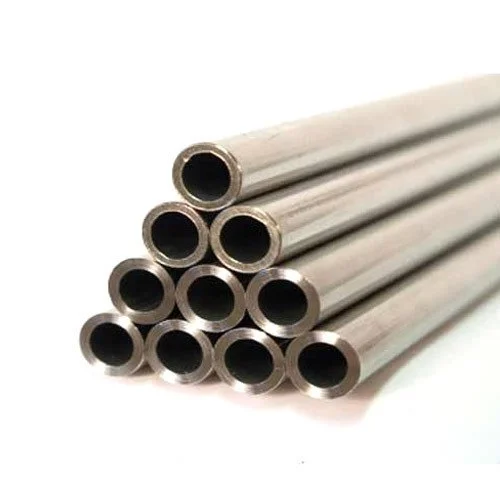
Hastelloy Pipes Specification
| Item |
Detail |
| Product | Hastelloy Pipes |
| Grades | C276, C22, C2000, C4, B2, B3, G30, X |
| Process | Seamless (hot finished or cold drawn) or welded (TIG or plasma arc), then solution annealed and quenched |
| Pipe standards | ASTM B622 / ASME SB-622 (seamless), ASTM B619 / ASME SB-619 (welded) |
| General requirements | ASTM B829 (seamless), ASTM B775 (welded) |
| Dimensions | ASME B36.19M (Sch 5S, 10S, 40S, 80S), ASME B36.10M (Sch 160 and other walls) |
| Size reference | NPS 1/2 to 12 in the tables, other sizes on request |
| Length | Single random, double random or cut length |
| Ends | Plain or bevelled (ASME B16.25) |
| Surface | Pickled |
| Tests | Chemical analysis, tensile, flattening, hydrostatic or non-destructive test; weld tension test on welded pipe |
| Certificate | EN 10204 3.1 with every order, 3.2 on request |
| Inspection | Third-party inspection on request |
Hastelloy Pipes Standards and Specifications
Hastelloy pipe is bought to a pipe standard, with matching fitting and flange standards and sour-service rules behind it. The table links each one to its job.
| Standard |
Scope |
Where it applies |
| ASTM B622 / ASME SB-622 | Seamless nickel and nickel-cobalt alloy pipe and tube | Seamless Hastelloy pipe |
| ASTM B619 / ASME SB-619 | Welded nickel and nickel-cobalt alloy pipe | Welded Hastelloy pipe |
| ASTM B626 | Welded nickel and nickel-cobalt alloy tube | Welded Hastelloy tube |
| ASTM B829 | General requirements for seamless nickel and nickel alloy pipe and tube | Tolerances and test rules for seamless pipe |
| ASTM B775 | General requirements for welded nickel and nickel alloy pipe | Tolerances and test rules for welded pipe |
| ASTM B366 | Factory-made wrought nickel and nickel alloy fittings | Matching butt-weld fittings |
| ASTM B564 | Nickel alloy forgings | Matching flanges and forged fittings |
| NACE MR0175 / ISO 15156 | Materials for sour service | Oil and gas projects |
| ASME B36.19M and B36.10M | Pipe dimensions and weights | OD and wall reference |
| ASME B16.25 | Butt-welding ends | Bevel angle and root face |
| EN 10204 | Types of inspection documents | 3.1 and 3.2 certificates |
Hastelloy Pipes Material and Grades
Pick the grade by the chemical, its concentration and the temperature. The table lists the common grades with their UNS and EN numbers.
| Grade |
UNS |
EN number |
Family |
Standard |
Typical use |
| Hastelloy C276 | N10276 | 2.4819 | Ni-Mo-Cr | B622, B619 | Mixed acids, scrubbers, wet chlorine |
| Hastelloy C22 | N06022 | 2.4602 | Ni-Cr-Mo | B622, B619 | Oxidising and reducing chemicals |
| Hastelloy C2000 | N06200 | 2.4675 | Ni-Cr-Mo-Cu | B622, B619 | Sulphuric acid, varied process streams |
| Hastelloy C4 | N06455 | 2.4610 | Ni-Cr-Mo | B622, B619 | Heat-cycled chemical service |
| Hastelloy B2 | N10665 | 2.4617 | Ni-Mo | B622, B619 | Hydrochloric acid |
| Hastelloy B3 | N10675 | 2.4600 | Ni-Mo | B622, B619 | Hydrochloric acid, better thermal stability |
| Hastelloy G30 | N06030 | 2.4603 | Ni-Cr-Fe-Mo | B622, B619 | Phosphoric acid, acid mixes |
| Hastelloy X | N06002 | 2.4665 | Ni-Cr-Fe-Mo | B622, B619 | Furnace parts, oxidising heat |
What Is the Difference Between Hastelloy Pipes and Inconel Pipes?
The short answer: Hastelloy is built for corrosion in strong acids and chlorides, while Inconel is built for strength and oxidation resistance at high temperature. Use Hastelloy for chemical process lines and Inconel for hot gas, heat treatment and high-temperature structural duty.
| Point |
Hastelloy Pipes |
Inconel Pipes |
| Alloy base | Nickel-molybdenum-chromium | Nickel-chromium, with iron or molybdenum |
| Main strength | Corrosion in acids and chlorides | Strength and oxidation resistance at heat |
| Hydrochloric acid | B2 and B3 are made for it | Limited |
| Wet chlorine and hypochlorite | Excellent (C276, C22) | Limited |
| High-temperature oxidation | Good; Hastelloy X is the heat grade | Excellent (600, 601, 690) |
| Seawater and sour gas | Excellent | Excellent (625) |
| Cost | Highest | High |
| Common standards | ASTM B622, B619 | ASTM B167, B444, B517 |
| Typical use | Chemical plants, scrubbers, pulp and paper | Furnaces, power, heat treatment |
Hastelloy Pipes Chemical Composition
Chemistry gives each grade its resistance. The tables show the ASTM B622 and B619 limits, one element per row. Values are percentage by weight, maximum unless shown as a range or marked "min".
C-series
| Element |
C276 |
C22 |
C2000 |
C4 |
| Nickel (Ni) | Balance | Balance | Balance | Balance |
| Chromium (Cr) | 14.5–16.5 | 20.0–22.5 | 22.0–24.0 | 14.0–18.0 |
| Molybdenum (Mo) | 15.0–17.0 | 12.5–14.5 | 15.0–17.0 | 14.0–17.0 |
| Iron (Fe) | 4.0–7.0 | 2.0–6.0 | 3.0 | 3.0 |
| Tungsten (W) | 3.0–4.5 | 2.5–3.5 | — | — |
| Cobalt (Co) | 2.5 | 2.5 | 2.0 | 2.0 |
| Copper (Cu) | — | — | 1.3–1.9 | — |
| Vanadium (V) | 0.35 | 0.35 | — | — |
| Titanium (Ti) | — | — | — | 0.70 |
| Aluminium (Al) | — | — | 0.50 | — |
| Carbon (C) | 0.01 | 0.015 | 0.010 | 0.015 |
| Manganese (Mn) | 1.0 | 0.50 | 0.50 | 1.0 |
| Silicon (Si) | 0.08 | 0.08 | 0.08 | 0.08 |
| Phosphorus (P) | 0.04 | 0.02 | 0.025 | 0.04 |
| Sulphur (S) | 0.03 | 0.02 | 0.010 | 0.03 |
B-series, G30 and X
| Element |
B2 |
B3 |
G30 |
X |
| Nickel (Ni) | Balance | 65.0 min | Balance | Balance |
| Chromium (Cr) | 1.0 | 1.0–3.0 | 28.0–31.5 | 20.5–23.0 |
| Molybdenum (Mo) | 26.0–30.0 | 27.0–32.0 | 4.0–6.0 | 8.0–10.0 |
| Iron (Fe) | 2.0 | 1.0–3.0 | 13.0–17.0 | 17.0–20.0 |
| Cobalt (Co) | 1.0 | 3.0 | 5.0 | 0.50–2.50 |
| Tungsten (W) | — | 3.0 | 1.5–4.0 | 0.20–1.00 |
| Copper (Cu) | — | 0.20 | 1.0–2.4 | — |
| Niobium + Tantalum | — | 0.20 | 0.30–1.50 | — |
| Carbon (C) | 0.02 | 0.01 | 0.03 | 0.05–0.15 |
| Manganese (Mn) | 1.0 | 3.0 | 1.5 | 1.0 |
| Silicon (Si) | 0.10 | 0.10 | 0.80 | 1.0 |
| Phosphorus (P) | 0.04 | 0.030 | 0.04 | 0.04 |
| Sulphur (S) | 0.03 | 0.010 | 0.02 | 0.03 |
| Other | — | Ti 0.20, Al 0.50 | — | B 0.010 |
Hastelloy Pipes Mechanical Properties
Mechanical properties depend on the grade, and Hastelloy pipe is supplied solution annealed. The table gives minimum values under ASTM B622, with one property per row. Values for B3, G30 and X are shown on the EN 10204 3.1 certificate.
| Property |
C276 |
C22 |
C2000 |
C4 |
B2 |
| Tensile strength, MPa (ksi) | 690 (100) | 690 (100) | 690 (100) | 690 (100) | 760 (110) |
| Yield strength 0.2%, MPa (ksi) | 283 (41) | 310 (45) | 310 (45) | 283 (41) | 350 (51) |
| Elongation (%) | 40 | 45 | 45 | 40 | 40 |
Hastelloy Pipes Size and Weight Chart
Weight depends on OD, wall thickness and alloy density. Hastelloy C276 has a density of about 8.89 g/cm³, so we use this formula:
| NPS |
OD (mm) |
Sch 10S (kg/m) |
Sch 40S (kg/m) |
Sch 80S (kg/m) |
| 1/2" | 21.3 | 1.13 | 1.43 | 1.83 |
| 1" | 33.4 | 2.37 | 2.83 | 3.67 |
| 2" | 60.3 | 4.45 | 6.16 | 8.47 |
| 3" | 88.9 | 7.31 | 12.79 | 17.30 |
| 4" | 114.3 | 9.48 | 18.21 | 25.28 |
| 6" | 168.3 | 15.66 | 32.01 | 48.20 |
| 8" | 219.1 | 22.61 | 48.19 | 73.21 |
| 10" | 273.1 | 31.47 | 68.31 | 92.37 |
| 12" | 323.9 | 40.76 | 83.68 | 110.39 |
Grade Weight Factors
| Grade |
Density (g/cm³) |
Factor |
| Hastelloy B2 | 9.22 | 0.02897 |
| Hastelloy B3 | 9.24 | 0.02903 |
| Hastelloy C276 | 8.89 | 0.02793 |
| Hastelloy C22 | 8.69 | 0.02730 |
| Hastelloy C4 | 8.64 | 0.02714 |
| Hastelloy C2000 | 8.50 | 0.02670 |
| Hastelloy G30, Hastelloy X | 8.22 | 0.02582 |
Available Sizes, Dimensions and Schedules
Hastelloy Pipes follow ASME B36.19M for Sch 5S, 10S, 40S and 80S, and ASME B36.10M for Sch 160. A schedule is a wall-thickness code, so for the same OD a higher number means a thicker wall. Other sizes and walls can be quoted on request. Confirm the wall against the design code and your corrosion allowance.
| NPS |
OD (mm) |
Sch 10S (mm) |
Sch 40S (mm) |
Sch 80S (mm) |
Sch 160 (mm) |
| 1/2" | 21.3 | 2.11 | 2.77 | 3.73 | 4.78 |
| 1" | 33.4 | 2.77 | 3.38 | 4.55 | 6.35 |
| 2" | 60.3 | 2.77 | 3.91 | 5.54 | 8.74 |
| 3" | 88.9 | 3.05 | 5.49 | 7.62 | 11.13 |
| 4" | 114.3 | 3.05 | 6.02 | 8.56 | 13.49 |
| 6" | 168.3 | 3.40 | 7.11 | 10.97 | 18.26 |
| 8" | 219.1 | 3.76 | 8.18 | 12.70 | 23.01 |
| 10" | 273.1 | 4.19 | 9.27 | 12.70 | 28.58 |
| 12" | 323.9 | 4.57 | 9.53 | 12.70 | 33.32 |
Tolerances on OD, wall and length follow ASTM B829 for seamless pipe and ASTM B775 for welded pipe, and they depend on pipe size.
Common Materials in Hastelloy Pipes
Commonly specified Hastelloy materials are supplied for demanding chemical, temperature and pressure conditions, with Hastelloy Pipe Suppliers offering grades suited to different industrial applications.
UNS N10276 (2.4819): Hastelloy C276, with about 16% molybdenum and 16% chromium. It is widely used for scrubbers, reactors and wet chlorine.
UNS N06022 (2.4602): Hastelloy C22, with about 21% chromium for strong oxidising resistance.
UNS N06200 (2.4675): Hastelloy C2000, with copper added for sulphuric acid service.
UNS N06455 (2.4610): Hastelloy C4, for service where heat cycling and welding are expected.
UNS N10665 (2.4617): Hastelloy B2, with about 28% molybdenum for hydrochloric acid.
UNS N10675 (2.4600): Hastelloy B3, a more heat-stable B-series grade.
UNS N06030 (2.4603): Hastelloy G30, with about 30% chromium for phosphoric acid.
UNS N06002 (2.4665): Hastelloy X, for oxidising high-temperature service.
Hastelloy Pipes We Manufacture and Supply
We make Hastelloy Pipes for the process duties below. The grade follows the chemical and the temperature.
| Process duty |
Typical grade |
Typical form |
| Flue gas desulphurisation scrubbers and ducts | C276, C22 | Welded or seamless |
| Hydrochloric acid production and handling | B2, B3 | Seamless |
| Wet chlorine, hypochlorite and bleach lines | C276, C22 | Seamless or welded |
| Sulphuric acid and mixed acid lines | C2000, C276 | Seamless |
| Phosphoric acid and fertiliser plant lines | G30, C276 | Seamless or welded |
| Pharmaceutical and fine chemical reactors | C22, C276 | Seamless |
| Furnace and combustion parts | X | Seamless |
Applications of Hastelloy Pipes
- Chemical processing: Reactor, transfer and utility lines for acids and chlorides.
- Flue gas desulphurisation: Scrubber, duct and absorber piping.
- Pulp and paper: Bleach plant and chemical recovery lines.
- Pharmaceutical industry: Process piping for corrosive intermediates and cleaning chemicals.
- Oil and gas: Sour-service flowlines and process lines.
- Fertiliser plants: Phosphoric and mixed acid lines.
- Pollution control: Waste incineration and hazardous waste treatment systems.
- Pickling and metal finishing: Acid circulation lines.
- Power generation: Scrubber and flue gas treatment piping.
- Marine and offshore: Seawater-handling and chemical injection lines.
Why Choose Us as Your Hastelloy Pipes Manufacturers in India?
With over two decades of experience in the pipes and tubes industry, we manufacture and supply Hastelloy Pipes for demanding chemical, petrochemical, pharmaceutical, power, marine, and process applications. Our range includes Hastelloy C276, C22, C2000, C4, B2, B3, G30, and X grades, with different sizes, wall thicknesses, schedules, lengths, and end finishes available according to project requirements.
Our quality systems are supported by ISO 9001:2015, ISO 14001:2015, and ISO 45001:2018 certifications, along with PED 2014/68/EU and TÜV approvals. EN 10204 3.1 certification is supplied with every order, while 3.2 certification and third-party inspection can be arranged on request. Popular sizes may be available from ready stock, subject to availability, while specific grades and dimensions can be supplied for project requirements.
With our facility near Mumbai and export office in Mumbai, we supply Hastelloy Pipes to customers across 85+ countries. Our Hastelloy Pipes Supplier in India setup supports material documentation, inspection coordination, export packing, and shipping requirements for international orders. Grade selection, specification-based supply, customization, and dependable documentation help us handle both standard and project-specific requirements.
Countries We Export Hastelloy Pipes To
Our Hastelloy Pipes are supplied from India to 85+ countries, with export orders covering chemical, pharmaceutical, pollution control and oil and gas projects. We work with international specifications and arrange the required material documentation, inspection and shipment details for each order.
Middle East: UAE, Saudi Arabia, Qatar, Oman, Kuwait and Bahrain
Europe: Germany, Italy, United Kingdom, Netherlands, France, Spain and Belgium
Asia-Pacific: Singapore, Malaysia, Indonesia, Thailand, Vietnam, South Korea, Japan and Australia
North and South America: USA, Canada, Mexico and Brazil
Africa: South Africa, Nigeria, Egypt and Kenya
For overseas requirements, EN 10204 3.1 certification is supplied with every order. EN 10204 3.2 certification and third-party inspection can be arranged when specified. Export packing and shipping documentation are handled according to the order and destination, supporting the movement of Hastelloy pipes from India to international project locations.