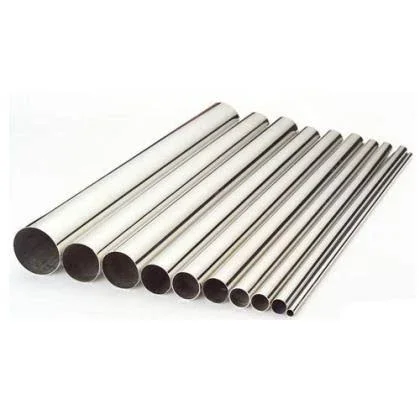
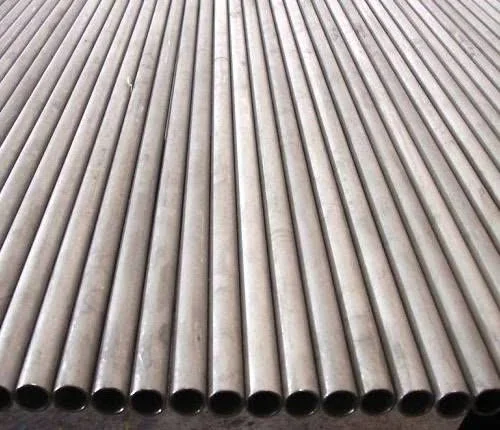
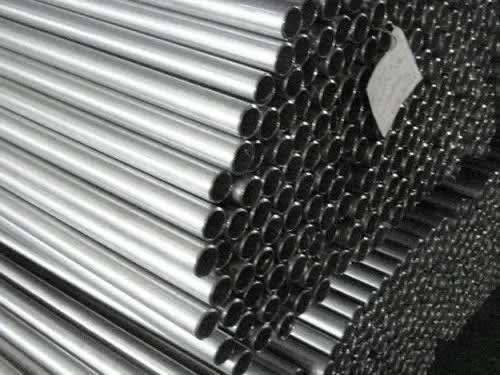
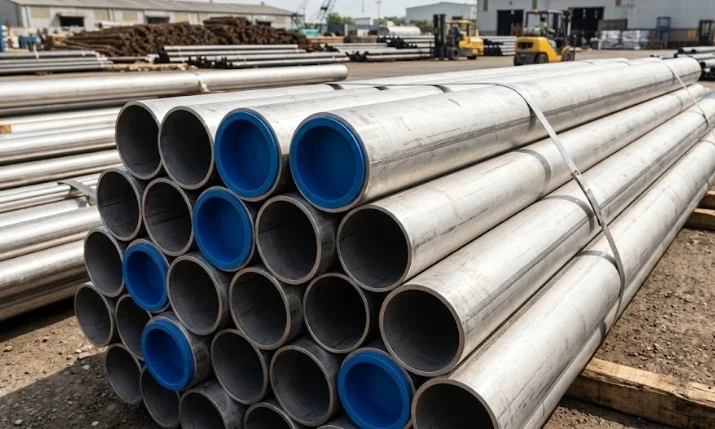
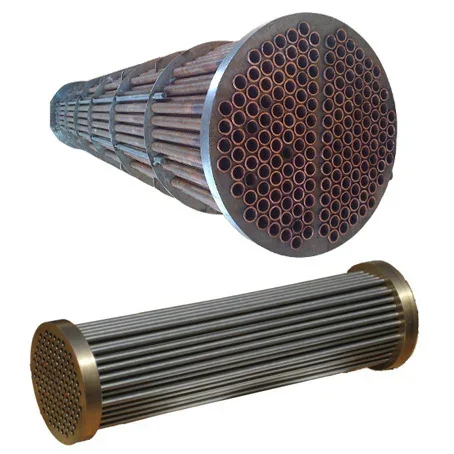
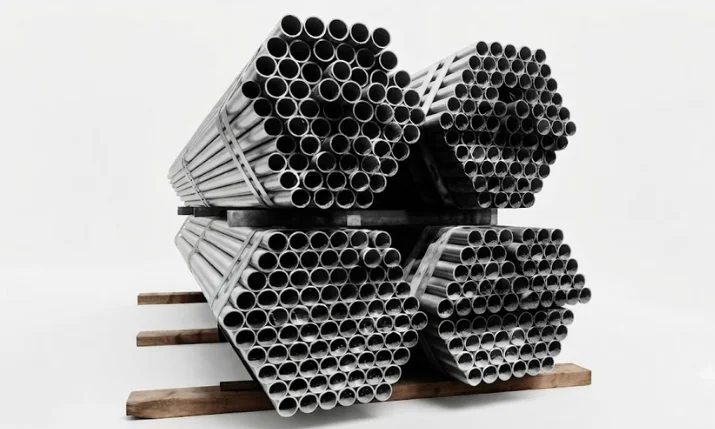
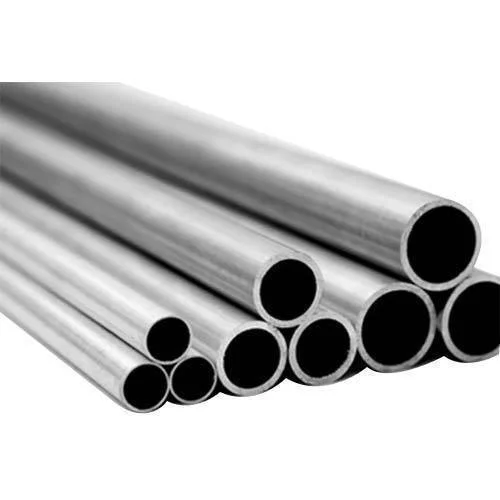
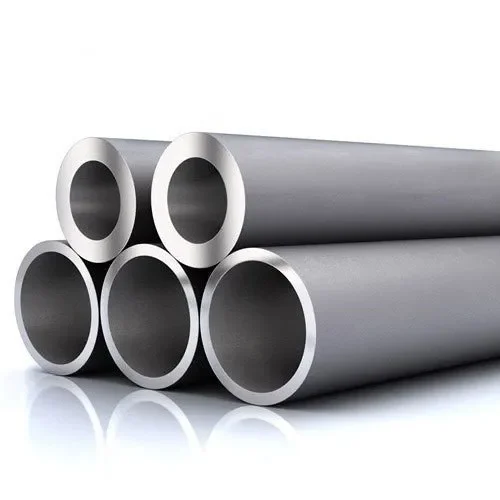
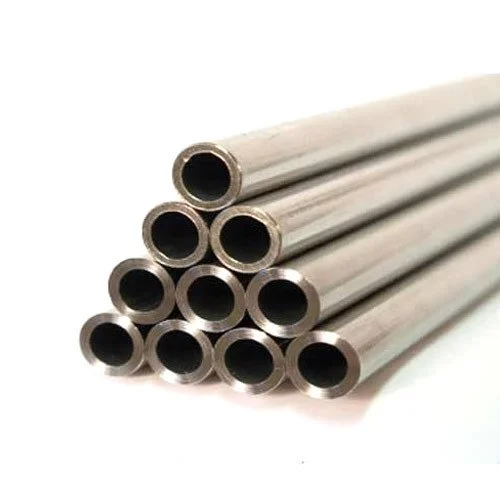
Stainless Steel Heat Exchanger Tubes Specification
| Item |
Straight Tubes |
U-Bend Tubes |
| Size Range | 1/2" to 2" OD (12.7 mm to 50.8 mm); up to 4" OD on request | 1/2" to 2" OD |
| Wall Thickness | 22 BWG (0.71 mm) to 10 BWG (3.40 mm) | 18 BWG (1.24 mm) to 10 BWG (3.40 mm) |
| Process | Seamless cold drawn, welded, welded and cold drawn | Seamless or welded and drawn |
| Grades | 304, 304L, 316, 316L, 317L, 321, 347, 904L, SMO 254, 2205, 2507 | 304, 304L, 316L, 321, 904L, 2205 |
| Condition | Solution annealed, cooled fast | Solution annealed before bending; stress relief on request |
| Surface | Annealed and pickled, bright annealed | Annealed and pickled |
| Length | 6 m, 9 m, 12 m, exact cut | Leg length to drawing |
| Bend Radius | – | About 1.5 × OD minimum per TEMA guidance |
| Ends | Square cut, deburred, capped | Square cut, deburred, capped |
| Testing | Hydrostatic or eddy current, flattening, flaring, reverse flattening (welded), hardness, PMI | Same, plus bend inspection |
| Certificate | EN 10204 3.1 (3.2 on request) | EN 10204 3.1 (3.2 on request) |
Stainless Steel Heat Exchanger Tube Standards and Specifications
| Standard |
Covers |
Typical Use |
| ASTM A213 / ASME SA213 | Seamless ferritic and austenitic boiler, superheater, and heat exchanger tubes | Seamless exchanger and condenser tubes |
| ASTM A249 / ASME SA249 | Welded austenitic boiler, superheater, heat exchanger, and condenser tubes | Welded exchanger and condenser tubes |
| ASTM A269 | Seamless and welded austenitic tubing for general service | General process and cooler tubes |
| ASTM A789 / ASME SA789 | Seamless and welded duplex tubing | Seawater and chloride duty |
| ASTM A688 | Welded austenitic feedwater heater tubes | Feedwater heaters |
| ASTM A803 | Welded ferritic feedwater heater tubes | Feedwater heaters |
| ASTM A1016 | General requirements for ferritic, austenitic, and duplex tubes | Tolerances, tests, marking |
| EN 10216-5, EN 10217-7 | Seamless and welded stainless tubes for pressure use | European pressure equipment |
| DIN 28180 | Seamless steel tubes for shell and tube exchangers | German-spec exchangers |
| JIS G3463 | Stainless boiler and heat exchanger tubes | Japanese-spec exchangers |
| TEMA, API 660, ASME Section VIII | Heat exchanger design codes | Exchanger design |
| ASTM A262 Practice E | Intergranular corrosion test | Sensitisation check |
| ASTM A380, A967 | Cleaning and passivation | Surface condition |
Stainless Steel Heat Exchanger Tubes Material and Grades
| Grade |
UNS |
EN No. |
Typical PREN |
Chloride Cracking Risk |
Typical Duty |
| 304 | S30400 | 1.4301 | ~19 | High above ~60°C | Clean water, food, mild chemicals |
| 304L | S30403 | 1.4307 | ~19 | High above ~60°C | Welded bundles in mild service |
| 316 | S31600 | 1.4401 | ~24 | High above ~60°C | Brackish water, process chemicals |
| 316L | S31603 | 1.4404 | ~24 | High above ~60°C | Pharma, chemical, marine coolers |
| 317L | S31703 | 1.4438 | ~30 | Moderate | Stronger acids, flue gas coolers |
| 321 | S32100 | 1.4541 | ~18 | High above ~60°C | Hot gas and steam up to about 850°C |
| 347 | S34700 | 1.4550 | ~18 | High above ~60°C | Refinery and power hot service |
| 904L | N08904 | 1.4539 | ~35 | Low | Hot sulphuric and phosphoric acid, brackish water |
| SMO 254 | S31254 | 1.4547 | ~43 | Very low | Seawater, bleach plants, scrubbers |
| 2205 | S32205 | 1.4462 | ~35 | Low | Seawater, desalination, oil and gas |
| 2507 | S32750 | 1.4410 | ~42 | Very low | Subsea, severe chloride service |
What Is the Difference Between Stainless Steel and Carbon Steel Heat Exchanger Tubes?
The difference is corrosion life against first cost. Carbon steel tubes cost far less and conduct heat about three times better than austenitic stainless steel, but they rust in water, wet gas, and many chemicals, so they need a corrosion allowance and often a short life. Stainless steel tubes cost more per metre, but they resist corrosion, keep a clean wall, and last decades in services that destroy carbon steel. Stainless steel is also tougher in cryogenic service and holds strength better at high temperature in the stabilised grades.
Choose carbon steel for steam, oils, and treated water. Choose stainless steel when the fluid is corrosive, hygiene matters, or maintenance access is hard.
| Point |
Stainless Steel Tubes |
Carbon Steel Tubes |
| Corrosion Resistance | High, grade dependent | Low, needs allowance or coating |
| Thermal Conductivity | About 16 W/m·K (austenitic) | About 50 W/m·K |
| Typical Wall | Thin, 0.7 mm to 2.1 mm | Medium, 1.65 mm to 3.4 mm |
| Fouling and Cleaning | Smooth bore resists deposits | Rust scale builds up |
| Chloride Cracking | A risk for 304 and 316L above ~60°C | Not a concern |
| Low-Temperature Behaviour | Tough down to cryogenic levels | Needs special grades such as A334 |
| First Cost | Higher | Lower |
| Service Life in Corrosive Duty | Decades | Short |
| Typical Standards | ASTM A213, A249, A269, A789 | ASTM A179, A214, A192, A210 |
| Best For | Seawater, acids, food, pharma, desalination | Steam, oils, treated water, general plant |
Stainless Steel Heat Exchanger Tubes Chemical Composition
Chemistry sets corrosion resistance, strength, and weldability. Values are weight percent.
Austenitic Grades (ASTM A213, A249)
| Element |
304 |
304L |
316 |
316L |
317L |
321 |
347 |
| C (max) | 0.08 | 0.035 | 0.08 | 0.035 | 0.035 | 0.08 | 0.08 |
| Mn (max) | 2.00 | 2.00 | 2.00 | 2.00 | 2.00 | 2.00 | 2.00 |
| Si (max) | 1.00 | 1.00 | 1.00 | 1.00 | 1.00 | 1.00 | 1.00 |
| P (max) | 0.045 | 0.045 | 0.045 | 0.045 | 0.045 | 0.045 | 0.045 |
| S (max) | 0.030 | 0.030 | 0.030 | 0.030 | 0.030 | 0.030 | 0.030 |
| Cr | 18.0–20.0 | 18.0–20.0 | 16.0–18.0 | 16.0–18.0 | 18.0–20.0 | 17.0–19.0 | 17.0–19.0 |
| Ni | 8.0–11.0 | 8.0–13.0 | 11.0–14.0 | 10.0–15.0 | 11.0–15.0 | 9.0–12.0 | 9.0–13.0 |
| Mo | – | – | 2.0–3.0 | 2.0–3.0 | 3.0–4.0 | – | – |
| Other | – | – | – | – | – | Ti 5×(C+N) min–0.70 | Nb 10×C min–1.00 |
The H grades, 304H, 316H, 321H, and 347H, hold carbon at 0.04% to 0.10% and match the base grade in the other elements. They keep more strength at high temperature.
High-Alloy and Duplex Grades (ASTM A213, A249, A789)
| Grade |
C (max) |
Mn (max) |
Si (max) |
P (max) |
S (max) |
Cr |
Ni |
Mo |
Other |
| 904L | 0.020 | 2.00 | 1.00 | 0.040 | 0.030 | 19.0–23.0 | 23.0–28.0 | 4.0–5.0 | Cu 1.0–2.0 |
| SMO 254 | 0.020 | 1.00 | 0.80 | 0.030 | 0.010 | 19.5–20.5 | 17.5–18.5 | 6.0–6.5 | Cu 0.50–1.00, N 0.18–0.25 |
| 2205 | 0.030 | 2.00 | 1.00 | 0.030 | 0.020 | 22.0–23.0 | 4.5–6.5 | 3.0–3.5 | N 0.14–0.20 |
| 2507 | 0.030 | 1.20 | 0.80 | 0.035 | 0.020 | 24.0–26.0 | 6.0–8.0 | 3.0–5.0 | Cu 0.50 max, N 0.24–0.32 |
Stainless Steel Heat Exchanger Tubes Mechanical Properties
Mechanical properties show how much load the tube carries before it stretches (yield) or breaks (tensile). Values are minimum unless marked max. Hardness matters here, because the tube must stay softer than the tubesheet for a tight rolled joint.
| Grade |
Tensile ksi (MPa) |
Yield ksi (MPa) |
Elongation % |
Hardness (max) |
| 304, 316, 317L, 321, 347 | 75 (515) | 30 (205) | 35 | 90 HRB / 192 HBW |
| 304H, 316H, 321H, 347H | 75 (515) | 30 (205) | 35 | 90 HRB / 192 HBW |
| 304L, 316L | 70 (485) | 25 (170) | 35 | 90 HRB / 192 HBW |
| 904L | 71 (490) | 31 (220) | 35 | – |
| SMO 254 | 95 (655) | 45 (310) | 35 | – |
| 2205 | 95 (655) | 65 (450) | 25 | 30.5 HRC / 290 HBW |
| 2507 | 116 (800) | 80 (550) | 15 | 32 HRC / 310 HBW |
Stainless Steel Heat Exchanger Tube Size and Weight Chart
Heat exchanger designers need more than weight, so this chart also gives the inside diameter, the flow area inside the tube, and the tube length needed for each square metre of outside surface. Weights are for 304 stainless steel at 7.93 g/cm³. Tubes in 316 weigh about 1% more, and duplex tubes weigh about 1% less.
| OD in |
OD mm |
BWG |
Wall mm |
ID mm |
Flow Area cm² |
Tube Length per m² of Outside Area (m) |
Weight kg/m |
| 5/8" | 15.88 | 18 | 1.24 | 13.40 | 1.41 | 20.0 | 0.45 |
| 5/8" | 15.88 | 16 | 1.65 | 12.58 | 1.24 | 20.0 | 0.58 |
| 3/4" | 19.05 | 18 | 1.24 | 16.57 | 2.16 | 16.7 | 0.55 |
| 3/4" | 19.05 | 16 | 1.65 | 15.75 | 1.95 | 16.7 | 0.72 |
| 3/4" | 19.05 | 14 | 2.11 | 14.83 | 1.73 | 16.7 | 0.89 |
| 1" | 25.40 | 16 | 1.65 | 22.10 | 3.84 | 12.5 | 0.98 |
| 1" | 25.40 | 14 | 2.11 | 21.18 | 3.52 | 12.5 | 1.22 |
| 1" | 25.40 | 12 | 2.77 | 19.86 | 3.10 | 12.5 | 1.56 |
| 1-1/4" | 31.75 | 16 | 1.65 | 28.45 | 6.36 | 10.0 | 1.24 |
| 1-1/4" | 31.75 | 14 | 2.11 | 27.53 | 5.95 | 10.0 | 1.56 |
| 1-1/2" | 38.10 | 14 | 2.11 | 33.88 | 9.02 | 8.4 | 1.89 |
| 1-1/2" | 38.10 | 12 | 2.77 | 32.56 | 8.33 | 8.4 | 2.44 |
| 2" | 50.80 | 14 | 2.11 | 46.58 | 17.04 | 6.3 | 2.56 |
| 2" | 50.80 | 12 | 2.77 | 45.26 | 16.09 | 6.3 | 3.31 |
To work out the weight of any size, use Weight (kg/m) = (OD − Wall) × Wall × 0.02491 for 304, with both values in mm. To work out heat transfer area, use Area = number of tubes × π × OD × tube length. For example, 500 tubes of 3/4" OD at 3 m each give 500 × 0.05985 × 3 = about 89.8 m² of outside surface.
Common Materials
Heat exchanger service can expose tubes to hot water, chlorides, acids, steam, and repeated temperature changes, so material selection matters. Stainless steel heat exchanger tubes suppliers can offer different grades depending on corrosion level, temperature, pressure, and the fluid flowing through the exchanger.
304 / 304L (UNS S30400 / S30403): Suitable for clean water, food processing, and moderately corrosive fluids. 304L is preferred when extensive welding is involved.
316 / 316L (UNS S31600 / S31603): Molybdenum improves resistance to salt water, chlorides, and many cleaning chemicals, making these grades common in process equipment.
317L (UNS S31703): Higher molybdenum content gives better resistance to aggressive acids than 316L.
321: Titanium stabilization makes it suitable for heat exchanger service involving elevated temperatures.
347: Niobium stabilization supports performance during prolonged high-temperature operation.
Duplex 2205 (UNS S32205): Provides higher strength and better resistance to chloride stress corrosion cracking than standard austenitic grades.
Super Duplex 2507 (UNS S32750): Offers strong resistance to severe chloride environments along with high mechanical strength.
904L (UNS N08904): Designed for highly corrosive acidic environments with strong resistance to pitting.
SMO 254 (UNS S31254): High molybdenum and nitrogen content provides excellent resistance to pitting and crevice corrosion in demanding chloride service.
For proper selection, consider the fluid chemistry, operating temperature, pressure, wall thickness, and tube condition together rather than choosing a grade based only on appearance or price.
Available Sizes, Dimensions and Tolerances
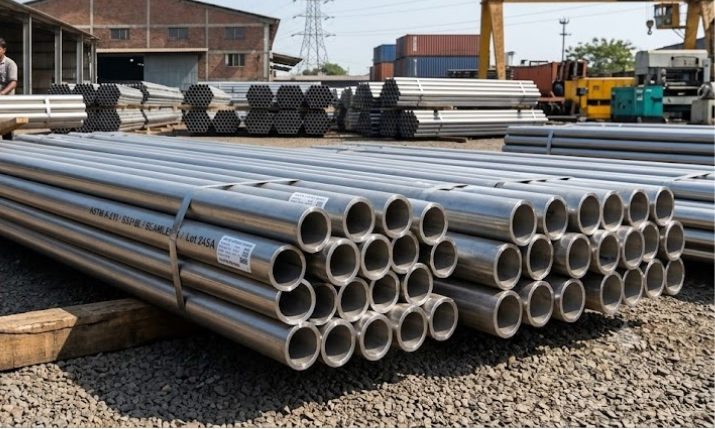
We supply stainless steel heat exchanger tubes from 1/2" to 2" OD, in walls from 22 BWG (0.71 mm) to 10 BWG (3.40 mm), with sizes up to 4" OD on request. Tubes do not use schedule numbers. You give the outside diameter and the wall thickness, and the standard sets how far each can vary. BWG is the gauge number for wall thickness, and a lower BWG means a thicker wall. Always say whether your design uses the minimum wall or the average wall, because ASTM A213 and A249 define them differently and your pressure calculation depends on the answer.
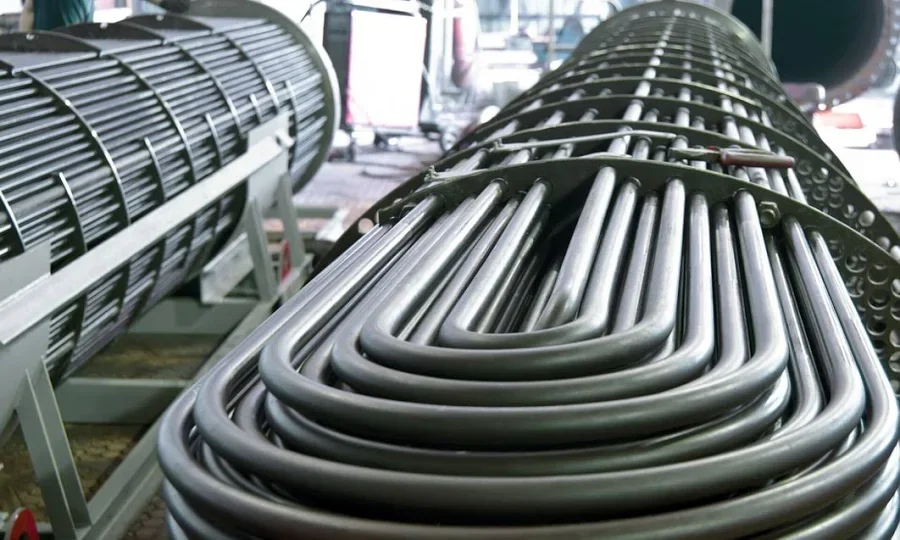
For U-bend tubes, remember that the outer side of the bend thins, and stainless steel work hardens as it bends. TEMA guidance generally sets the minimum bend radius at about 1.5 times the tube OD. Tell us your bend radius and your minimum wall after bending, and we will confirm the wall to order before bending.
Standard lengths are 6 m, 9 m, and 12 m, plus exact cut lengths. As a stainless steel heat exchanger tubes supplier in India, we hold common grades and sizes in stock, subject to availability.
| Product |
Size Range |
Wall Thickness |
Lengths |
Condition |
| ASTM A213 Seamless 304 / 304L / 316L Tubes | 1/2" to 2" OD | 18 BWG to 10 BWG | 6 m / 9 m / 12 m / exact cut | Annealed and pickled |
| ASTM A213 Seamless 321 / 347 Tubes | 1/2" to 2" OD | 16 BWG to 10 BWG | 6 m / 9 m / 12 m / exact cut | Annealed and pickled |
| ASTM A249 Welded 304 / 316L Tubes | 1/2" to 2" OD | 20 BWG to 12 BWG | 6 m / 12 m / exact cut | Annealed and pickled |
| 904L and SMO 254 Tubes | 1/2" to 2" OD | 18 BWG to 10 BWG | 6 m / 9 m / exact cut | Annealed and pickled |
| Duplex and Super Duplex Tubes | 1/2" to 2" OD | 18 BWG to 10 BWG | 6 m / 9 m / exact cut | Annealed and pickled |
| U-Bend Tubes | 1/2" to 2" OD | 18 BWG to 10 BWG | Made to drawing | Annealed and pickled |
Stainless Steel Heat Exchanger Tubes We Manufacture and Supply
| Product |
Standard |
Grades |
Typical Finish |
| Seamless Exchanger and Condenser Tubes | ASTM A213 | 304, 304L, 316L, 317L, 321, 347 | Annealed and pickled |
| Welded Exchanger and Condenser Tubes | ASTM A249 | 304, 304L, 316L, 321 | Annealed and pickled |
| High-Alloy Exchanger Tubes | ASTM A213, A249 | 904L, SMO 254 | Annealed and pickled |
| Duplex Exchanger Tubes | ASTM A789 | 2205, 2507 | Annealed and pickled |
| Feedwater Heater Tubes | ASTM A688 | 304, 316 | Annealed and pickled |
| High-Temperature Boiler-Type Tubes | ASTM A213 | 304H, 316H, 321H, 347H | Annealed and pickled |
| U-Bend Tubes | ASTM A213, A249 | 304, 316L, 321, 904L, 2205 | Bent to drawing |
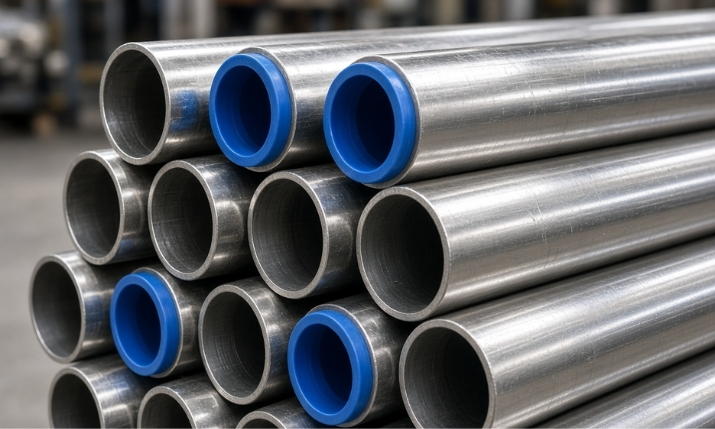
Each shipment carries the markings, heat numbers, and test reports your standard requires, and we cap every tube against dirt.
Applications of Stainless Steel Heat Exchanger Tubes
- Refineries and Petrochemical Plants: Cool and heat process streams in shell and tube exchangers.
- Power Plant Condensers: Turn exhaust steam back into water, with duplex tubes for seawater cooling.
- Desalination Plants: Resist seawater and brine in evaporator and condenser tubes.
- Chemical and Fertilizer Plants: Handle acids, alkalis, and aggressive process fluids.
- Food, Dairy and Beverage Plants: Pasteurize and chill product in hygienic tubes.
- Pharmaceutical and Biotech Facilities: Heat and cool water for injection and clean steam.
- Pulp and Paper Mills: Resist hot liquors and bleach plant chemicals.
- LNG and Cryogenic Plants: Stay tough at very low temperature in vaporizers and coolers.
- Marine and Offshore Systems: Cool oil and fresh water with seawater in compact coolers.
Why Choose Us as Your Stainless Steel Heat Exchanger Tubes Manufacturer in India?
We know that heat exchanger tubes are not simply standard tubes cut to length. The tube must suit the fluid, temperature, pressure, exchanger design, and cleaning conditions. With 20+ years of experience since 2005, we understand these requirements and help customers select suitable grades, dimensions, wall thicknesses, and finishes for their application. We also understand how important clean bores, accurate lengths, proper U-bending, and reliable testing are when tubes are installed inside an exchanger.
Working with us also gives you a dependable stainless steel heat exchanger tubes supplier in India for both regular and project requirements. We can manufacture and export up to 100 tons every month and serve customers across 85+ countries. We provide pressure or eddy current testing, heat-number traceability, and EN 10204 3.1 certificates, with ISO 9001:2015 and PED 2014/68/EU certifications supporting our quality processes. We focus on getting the tube specification right before production, so customers receive material suited to the actual service.
Countries We Export Stainless Steel Heat Exchanger Tubes To
We export stainless steel heat exchanger tubes to customers in 85+ countries, supporting heat exchanger manufacturers, EPC companies, process plants, engineering firms, distributors, and maintenance teams. Different markets require different grades, tube dimensions, testing, and documentation, so we prepare each order around the project specification.
North America: United States, Canada, Mexico
Middle East: UAE, Saudi Arabia, Qatar, Kuwait, Oman, Bahrain
Europe: UK, Germany, France, Italy, Netherlands, Spain
Asia Pacific: Australia, Singapore, Malaysia, Indonesia, Thailand, Vietnam
Africa: South Africa, Egypt, Nigeria, Kenya, Algeria
South America: Brazil, Argentina, Chile, Peru, Colombia
Our stainless steel heat exchanger tubes suppliers support both repeat requirements and complete project orders. We can manufacture and export up to 100 tons every month, with options for straight tubes and U-bends, along with testing, heat-number traceability, and EN 10204 3.1 certificates where specified.