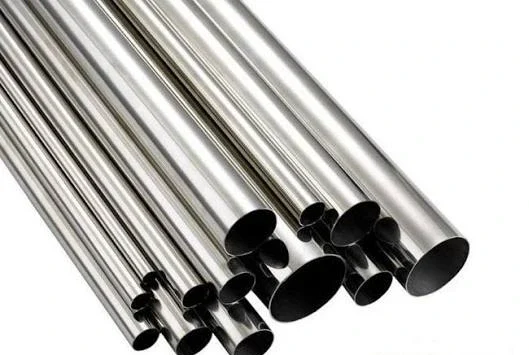
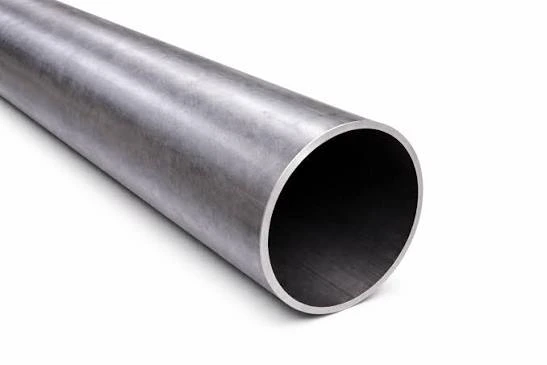
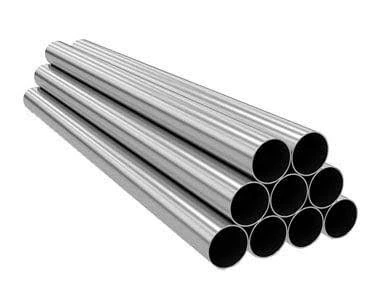
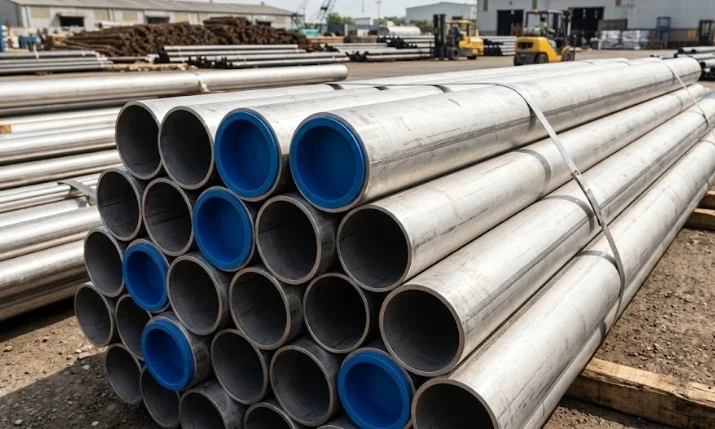
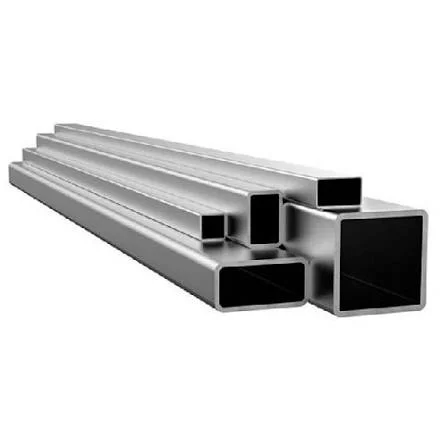
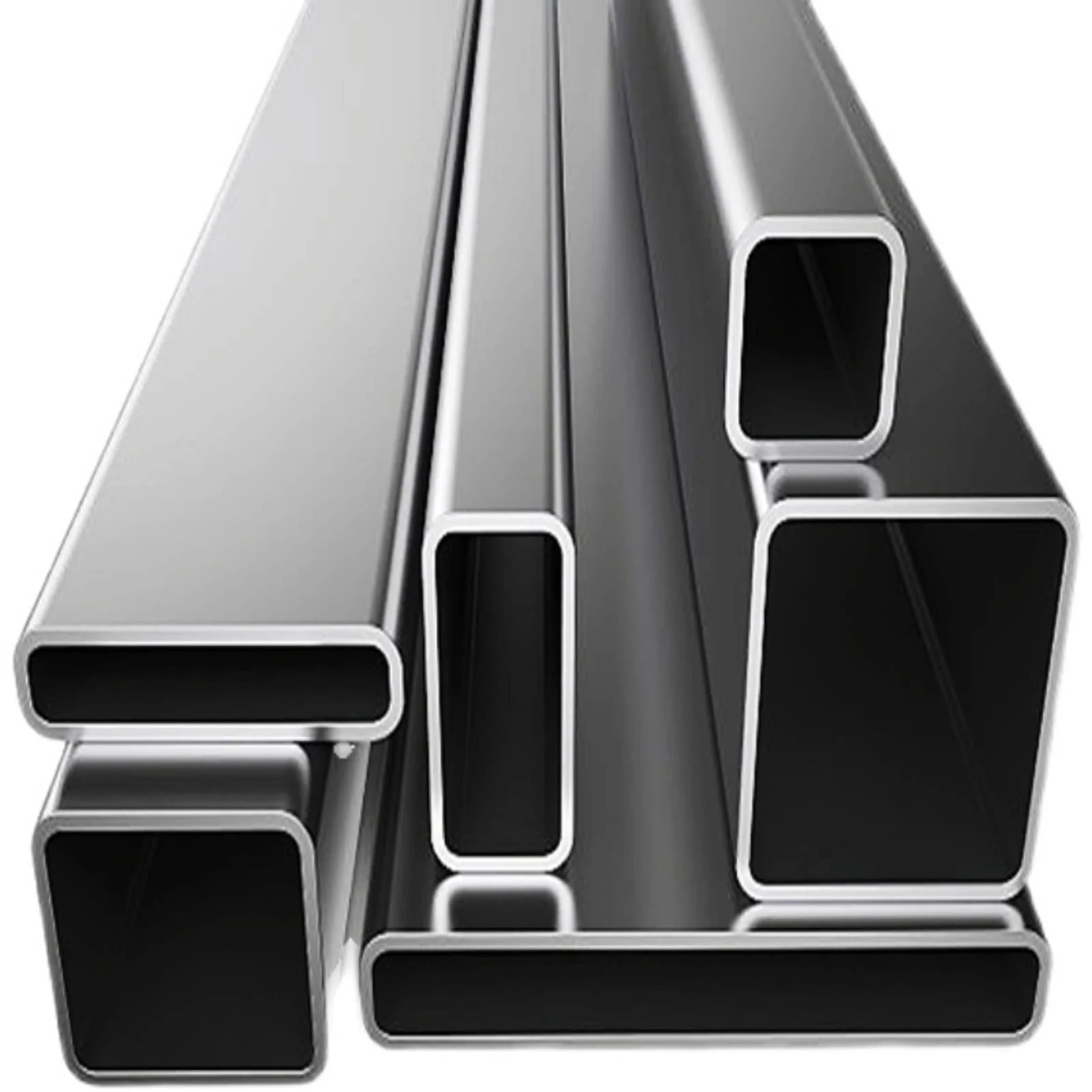
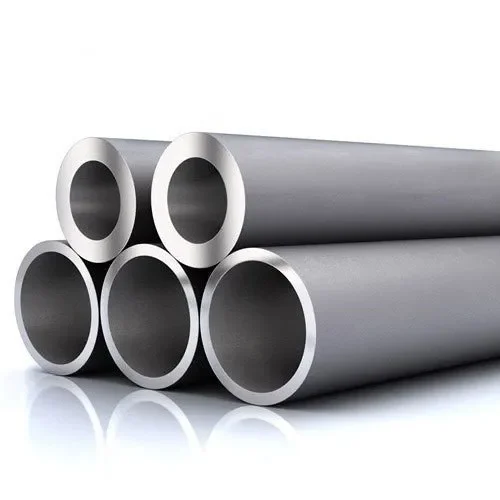
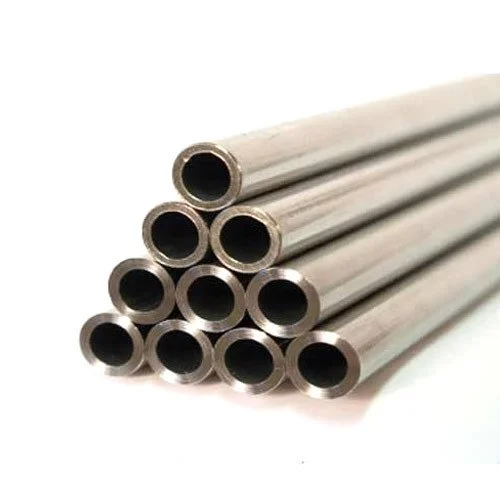
Stainless Steel 310 / 310S Pipes Specifications
| Property |
Detail |
| Grades | TP310, TP310S, TP310H |
| UNS Numbers | S31000, S31008, S31009 |
| EN Numbers | 1.4841, 1.4845 |
| Pipe Types | Seamless, Welded, EFW |
| Size Range | ⅛" to 24" NB (custom sizes on request) |
| Schedules | 5S, 10S, 40S, 80S, 160, XXS |
| Length | Single random, double random, cut length |
| Ends | Plain, beveled, threaded |
| Finish | Annealed and pickled, bright annealed, polished |
| Delivery Condition | Solution annealed |
| Main Standard | ASTM A312 / ASME SA312 |
| Tests | PMI, hydrostatic, NDT, flattening, flaring |
| Certificates | EN 10204 3.1, 3.2 on request |
Stainless Steel 310 / 310S Pipes Standards
| Standard |
What It Covers |
| ASTM A312 / ASME SA312 | Seamless and welded austenitic pipe, including TP310S and TP310H |
| ASTM A358 | Electric fusion welded pipe for corrosive and high-temperature service |
| ASTM A409 | Large-diameter welded pipe for corrosive or high-temperature use |
| ASTM A213 | Seamless tubes for boilers, superheaters and heat exchangers |
| ASTM A999 | General requirements that apply to A312 pipe |
| ASME B36.19M | Stainless steel pipe dimensions and wall thickness |
| EN 10216-5 / EN 10217-7 | European seamless and welded stainless pipe standards |
Before dispatch, each lot goes through positive material identification, so the chromium and nickel levels are confirmed on the pipe itself, not just on paper. Hydrostatic or non-destructive testing follows the rules of the standard, and intergranular corrosion testing can be added on request.
Stainless Steel 310 / 310S Pipes Material and Grades
Three grades cover nearly every 310 pipe order. 310 has up to 0.25% carbon, which gives it good strength at high heat but makes it more prone to carbide precipitation. 310S holds carbon to 0.08% max, which improves weldability and reduces embrittlement in service.
310H sits between the two, with carbon held at 0.04–0.10% for applications that need a guaranteed creep strength. In most welded fabrication work, 310S is the sensible default. If your drawing or code calls for 310H, tell us at the enquiry stage so the right heat is set aside.
Stainless Steel 310 vs 310S Pipes: What Sets Them Apart
The main difference is carbon. 310 carries more of it, which adds hot strength but raises the risk of chromium carbides forming at grain boundaries in the 425–870 °C range. 310S keeps carbon low, so welded joints stay more resistant to corrosion and the pipe is less likely to turn brittle during long service.
Strength at room temperature is the same on paper. For that reason, most buyers pick 310S for fabricated furnace parts and keep 310 for cases where the specification names it.
If you are also weighing 309S, the call is about temperature. 309S handles heat well up to roughly 1000 °C, while 310S pushes that further because of its extra chromium and nickel. The price gap is modest, so for the hottest zones 310S is usually the safer buy.
Heat Resistance and Corrosion Performance of Stainless Steel 310 / 310S Pipes
In clean, oxidizing air, 310S can serve continuously at around 1100 °C, and around 1035 °C where the pipe heats and cools repeatedly. The high chromium builds a tight oxide scale that stays attached, which is the reason the grade is picked for furnace parts.
It also stays tough at low temperature, and remains non-magnetic in the annealed state, so it is sometimes used for cryogenic service. Against corrosion, it performs well in oxidizing acids such as nitric acid.
Know its limits before specifying it. Long exposure between about 650 and 900 °C can form sigma phase, which makes the metal brittle once it cools. Sulfur-bearing reducing gases attack it quickly, and its resistance to chlorides is only about the same as 304. For wet chloride service, 316L or duplex is the better pick.
Stainless Steel 310 / 310S Pipes Chemical Composition
| Element |
310 (S31000) |
310S (S31008) |
| Carbon (C) | 0.25 max | 0.08 max |
| Manganese (Mn) | 2.00 max | 2.00 max |
| Silicon (Si) | 1.50 max | 1.00 max |
| Phosphorus (P) | 0.045 max | 0.045 max |
| Sulfur (S) | 0.030 max | 0.030 max |
| Chromium (Cr) | 24.00 – 26.00 | 24.00 – 26.00 |
| Nickel (Ni) | 19.00 – 22.00 | 19.00 – 22.00 |
| Molybdenum (Mo) | 0.75 max | 0.75 max |
| Iron (Fe) | Balance | Balance |
Percentages by weight, per ASTM A312 and A240 limits.
Stainless Steel 310 / 310S Pipes Mechanical Properties
| Property |
Value |
| Tensile Strength | 515 MPa (75 ksi) min |
| Yield Strength (0.2% offset) | 205 MPa (30 ksi) min |
| Elongation | 35% min |
| Hardness | 90 HRB / 192 HBW max |
| Density | approx. 7.90 g/cm³ |
| Melting Range | approx. 1400 – 1450 °C |
These are room-temperature minimums. At working temperature, strength drops, which is why furnace designers use allowable-stress tables for the grade and not the room-temperature numbers.
Stainless Steel 310 / 310S Pipes Size and Weight Chart
Weight per metre is worked out as (OD − wall) × wall × 0.02491, with both in mm. It is an approximate figure, and the actual weight depends on the wall tolerance.
| NPS |
OD (mm) |
Sch 10S |
Sch 40S |
Sch 80S |
| ¾" | 26.67 | 2.11 mm → 1.29 kg/m | 2.87 mm → 1.70 kg/m | 3.91 mm → 2.22 kg/m |
| 1¼" | 42.16 | 2.77 mm → 2.72 kg/m | 3.56 mm → 3.42 kg/m | 4.85 mm → 4.51 kg/m |
| 3" | 88.90 | 3.05 mm → 6.52 kg/m | 5.49 mm → 11.41 kg/m | 7.62 mm → 15.43 kg/m |
| 5" | 141.30 | 3.40 mm → 11.68 kg/m | 6.55 mm → 21.99 kg/m | 9.53 mm → 31.28 kg/m |
| 10" | 273.05 | 4.19 mm → 28.06 kg/m | 9.27 mm → 60.92 kg/m | 12.70 mm → 82.36 kg/m |
| 12" | 323.85 | 4.57 mm → 36.35 kg/m | 9.53 mm → 74.62 kg/m | 12.70 mm → 98.44 kg/m |
For sizes not shown, we can send a full chart for any pipe size and schedule.
Stainless Steel 310 / 310S Pipes Sizes, Dimensions and Schedules
Our range covers small ⅛" bore lines up to large furnace ducting at 24" NB. Walls run from light Sch 5S and 10S through Sch 40S and 80S, up to heavy Sch 160 and XXS. Non-standard OD and wall combinations can be made to your drawing.
Pipes come in single random, double random or exact cut lengths. Ends can be plain, beveled for welding or threaded. For surface, annealed and pickled is the usual choice for furnace work, while bright annealed and polished finishes are available for cleaner or more visible installations.
Delivery is in the solution-annealed condition, which restores the structure after forming and keeps the chromium working as intended.
Common Material Grades for Stainless Steel 310 / 310S Pipes
Stainless Steel 310 / 310S Pipes are specified under different international standards, depending on the project location and industry requirements. Knowing the equivalent grade designations helps with material selection, technical reviews, and cross-checking piping specifications before placing an order.
| Standard |
Grade Designation |
| ASTM / ASME | TP310, TP310S, and TP310H |
| UNS | S31000, S31008, and S31009 |
| European EN | 1.4841 (X15CrNi25-20) and 1.4845 (X8CrNi25-21) |
| JIS | SUS310 and SUS310S |
| DIN | X8CrNi25-21 |
| GOST | 20Ch25N20S2 |
These designations help identify the required material grade across different standards. As experienced Stainless Steel 310 / 310S Pipes Suppliers, we can help match pipe requirements with the applicable specifications and material documentation. Grade equivalents should always be confirmed against the relevant standard and chemical composition before ordering.
Stainless Steel 310 / 310S Pipes Applications
- Industrial Furnaces: Radiant tubes, muffles, burner tubes and furnace piping that run hot day after day.
- Heat Treatment Plants: Retorts, trays and gas lines in annealing and carburizing lines.
- Petrochemical and Refining: Process heater tubing and high-temperature lines in cracking and reforming units.
- Power Generation: Boiler components, superheater supports and flue systems in coal-fired plants.
- Cement and Lime Plants: Kiln parts and preheater components exposed to abrasive hot gases.
- Glass and Ceramics: Kiln furniture, burner pipes and exhaust lines near the melt zone.
- Waste Incineration: Hot gas ducts and tubes inside combustion chambers.
- Chemical Processing: Lines handling oxidizing acids such as nitric acid at elevated temperature.
Why Choose Us as Your Stainless Steel 310 / 310S Pipes Manufacturer in India?
We hold ISO 9001:2015, ISO 14001:2015 and TÜV certification, and we are MSME registered. Auditors from outside the company check how we run, so you are not relying on our word alone.
We have been in manufacturing since 2005, and our 310 and 310S pipes are made to ASTM A312, A358 and A409. Each shipment comes with an EN 10204 3.1 certificate, and we accept 3.2 certification and third-party inspection from an agency you name.
Our pipes are in use across 85+ countries, so documentation, packing and traceability are routine for us. Before you order, our technical team will tell you honestly whether 310S, 310 or a different grade such as 309S or Alloy 800H suits your furnace conditions. We would rather lose a sale than supply a grade that fails early. For buyers who need a dependable Stainless Steel 310 / 310S Pipes Manufacturer, that straight advice matters as much as the product.
Countries We Export Stainless Steel 310 / 310S Pipes To
Furnace builders, EPC contractors and plant operators in 85+ countries buy from us, and as a Stainless Steel 310 / 310S Pipes Supplier in India we serve refining, power, cement, glass and chemical customers. Key markets include:
North America: USA, Canada, Mexico
Europe: Germany, United Kingdom, France, Italy, Netherlands, Spain, Poland
Middle East: UAE, Saudi Arabia, Qatar, Oman, Kuwait, Bahrain
Asia-Pacific: Singapore, Malaysia, Indonesia, Australia, Japan, South Korea, Vietnam
Africa: South Africa, Nigeria, Egypt, Kenya, Morocco
South America: Brazil, Argentina, Chile, Peru
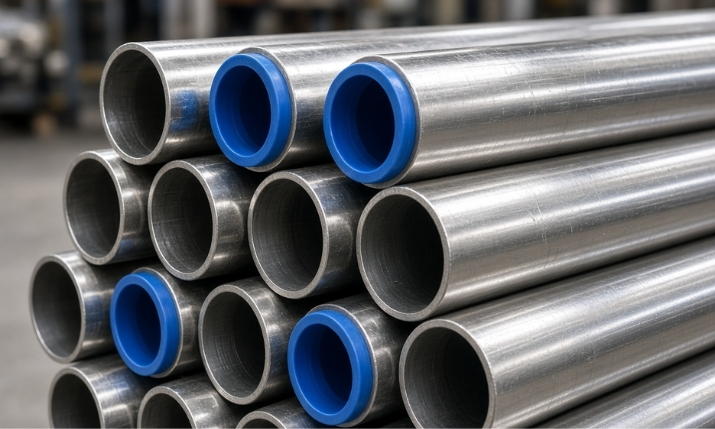
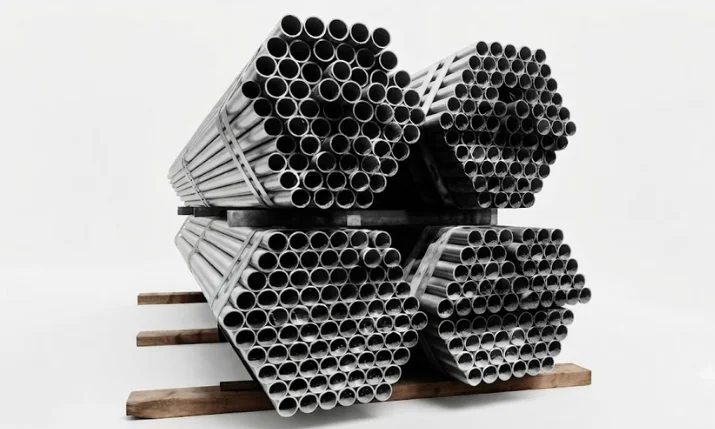
Material test certificates to EN 10204 3.1 go out with each shipment, and 3.2 or third-party inspection can be arranged before dispatch. Pipes are bundled or crated with capped ends for sea freight, and we prepare the invoice, packing list and certificates to suit your port and customs rules.