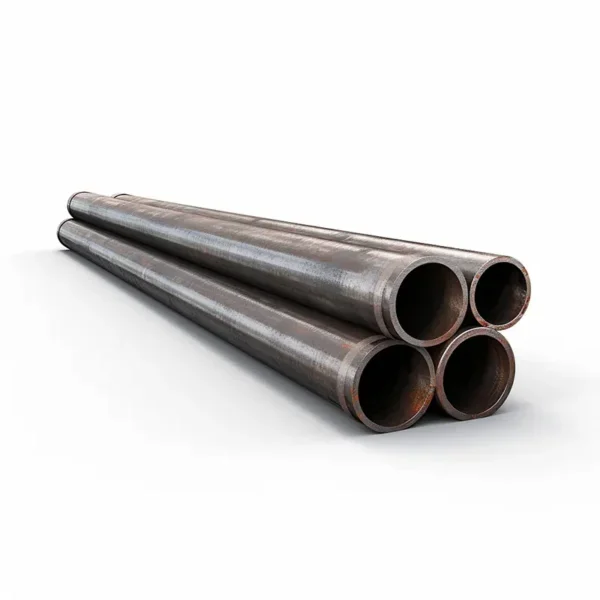
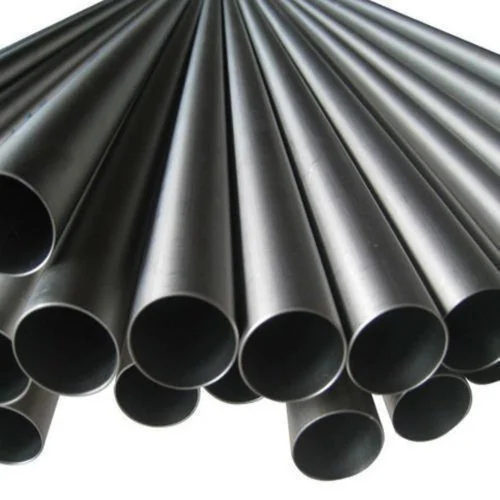
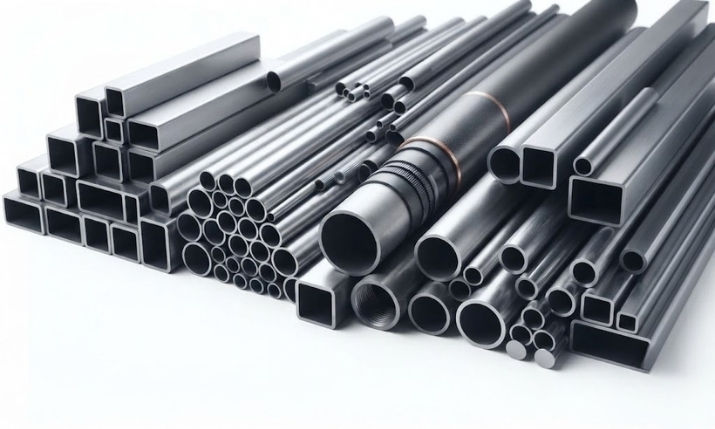
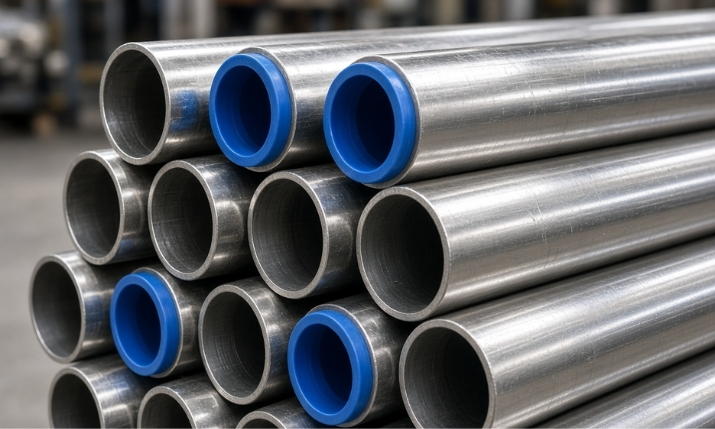
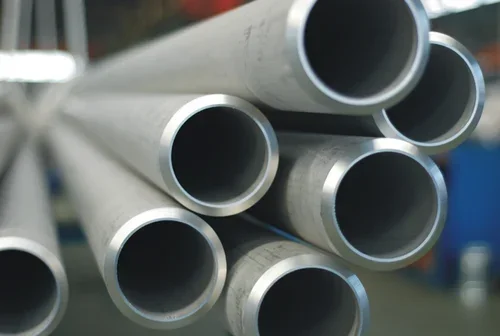
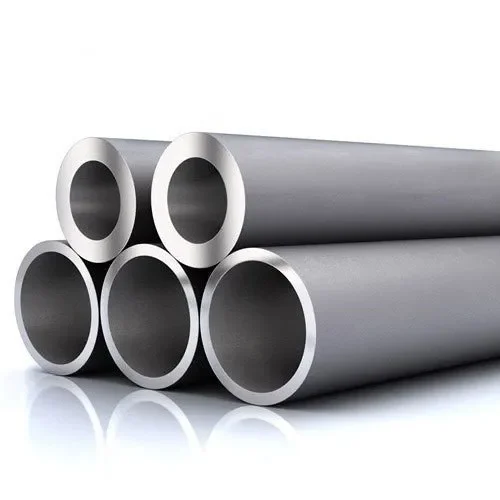
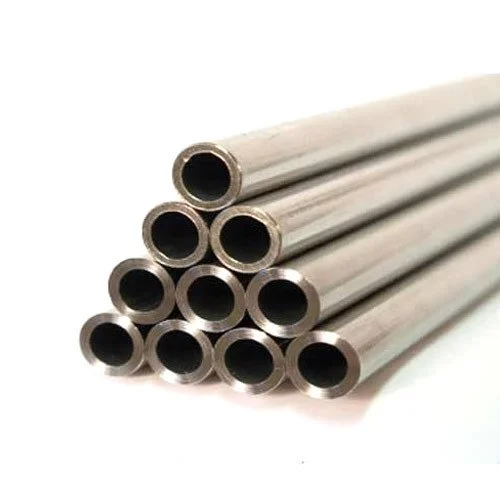
ASTM A106 Grade C Carbon Steel Pipes Specifications
| Parameter |
Details |
| Material | ASTM A106 Grade C / ASME SA106 Grade C / UNS K03501 |
| Product form | Seamless, hot finished or cold drawn |
| Pipe size | ⅛" NPS to 24" NPS, larger on request |
| Schedules | Sch 80, 160, XS, XXS and others |
| Wall thickness | 3.73 mm to 50 mm |
| Length | Single random 4.8 to 6.7 m, double random from 10.7 m, cut length on request |
| Ends | Plain, beveled, threaded |
| Surface | Black oiled, varnished, primed, epoxy coated |
| Tests | Hydrostatic, tensile, flattening or bend, chemical analysis |
| Extra tests on request | Carbon equivalent, hardness, Charpy impact, NDE |
| Documents | EN 10204 3.1 mill certificate, inspection reports |
ASTM A106 Grade C Carbon Steel Pipes Standards
| Standard |
What it covers |
| ASTM A106 / A106M | Seamless carbon steel pipe for high-temperature service |
| ASME SA106 | The ASME version of A106 for pressure piping |
| ASTM A530 / A530M | General requirements and tolerances for carbon and alloy steel pipe |
| ASME B36.10M | Dimensions of welded and seamless steel pipe |
| ASME B31.1 | Power piping |
| ASME B31.3 | Process piping |
| ASME B16.25 | Butt-welding end preparation |
| ASME B1.20.1 | Pipe threads |
| EN 10216-2 | European seamless pressure tubes, nearest equivalent |
Material and Grades of ASTM A106 Grade C Carbon Steel Pipes
Grade C is made from killed steel with at least 0.10% silicon, so the structure is clean and uniform. Its higher carbon, up to 0.35%, and its manganese range of 0.29–1.06% are what give it the extra strength.
The standard lets manganese rise above its limit when carbon is lower. For each 0.01% that carbon sits below 0.35%, manganese can go 0.06% above the stated maximum, up to 1.35%.
Hot finished pipe needs no final heat treatment. Cold drawn pipe is heat treated after the final draw, at 650°C or higher.
Grade C is produced in a narrower range of sizes and schedules than Grade B, and mills often make it to order. For that reason, it helps to share your size, wall and quantity early so we can confirm what can be supplied and when.
ASTM A106 Grade C vs Grade B vs Grade A: Which One Do You Need?
| Point |
Grade C |
Grade B |
Grade A |
| Carbon (max) | 0.35% | 0.30% | 0.25% |
| Tensile strength (min) | 485 MPa | 415 MPa | 330 MPa |
| Yield strength (min) | 275 MPa | 240 MPa | 205 MPa |
| Ductility | Lowest | Moderate | Highest |
| Bending and coiling | Not recommended | Good | Best |
| Weldability | Needs the most care | Good | Easiest |
| Allowable stress, B31.3 at ambient | 161 MPa | 138 MPa | 110 MPa |
| Typical use | High-pressure heavy-wall lines | Standard steam and process piping | Bent, coiled and general hot lines |
Choose Grade C for high-pressure lines where a thinner wall saves weight and cost, and where the pipe will not be bent or coiled. Choose Grade B for standard process and steam piping, since it is the usual specification on most projects. Choose Grade A for lines that must be bent or coiled.
ASTM A106 Grade C Carbon Steel Pipes Chemical Composition
| Element |
Content (%) |
| Carbon (C) | 0.35 max |
| Manganese (Mn) | 0.29 – 1.06 |
| Phosphorus (P) | 0.035 max |
| Sulphur (S) | 0.035 max |
| Silicon (Si) | 0.10 min |
| Chromium (Cr) | 0.40 max |
| Copper (Cu) | 0.40 max |
| Molybdenum (Mo) | 0.15 max |
| Nickel (Ni) | 0.40 max |
| Vanadium (V) | 0.08 max |
| Iron (Fe) | Balance |
The total of copper, nickel, chromium, molybdenum and vanadium must not exceed 1.00%.
ASTM A106 Grade C Carbon Steel Pipes Mechanical Properties
| Property |
Value |
| Tensile strength | 485 MPa min (70 ksi) |
| Yield strength | 275 MPa min (40 ksi) |
| Elongation, longitudinal | 30% min (for walls 5/16" and above) |
| Elongation, transverse | 16.5% min (for walls 5/16" and above) |
| Density | About 7.85 g/cm³ |
| Elastic modulus | About 200 GPa |
| Melting range | About 1450 – 1510°C |
| Magnetic response | Magnetic |
Pressure Capacity of ASTM A106 Grade C Carbon Steel Pipes
The table gives an indicative working pressure for common sizes, using Barlow's formula P = 2 × S × t ÷ D, with an allowable stress S of 161 MPa (23.3 ksi, as used in ASME B31.3 at ambient temperature). It uses the nominal wall and no corrosion allowance. Allowable stress falls as temperature rises, and mill tolerance and joint design also reduce capacity. Final design must follow ASME B31.3 or B31.1 for your service.
| NPS |
OD (mm) |
Sch 80 wall (mm) |
Sch 80 pressure (bar) |
Sch 160 wall (mm) |
Sch 160 pressure (bar) |
| 2" | 60.3 | 5.54 | 296 | 8.74 | 467 |
| 4" | 114.3 | 8.56 | 241 | 13.49 | 380 |
| 6" | 168.3 | 10.97 | 210 | 18.26 | 349 |
| 8" | 219.1 | 12.70 | 187 | 23.01 | 338 |
| 12" | 323.9 | 17.48 | 174 | 33.32 | 331 |
ASTM A106 Grade C Carbon Steel Pipes Size and Weight Chart
Theoretical weight is (OD − Wall) × Wall × 0.02466, giving kg per metre with dimensions in mm. Real weight varies slightly within mill tolerance.
| NPS |
OD (mm) |
Sch 80 wall |
Sch 80 kg/m |
Sch 160 wall |
Sch 160 kg/m |
XXS wall |
XXS kg/m |
| 1" | 33.4 | 4.55 | 3.24 | 6.35 | 4.24 | 9.09 | 5.45 |
| 2" | 60.3 | 5.54 | 7.48 | 8.74 | 11.11 | 11.07 | 13.44 |
| 3" | 88.9 | 7.62 | 15.27 | 11.13 | 21.34 | 15.24 | 27.68 |
| 4" | 114.3 | 8.56 | 22.32 | 13.49 | 33.54 | 17.12 | 41.03 |
| 6" | 168.3 | 10.97 | 42.56 | 18.26 | 67.56 | 21.95 | 79.22 |
| 8" | 219.1 | 12.70 | 64.64 | 23.01 | 111.27 | 22.23 | 107.92 |
| 10" | 273.1 | 15.09 | 96.01 | 28.58 | 172.33 | 25.40 | 155.15 |
| 12" | 323.9 | 17.48 | 132.09 | 33.32 | 238.76 | 25.40 | 186.97 |
ASTM A106 Grade C Carbon Steel Pipes Sizes, Dimensions and Schedules
Grade C is mostly ordered in the heavier schedules, because that is where its strength pays off. Schedule numbers follow ASME B36.10M, and DN is the metric size for each NPS. Note that at 8 inch and above, XXS can be thinner than Sch 160, so check the wall on your drawing.
| Schedule |
Wall at 4" / DN 100 (mm) |
Wall at 10" / DN 250 (mm) |
Typical use |
| Sch 80 / XS | 8.56 | 15.09 | High-pressure steam and process lines |
| Sch 160 | 13.49 | 28.58 | Very high pressure |
| XXS | 17.12 | 25.40 | Severe pressure and temperature |
Under ASTM A530, outside diameter tolerance is ±0.4 mm up to 1½ inch, ±0.8 mm above 1½ and up to 4 inch, +1.6/−0.8 mm above 4 and up to 8 inch, and +2.4/−0.8 mm above 8 and up to 18 inch. Wall thickness is held to −12.5%. We supply single random and double random lengths, and cut and bevel to your drawing.
Testing and Inspection of ASTM A106 Grade C Carbon Steel Pipes
| Test |
Purpose |
| Hydrostatic test | Every length is pressure tested to the A106 requirement to confirm it is leak tight |
| Tensile test | Confirms tensile strength, yield strength and elongation against the Grade C minimums |
| Flattening or bend test | Shows the pipe deforms without cracking, as the standard requires for the size |
| Chemical analysis | Checks carbon, manganese, phosphorus, sulphur, silicon and residuals |
| Carbon equivalent | Calculated from chemistry on request, to guide preheat for welding |
| Dimensional check | Measures OD, wall, length, straightness and ovality |
| Visual inspection | Looks for scale, laps, seams, pits and dents |
| NDE and Charpy impact | Ultrasonic or eddy current, and impact testing, on request |
Welding and Fabrication of ASTM A106 Grade C Carbon Steel Pipes
Grade C welds well when the procedure is right, but its higher carbon and manganese make it more sensitive than Grade A or B. A few points matter on every job.
Preheat and interpass control reduce the risk of hardening and cracking in the heat-affected zone, and the amount depends on wall thickness, joint restraint and ambient temperature. Low-hydrogen electrodes such as E7018, kept dry, are the usual choice for stick welding. Post-weld heat treatment may be required by the code on heavier walls.
Avoid cold bending and close coiling. If a bend is needed, hot bending to a qualified procedure, or a Grade A or B pipe in that section, is the safer path. Ask us for the carbon equivalent of your heat if your welding engineer needs it.
Finishes and Coatings of ASTM A106 Grade C Carbon Steel Pipes
| Finish |
What it is |
Where it is used |
| Black / mill finish | As-rolled surface with a light oil coat | Pipe to be painted or coated on site |
| Varnish coating | Thin protective lacquer | Storage and shipping protection |
| Red oxide primer | Corrosion-protective primer | Pipe that will be painted later |
| Epoxy coating | Epoxy system for stronger protection | Wet and buried environments, on request |
ASTM A106 Grade C Carbon Steel Pipes Manufacturers and Suppliers in India
ASTM A106 Grade C is a specialised carbon steel pipe grade with higher minimum tensile strength than Grades A and B. Since not every standard offers a direct equivalent, checking the material designation is important before placing an order. As an ASTM A106 Grade C carbon steel pipe supplier in India, we help customers confirm the required grade, pipe schedule, and material documentation before dispatch.
ASTM A106 Grade C Pipe Designations
| Standard or System |
Grade or Designation |
| ASTM | A106 Grade C |
| ASME | SA106 Grade C |
| UNS | K03501 |
| JIS | STPT480 (approximate equivalent) |
| EN | P355GH (nearest comparison; not a direct equivalent) |
| ASTM A53 / API 5L | No direct equivalent to Grade C |
These designations do not guarantee that the materials are interchangeable. Chemical composition, mechanical properties, dimensions, and testing requirements can differ between standards. Always confirm acceptance with the applicable design code and project specifications before substituting one grade for another.
Common Materials Supplied with ASTM A106 Grade C Carbon Steel Pipes
Industrial piping projects often combine different pipe grades to handle changes in temperature, pressure, and service conditions. As ASTM A106 Grade C carbon steel pipe suppliers, we offer a range of related piping materials and components for power plants, refineries, oil and gas facilities, and other industrial applications.
ASTM A106 Grade A and B Pipes: Used for general piping runs and applications where the properties of these grades meet the design requirements.
ASTM A335 P11, P22, and P91 Pipes: Alloy steel pipes designed for high-temperature service in boilers, power plants, and industrial process systems.
ASTM A333 Grade 6 Pipes: Suitable for low-temperature applications that require specified impact toughness.
ASTM A53 Grade B Pipes: Used in general-purpose piping and utility systems, depending on the required specification.
API 5L Grade B to X70 Pipes: Designed for oil, gas, and other pipeline transportation applications.
Forged Fittings and Flanges: Include heavy-wall elbows, tees, reducers, and flanges for connecting piping sections and managing changes in flow direction.
Each material has specific mechanical properties and operating limits. We help customers identify suitable products based on project specifications, operating conditions, and applicable standards to support a compatible piping system.
Applications of ASTM A106 Grade C Carbon Steel Pipes
- Power Generation: High-pressure feed water, boiler and steam piping.
- Oil and Gas Facilities: High-pressure process lines and manifolds.
- Oil Refining: Heavy-wall process piping that runs hot under pressure.
- Petrochemical: High-pressure reactor feed and transfer lines.
- Fertiliser Plants: High-pressure, high-temperature process lines.
- Boilers and Heat Recovery: Pressure sections and headers.
- Hydraulic and Compressed Gas Systems: High-pressure utility lines.
- Offshore Platforms: Heavy-wall utility and process piping.
Why Choose Us as Your ASTM A106 Grade C Carbon Steel Pipe Manufacturer in India?
With 20+ years of experience since 2005, we understand the importance of selecting the correct carbon steel pipe grade for demanding industrial applications. Our ISO 9001:2015 and TÜV certifications reflect our focus on quality and reliable supply. As an ASTM A106 Grade C carbon steel pipe manufacturer and supplier in India, we work to meet project specifications with suitable pipe dimensions, schedules, and material documentation.
Our production and supply capacity of up to 100 tons per month allows us to handle bulk orders and project requirements. We supply seamless carbon steel pipes in different sizes and wall thicknesses for applications involving high temperatures and pressure. Our team checks the required grade and specifications to help ensure the supplied material matches the order.
We also focus on material traceability and quality verification. Every order includes an EN 10204 3.1 material test certificate, while additional testing and third-party inspections can be arranged on request. With exports to 85+ countries, we support international customers through careful packaging, export documentation, and organised dispatch for industrial and engineering projects.
Countries We Export ASTM A106 Grade C Carbon Steel Pipes To
As an ASTM A106 Grade C Carbon Steel Pipes Manufacturer and Supplier in India, we export to 85+ countries, serving oil and gas, refining, power generation, petrochemical and chemical industries.
Middle East: UAE, Saudi Arabia, Qatar, Oman, Kuwait and Bahrain.
Europe: Germany, Italy, United Kingdom, Netherlands, France, Spain, Belgium and Poland.
Asia-Pacific: Singapore, Malaysia, Indonesia, Thailand, Vietnam, South Korea, Japan and Australia.
Americas: USA, Canada, Mexico, Brazil and Chile.
Africa: South Africa, Nigeria, Egypt and Kenya.
South Asia: Nepal, Bangladesh and Sri Lanka.
EN 10204 3.1 mill test certificates come with every order. EN 10204 3.2 certification and third-party inspection can be arranged on request. We pack each shipment to suit its route and destination, and we prepare the shipping and export documents your project requires, so international orders move cleanly from our plant to your site.